
From: The Count of Monte Cristo (1844–1846) by Alexandre Dumas
Literary Figures of Righteousness Hall — Righteous Museum
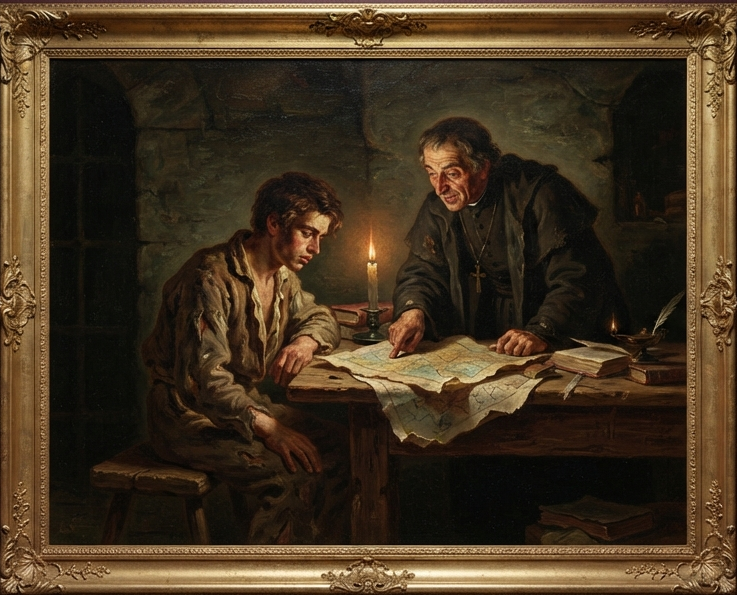
Figure 1. Edmond Dantès: The Prisoner’s Transformation
Figure 1. Edmond Dantès in the dungeons of the Château d’If, studying by candlelight with the Abbé Faria—a visual metaphor for the transformation of an innocent man into a calculating avenger.
Figure Description: A young man in ragged prison clothes sits in a dark, stone dungeon cell, illuminated by a single candle. An older priest (Abbé Faria) gestures as he teaches, while the young man studies books and maps spread across a crude table. The mood is intense and transformative—capturing the moment Dantès’s innocence is replaced by knowledge, purpose, and the seed of vengeance.
Introduction
Edmond Dantès is the protagonist of Alexandre Dumas’s epic adventure novel The Count of Monte Cristo. At the age of nineteen, Dantès is a young, honest, and intelligent sailor with a promising future: he is about to be named captain of the ship Pharaon and marry his beloved fiancée, Mercédès. His life is shattered when three men—Fernand Mondego (driven by jealousy), Danglars (driven by envy), and Villefort (driven by ambition)—conspire to falsely accuse him of treason. Arrested on his wedding day, Dantès is imprisoned without trial in the notorious Château d’If, where he languishes for fourteen years.
During his imprisonment, Dantès meets the Abbé Faria, a brilliant priest who becomes his intellectual father. Faria teaches Dantès history, science, languages, and philosophy, and reveals the location of a vast hidden treasure on the island of Monte Cristo. After Faria’s death, Dantès escapes, finds the treasure, and reinvents himself as the Count of Monte Cristo—a mysterious, wealthy, and powerful nobleman.
Dantès adopts multiple identities to meticulously orchestrate his revenge against the three men who destroyed his life, while also rewarding those who showed him kindness. However, as his vengeance unfolds, Dantès confronts the profound moral question: Can a man serve as the agent of divine justice, or does vengeance corrupt even the most righteous cause?
“I have taken the place of Providence to reward the good; now let the avenging God make way for me to punish the wrongdoer!” — Edmond Dantès (Dumas, 1844)
The Righteous Dilemma: Justice or Vengeance?
Edmond Dantès’s story forces us to confront one of the most enduring questions of righteousness: When the law fails to deliver justice, is it righteous to take justice into one’s own hands?
Dantès was betrayed by the very system that was supposed to protect him. A corrupt prosecutor (Villefort) sacrificed an innocent man to protect his own political ambitions. No court, no appeal, no justice ever came. When Dantès emerges from prison with vast wealth and extraordinary intelligence, he believes he has been chosen to act as the agent of Providence—a divine instrument of punishment and reward.
But as the novel unfolds, Dumas suggests that justice and revenge are not synonymous. Dantès’s meticulously planned vengeance is so complete that it begins to destroy not only the guilty but also the innocent around them. The novel ultimately asks: Does systematic revenge, no matter how justified, make a man righteous—or does it make him a monster?
Table 1. The Righteousness Paradox: Justice vs. Vengeance in The Count of Monte Cristo
| Edmond Dantès as the Victim | Edmond Dantès as the Avenger |
|---|---|
| Falsely imprisoned for 14 years | Escapes and becomes the Count of Monte Cristo |
| Lost his father, his fiancée, and his youth | Systematically destroys the lives of his enemies |
| Suffered injustice through no fault of his own | Inflicts suffering on others, including the innocent |
| Had no power to defend himself | Wields immense wealth and influence as weapons |
| Represents human vulnerability | Represents human power and control |
Note. This table illustrates Dantès’s transformation from an innocent victim to a powerful avenger. The central righteous question is: Does suffering injustice give a person the moral right to become the judge, jury, and executioner of others?
Key Scenes of Moral Choice
Scene 1: The Betrayal — Injustice Begins
Young Edmond Dantès returns from a sea voyage to find his father hungry and in debt. He gives his father all the money he has, showing his devotion and love. His ambitions are purely personal: he loves his father, respects his employer Monsieur Morrel, and adores his fiancée Mercédès. He has no political aspirations. Yet he is arrested on his wedding day and accused of treason for carrying a letter he did not understand.
The Question: How does an innocent man respond when the system that should protect him destroys him instead?
The Righteous Failure: The justice system—represented by Prosecutor Villefort—fails completely. Villefort knows Dantès is innocent but sentences him to life in prison to protect his own political career.
Scene 2: The Transformation — Education and Vengeance
In prison, the Abbé Faria transforms Dantès from an uneducated sailor into a multilingual mathematician, scientist, and man of the world. Faria also reveals the location of the Monte Cristo treasure and inspires Dantès’s plan for vengeance. But even during his imprisonment, Dantès’s hatred begins to consume him. He dooms his unknown enemies “to every torment that his inflamed imagination could devise”.
The Question: Does acquiring power and knowledge give a person the right to use them for revenge?
The Righteous Tension: Dantès’s education is both a gift and a curse—it elevates him intellectually but also arms him for destruction.
Scene 3: The Count Revealed — Assuming the Role of Providence
After escaping prison and finding the treasure, Dantès adopts the identity of the Count of Monte Cristo and declares his new purpose:
“And now, farewell, goodness, humanity, gratitude… Farewell all those feelings that nourish and illuminate the heart! I have taken the place of Providence to reward the good; now let the avenging God make way for me to punish the wrongdoer!”
The Question: Can a human being rightfully claim to act as Providence—the instrument of divine justice?
The Righteous Failure: Dantès assumes a godlike role, but he is still human—and his vengeance, no matter how calculated, is still motivated by human hatred.
Scene 4: The Cost of Vengeance — Innocents Suffer
Dantès’s revenge is devastatingly effective. Fernand (now Count de Morcerf) is exposed and disgraced. Danglars is financially ruined. Villefort goes mad after his wife commits murder and suicide. But in the process, innocent people suffer: Mercédès loses her husband and son, young Albert de Morcerf is forced into exile, and the innocent Valentine de Villefort is nearly poisoned. Dantès himself begins to question his mission when his actions push a man to madness.
The Question: Is vengeance still righteous when it destroys the innocent along with the guilty?
The Righteous Awakening: Dantès realizes that vengeance—even justified vengeance—has a cost that cannot be contained.
Scene 5: The Redemption — Choosing Mercy
By the end of the novel, Dantès recognizes that his vengeance has gone too far. He spares Danglars’s life, allowing him to live in poverty rather than killing him. He reunites with his former employer Morrel’s family and ensures their happiness. He finally allows himself to love again, finding peace with Haydée. In his final letter, Dantès writes:
“All human wisdom is contained in these two words: Wait and Hope.”
The Question: Does choosing mercy at the end redeem a life of vengeance?
The Righteous Lesson: True righteousness is not found in perfect revenge, but in the ability to stop the cycle of violence and choose mercy.
Memorable Quotes
Table 2. Key Quotes from The Count of Monte Cristo on Justice, Vengeance, and Redemption
| Quote | Speaker | Significance |
|---|---|---|
| “I have taken the place of Providence to reward the good; now let the avenging God make way for me to punish the wrongdoer!” | Edmond Dantès | Dantès declares himself the agent of divine justice—a claim that raises profound questions about human arrogance |
| “Oh, God, your vengeance may sometimes be slow in coming, but I think that then it is all the more complete.” | The Count of Monte Cristo | Dantès believes that patient, complete revenge is more righteous than hasty vengeance |
| “Hatred is blind and anger deaf: the one who pours himself a cup of vengeance is likely to drink a bitter draught.” | Franz d’Épinay (to the Count) | A warning from another character that vengeance will ultimately poison the avenger |
| “I am not proud, but I am happy; and happiness blinds, I think, more than pride.” | Edmond Dantès | A reflection on how happiness—and by extension, suffering—can distort perception |
| “There are two ways of seeing: with the body and with the soul. The body’s sight can sometimes forget, but the soul remembers forever.” | Edmond Dantès | The soul’s memory of injustice drives Dantès’s quest for righteousness |
| “All human wisdom is contained in these two words: Wait and Hope.” | Edmond Dantès | The novel’s final message—redemption comes through patience and hope, not through revenge |
Note. These passages trace Dantès’s journey from innocent victim to vengeful Count to redeemed man. The quotes reflect the novel’s central tension between human vengeance and divine justice.
Lessons on Righteousness from Edmond Dantès
Table 3. Lessons on Righteousness from The Count of Monte Cristo
| Lesson | Application |
|---|---|
| Justice systems can fail—and the innocent suffer | Dantès was destroyed by a corrupt legal system. When institutions fail, the pursuit of justice becomes a personal burden. |
| Vengeance is not the same as justice | Dantès’s revenge is brilliantly executed, but it destroys innocent lives along with the guilty. Justice restores balance; vengeance perpetuates suffering. |
| Power does not make a person righteous | Dantès acquires immense wealth and intelligence, but these tools do not make his actions moral. Righteousness is about how power is used, not how much power one has. |
| Revenge corrupts the avenger | Dantès admits that his vengeance was driven by “human hatred” rather than “divine vengeance”. Even justified anger can poison the soul. |
| Redemption is possible—but it requires letting go | Dantès ultimately chooses mercy and finds peace. True righteousness is not found in perfect revenge, but in the ability to stop and choose hope. |
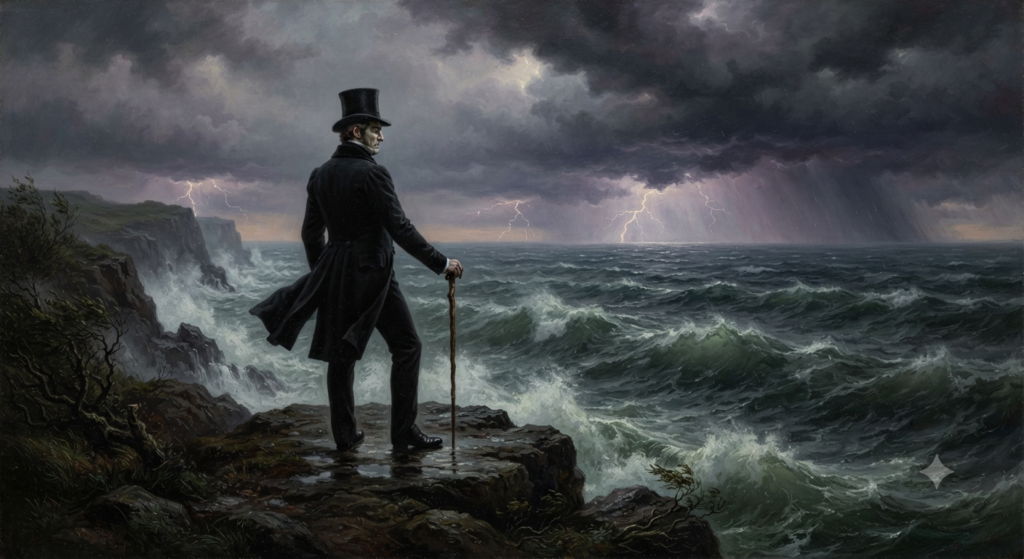
Figure 2. The Count of Monte Cristo: The Mask of Vengeance
Figure 2. The Count of Monte Cristo standing on a cliff overlooking the sea, his dark silhouette framed against a stormy sky—a visual metaphor for the man who has become the instrument of his own justice.
Figure Description: A tall, distinguished man in elegant early 19th-century black clothing stands on a rocky cliff overlooking a stormy sea. His face is partially shadowed, his expression unreadable—cold, powerful, and remote. Dark clouds gather overhead, and waves crash against the rocks below. The mood is ominous and majestic—capturing the Count’s transformation from wronged sailor to powerful, calculating avenger.
Further Resources
- Read the full text: Dumas, A. (1844–1846). The Count of Monte Cristo. Paris: Pétion. The novel is in the public domain and available for free through Project Gutenberg and the Internet Archive.
- Watch the film adaptations:
- The Count of Monte Cristo (2002). Directed by Kevin Reynolds. Touchstone Pictures. Starring Jim Caviezel as Edmond Dantès.
- Le Comte de Monte-Cristo (2024). Directed by Matthieu Delaporte and Alexandre de La Patellière. Starring Pierre Niney as Edmond Dantès.
- Explore more: Visit the Literary Figures of Righteousness Hall to discover other literary characters who faced moral dilemmas.
References
Dumas, A. (1844–1846). The Count of Monte Cristo. Pétion.
Reynolds, K. (Director). (2002). The Count of Monte Cristo [Film]. Touchstone Pictures.
Delaporte, M., & de La Patellière, A. (Directors). (2024). Le Comte de Monte-Cristo [Film]. Samuel Goldwyn Films.