

Country: USA
Museum Path: Research Wing > Diligence & Perseverance in Doing Right Hall
Harriet Tubman (Abolitionist, Freedom Fighter, and Humanitarian, USA, c. 1822–1913) was born into slavery on Maryland’s Eastern Shore, escaped to freedom in 1849, and then repeatedly returned to slaveholding territory to help family members and others escape. Over the following decade, she made approximately 13 trips into Maryland and helped about 70 people reach freedom directly. During the Civil War, she continued serving others as a nurse, scout, spy, and leader, including her role in the 1863 Combahee River Raid, which helped liberate more than 700 enslaved people. (National Park Service)
Tubman’s story is therefore particularly relevant to a hall devoted to diligence and perseverance in doing right. Her achievement was not one isolated act of courage. It was a pattern of repeated decisions: learning, preparing, acting, returning, helping, adapting, and continuing.
Her life illustrates a powerful principle:
Diligence does what is right faithfully; perseverance continues doing what is right when doing so becomes difficult.
1. Early Hardship — Developing Strength Through Difficulty
Harriet Tubman was born as Araminta Ross around 1822 in Dorchester County, Maryland. She was enslaved from birth and was hired out to perform different forms of labor, including domestic work, field work, and work around the waterfront. As a child, she also suffered a severe head injury when an overseer threw a heavy weight that struck her. The injury had lifelong consequences, but it did not prevent her from developing remarkable determination and physical endurance. (National Archives)
Tubman’s early environment forced her to develop practical knowledge. She learned to observe the landscape, waterways, woods, weather, and stars. These skills later became important during her escape and Underground Railroad activities. The National Park Service notes that she used knowledge gained from working in Maryland’s fields, woods, and waterways in her later freedom missions. (National Park Service)
Her story demonstrates that diligence often begins before a person understands where that diligence will eventually lead.
Righteousness Principle
Diligence begins with developing the abilities needed to respond faithfully to responsibility.
Table 1. Tubman’s Early Challenges and Responses
| No. | Challenge | Tubman’s Response | Diligence & Perseverance Lesson |
|---|---|---|---|
| 1 | Enslavement | Developed practical knowledge and endurance | Develop abilities even in difficult circumstances |
| 2 | Limited opportunities | Learned from her surroundings | Pay attention and learn continuously |
| 3 | Severe childhood injury | Continued developing strength and determination | Difficulty does not have to end growth |
| 4 | Separation of family members | Maintained strong commitment to family | Let worthy relationships motivate responsible action |
| 5 | Threat of being sold | Decided to seek freedom | Recognize when courageous action is necessary |
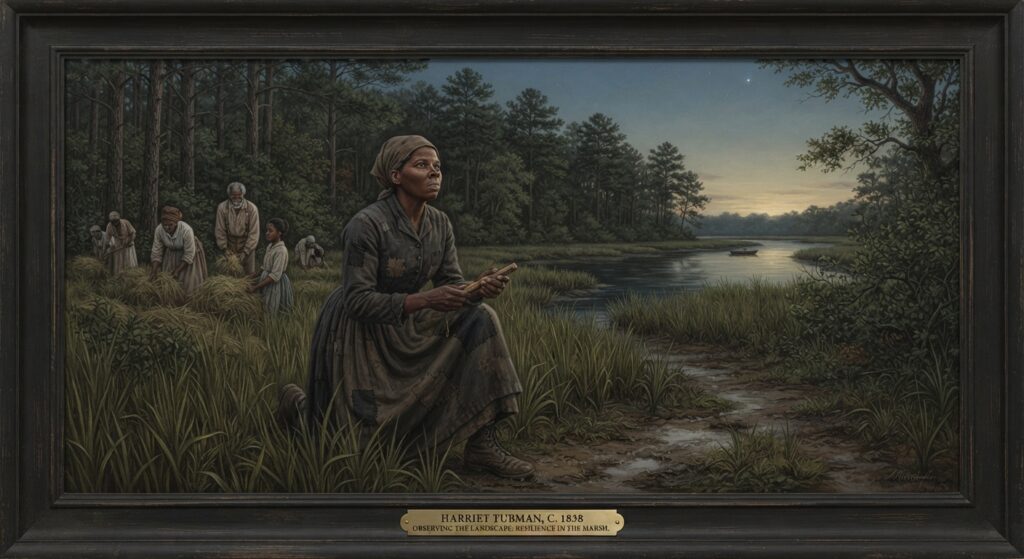
Figure 1. From Enslavement to Freedom-Seeking
2. Escape to Freedom — Courageous Action
In 1849, after the death of her enslaver and amid the danger that she might be sold, Tubman escaped from slavery and reached Philadelphia. Her escape represented an extraordinary act of courage because capture could result in severe punishment and forced return to slavery. (National Park Service)
But Tubman’s story did not end when she reached safety.
The National Park Service records that after reaching Philadelphia, Tubman returned to Maryland approximately 13 times between 1850 and 1860 to help family and friends reach freedom. (National Park Service)
This distinction is central to the museum’s interpretation.
Escaping once required courage. Returning repeatedly required perseverance.
Righteousness Principle
Doing what is right may require action beyond personal comfort or safety.
Tubman could have remained in freedom and focused exclusively on her own life. Instead, she repeatedly accepted danger because she believed others should also have the opportunity to be free.
Table 2. From Personal Freedom to Service
| No. | Stage | Tubman’s Action | Character Meaning |
|---|---|---|---|
| 1 | Enslavement | Recognized the desire for freedom | Moral awareness |
| 2 | Escape | Took action toward freedom | Courage |
| 3 | Freedom | Did not forget those left behind | Compassion |
| 4 | Return | Went back into danger | Perseverance |
| 5 | Rescue | Helped others reach freedom | Service |
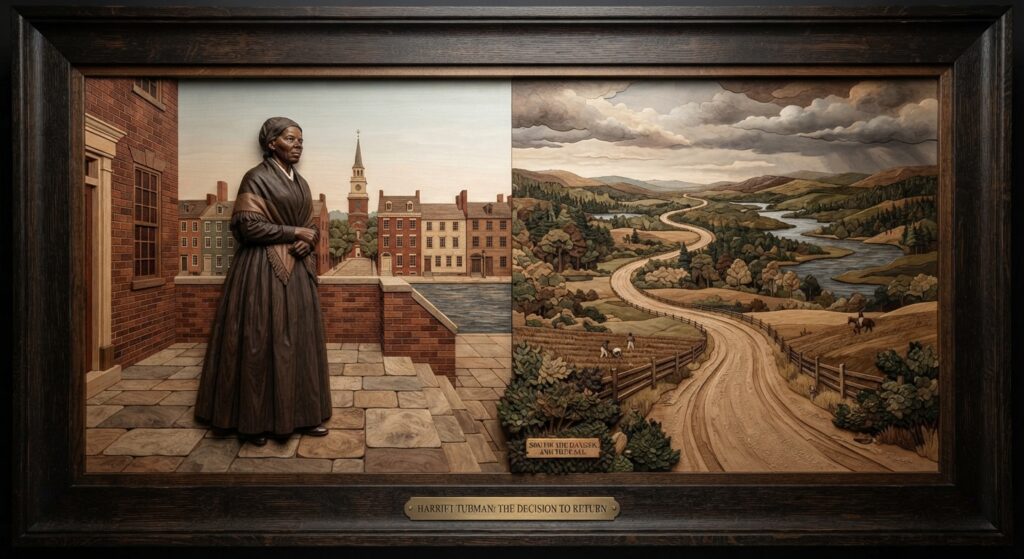
Figure 2. The Decision to Return
3. Underground Railroad — Diligence in Preparation
Tubman’s Underground Railroad work was not simply a matter of bravery.
Successful escape required planning, secrecy, observation, timing, navigation, communication, and cooperation.
The Underground Railroad itself was not an actual railroad but a network of people, routes, safe places, and methods of resistance used by freedom seekers and their supporters. (National Park Service)
Tubman developed and used knowledge of the Maryland landscape and relied upon networks of people willing to assist freedom seekers. Historical sources describe her use of disguises, deception, safe houses, and trusted networks. (National Park Service)
Her work demonstrates that righteous action requires preparation.
Righteousness Principle
Good intentions are not enough. Doing what is right requires preparation, skill, and responsible action.
Tubman’s diligence was practical. She had to think ahead because mistakes could endanger not only herself but also the people traveling with her.
Table 3. Tubman’s Diligent Preparation
| No. | Skill | Application | Character Meaning |
|---|---|---|---|
| 1 | Observation | Studied the landscape | Awareness |
| 2 | Navigation | Used natural surroundings | Preparation |
| 3 | Planning | Organized escape journeys | Responsibility |
| 4 | Communication | Worked with trusted networks | Cooperation |
| 5 | Adaptation | Responded to changing dangers | Practical wisdom |
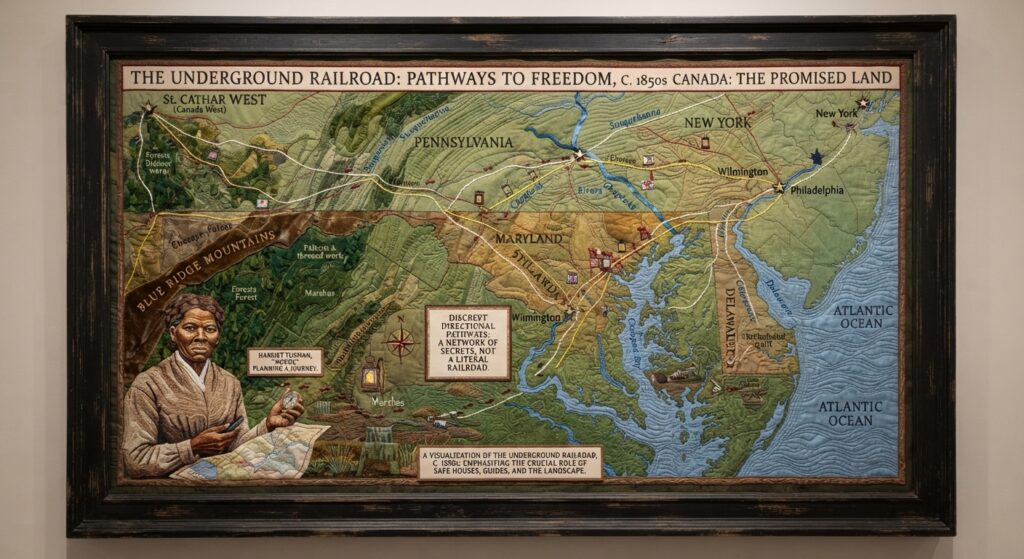
Figure 3. The Underground Railroad Network
4. Repeated Journeys — Perseverance in Doing Right
Tubman’s greatest lesson for this hall may be found in the fact that she went back.
After escaping, she could have chosen a safer life. Instead, she repeatedly entered dangerous slaveholding territory.
The National Park Service records approximately 13 trips into Maryland between 1850 and 1860, during which she helped about 70 family members and friends reach freedom. (National Park Service)
The Library of Congress describes her Underground Railroad work over roughly a decade and notes that she led hundreds of enslaved people toward freedom. (Research Guides)
The exact numbers vary depending on whether historians count people Tubman personally accompanied or people who received her instructions and proceeded independently. For museum accuracy, it is therefore useful to distinguish direct rescues from the broader number influenced by her work.
Righteousness Principle
Perseverance means continuing a worthy responsibility despite difficulty, risk, disappointment, and fear.
Tubman’s perseverance was not simply persistence for personal success.
It was persistence for the freedom and dignity of other people.
Table 4. The Pattern of Perseverance
| No. | Situation | Tubman’s Response | Lesson |
|---|---|---|---|
| 1 | She escaped slavery | Reached freedom | Courage begins action |
| 2 | Family remained enslaved | Returned to Maryland | Responsibility extends beyond self |
| 3 | Danger increased | Planned carefully | Perseverance requires wisdom |
| 4 | More people needed help | Continued her missions | Keep serving |
| 5 | Freedom remained uncertain | Continued working | Do not abandon a worthy purpose |

Figure 4. Thirteen Journeys of Perseverance
5. Civil War Service — Diligence Under New Responsibilities
When the Civil War began, Tubman’s service expanded beyond the Underground Railroad.
She traveled to South Carolina in 1862 and served the Union cause in several roles, including nurse, cook, scout, and spy. Her knowledge of the landscape and her established networks made her valuable to Union operations. (National Archives)
This transition is important.
Tubman did not simply repeat one method throughout her life. She adapted her abilities to new responsibilities.
The same qualities that had helped her navigate Maryland—observation, courage, knowledge of terrain, communication, and determination—could now be applied in a different context.
Righteousness Principle
Diligence includes preparing yourself so that your abilities can be used responsibly when new opportunities to serve arise.
Table 5. Tubman’s Expanding Service
| No. | Role | Responsibility | Diligence & Perseverance |
|---|---|---|---|
| 1 | Nurse | Care for wounded and sick people | Compassionate service |
| 2 | Cook | Support military operations | Faithfulness in ordinary work |
| 3 | Scout | Gather information | Observation and preparation |
| 4 | Spy | Obtain useful intelligence | Courage and discretion |
| 5 | Leader | Help plan military action | Responsibility under pressure |
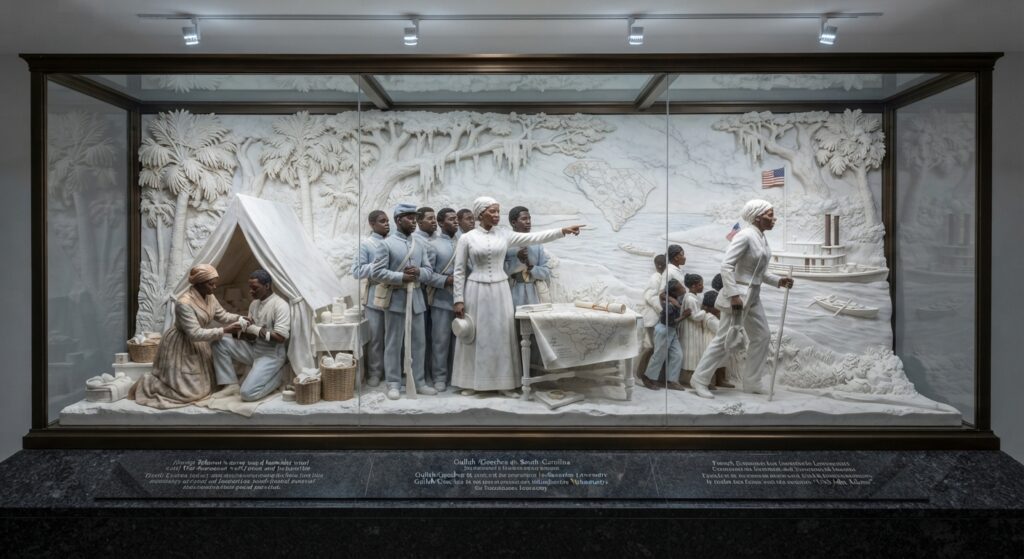
Figure 5. From Underground Railroad Conductor to Civil War Scout
6. Combahee River Raid — Diligence Becoming Action
One of the most significant episodes of Tubman’s Civil War service occurred during the Combahee River Raid on June 2, 1863.
Tubman worked with military leaders and a network of scouts and pilots who gathered information about the area. The operation used this intelligence to navigate the Combahee River and attack Confederate positions and plantations. More than 700 enslaved people were liberated during the operation. (National Archives)
The National Park Service emphasizes that Tubman’s Underground Railroad experience, including her knowledge of terrain and clandestine movement, contributed to her effectiveness in this operation. (National Park Service)
This episode provides an excellent museum example of the relationship between diligence and righteous action:
Knowledge → Preparation → Courage → Action → Service
Righteousness Principle
Diligence prepares the person; perseverance sustains the mission; righteous purpose determines what the effort is for.
Table 6. Combahee River Raid
| No. | Element | Tubman’s Contribution | Character Dimension |
|---|---|---|---|
| 1 | Intelligence | Worked with scouts and information networks | Preparation |
| 2 | Planning | Helped develop the operation | Diligence |
| 3 | Navigation | Used knowledge of waterways | Skill |
| 4 | Leadership | Participated in directing the operation | Courage |
| 5 | Liberation | More than 700 enslaved people were freed | Service and freedom |
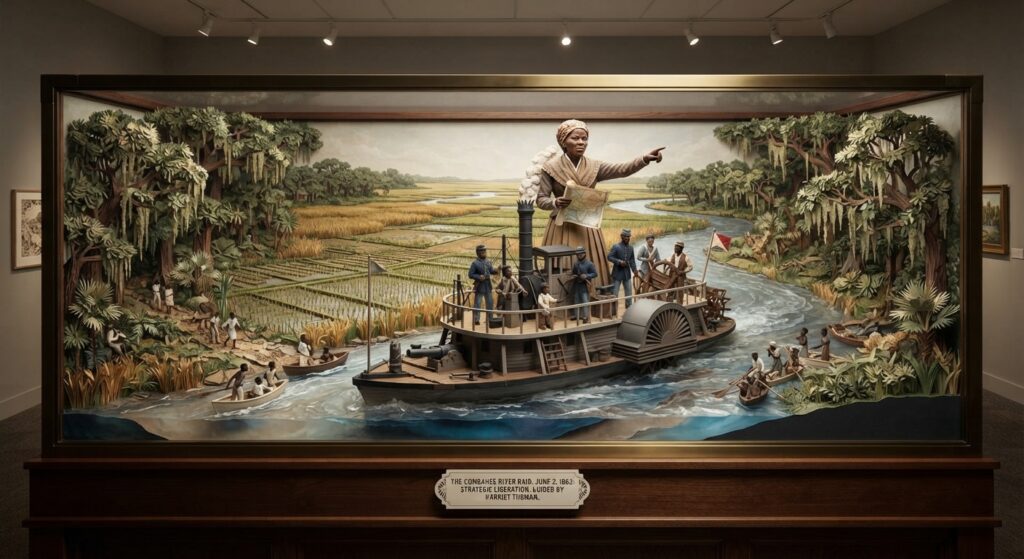
Figure 6. The Combahee River Raid
7. Beyond the War — Perseverance as a Lifelong Commitment
Tubman’s commitment to service did not end with the Civil War.
After the war, she continued advocating for African Americans and women and remained involved in caring for people in need. She eventually established the Harriet Tubman Home for the Aged in Auburn, New York, which opened in 1908. (National Park Service)
Her later life demonstrates another important dimension of perseverance:
Perseverance is not only surviving one great challenge. It is continuing a worthy pattern of service across an entire lifetime.
Tubman’s life therefore moved through several forms of service:
Freedom seeker → freedom guide → nurse → scout → spy → leader → advocate → caregiver
Righteousness Principle
A righteous purpose can continue developing as a person’s responsibilities and circumstances change.
Table 7. A Lifetime of Service
| Life Period | Major Activity | Diligence | Perseverance |
|---|---|---|---|
| Early life | Developed practical knowledge | Learning | Endurance |
| 1849 | Escaped slavery | Preparation | Courage |
| 1850–1860 | Underground Railroad | Planning | Repeated missions |
| Civil War | Nurse, scout, spy | Skill development | Service under danger |
| 1863 | Combahee River Raid | Intelligence and preparation | Courageous action |
| Later life | Suffrage and humanitarian work | Continued advocacy | Lifelong commitment |
| 1908 onward | Home for the Aged | Care for others | Continuing service |
8. Legacy — Diligence Directed Toward Doing Right
Harriet Tubman died on March 10, 1913, in Auburn, New York. Her life had included slavery, escape, repeated rescue missions, Civil War service, advocacy, and humanitarian work. (National Park Service)
Her historical significance is not simply that she was courageous.
Her deeper significance for this hall is that courage was repeatedly converted into action.
She did not merely believe that freedom was valuable.
She acted.
She did not merely escape slavery.
She returned to help others.
She did not merely survive the Civil War.
She continued serving.
She did not merely speak about helping vulnerable people.
She eventually opened her home to people who needed care. (National Park Service)
Righteousness Principle
Knowing what is right is the beginning. Diligently doing what is right—and persevering when it becomes difficult—is character in action.
Table 8. The Harriet Tubman Diligence & Perseverance Framework
| No. | Life Dimension | Diligence | Perseverance | Connection to Doing Right |
|---|---|---|---|---|
| 1 | Learning | Developed practical knowledge | Continued learning through hardship | Responsible preparation |
| 2 | Escape | Carefully pursued freedom | Continued despite danger | Courageous action |
| 3 | Underground Railroad | Planned journeys | Returned repeatedly | Helping others gain freedom |
| 4 | Family | Prepared rescue missions | Continued after personal freedom | Loyalty and service |
| 5 | Civil War | Developed new skills | Served under difficult conditions | Service |
| 6 | Combahee Raid | Gathered information and planned | Continued through danger | Liberation |
| 7 | Suffrage | Advocated for women’s rights | Continued public engagement | Civic responsibility |
| 8 | Humanitarian work | Created a place of care | Continued serving in later life | Compassion |
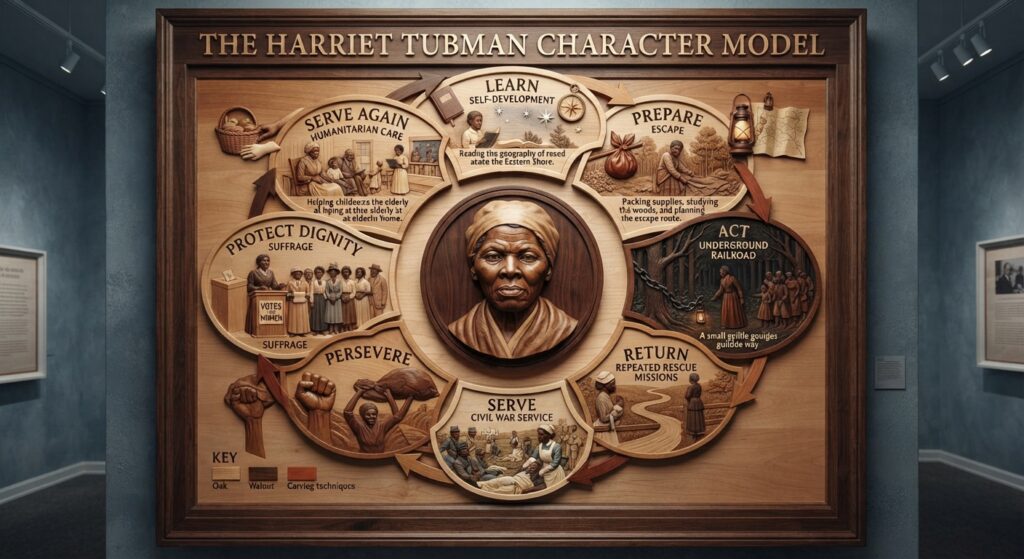
Figure 7. The Harriet Tubman Character Model
Museum Interpretation: What Can We Learn From Harriet Tubman?
Harriet Tubman’s story can be translated into a practical model for everyday character development:
Recognize what is right → prepare → act → continue → serve → grow
A child does not need to lead an Underground Railroad to practice these qualities.
A student can practice diligence by:
- finishing homework before playing;
- practicing a difficult skill;
- preparing for school;
- keeping promises;
- helping with responsibilities without being reminded.
A student can practice perseverance by:
- trying again after making a mistake;
- studying after receiving a poor grade;
- continuing when a task becomes frustrating;
- learning from failure rather than giving up.
A student can practice doing right by:
- telling the truth;
- refusing to cheat;
- helping someone who needs assistance;
- returning something that does not belong to them;
- standing up for someone being treated unfairly.
The scale is different from Tubman’s historical challenges, but the character pattern is similar.
Table 9. From Tubman’s Life to Everyday Character
| Historical Example | Everyday Application |
|---|---|
| Tubman learned from her environment | Pay attention and keep learning |
| She escaped slavery | Take responsible action when an opportunity appears |
| She returned to help others | Do not forget people who need help |
| She planned dangerous journeys | Prepare before acting |
| She continued after repeated danger | Keep going when doing right is difficult |
| She served as a nurse | Help people who need you |
| She served as a scout and spy | Develop useful skills |
| She participated in the Combahee operation | Use skills for a worthy purpose |
| She continued humanitarian work | Make service a lifelong habit |
The Central Lesson
The lesson of Harriet Tubman is not simply “be brave.”
It is deeper:
Know what is right.
Prepare yourself to do it.
Act when action is required.
Keep going when it becomes difficult.
Use your abilities to serve others.
This is the connection between diligence, perseverance, and doing right.
Diligence asks:
“Will I faithfully do what needs to be done?”
Perseverance asks:
“Will I continue when it becomes difficult?”
Righteous action asks:
“Am I using my effort to do what is right and to serve others?”
Together:
Diligence prepares you.
Perseverance sustains you.
Doing right directs you.
Curator’s Summary
Harriet Tubman represents an extraordinary example of diligence and perseverance directed toward doing right. Born into slavery, she developed practical knowledge and resilience, escaped to freedom in 1849, and then repeatedly returned to Maryland to help others escape. During the Civil War, she adapted her abilities to new responsibilities as a nurse, scout, spy, and leader, including her important role in the Combahee River Raid, which helped liberate more than 700 enslaved people. (National Park Service)
Her contribution to this hall is therefore not merely a story of courage. It is a story of repeated responsible action.
Tubman’s life asks visitors to consider a simple but demanding question:
When I know something is right, am I willing to diligently do it—and persevere when doing it becomes difficult?
That is the character lesson her life offers.
References
Library of Congress. (2024). Harriet Tubman: A resource guide. Library of Congress — Harriet Tubman Resource Guide (Research Guides)
Library of Congress. (2025). Harriet Tubman: Topics in Chronicling America. Library of Congress — Harriet Tubman in Chronicling America (Research Guides)
National Archives. (2022). Harriet Tubman (c. March 1822–March 10, 1913). National Archives — Harriet Tubman (National Archives)
National Park Service. (2022). Harriet Tubman. U.S. Department of the Interior. National Park Service — Harriet Tubman (National Park Service)
National Park Service. (2023). Harriet Tubman Underground Railroad National Historical Park: Learn About the Park. U.S. Department of the Interior. Harriet Tubman Underground Railroad National Historical Park (National Park Service)
National Park Service. (2022). HTubman: Harriet Tubman Underground Railroad National Historical Park. U.S. Department of the Interior. National Park Service — Harriet Tubman biography (National Park Service)
National Park Service. (2025). Harriet Tubman and the 54th Massachusetts. U.S. Department of the Interior. (National Park Service)
National Park Service. (2021). Harriet Tubman’s Auburn Home. U.S. Department of the Interior. (National Park Service)
National Park Service. (2025). Combahee River Ferry & Harriet Tubman Bridge. U.S. Department of the Interior. (National Park Service)