

Country: South Africa
Museum Path: Research Wing > Diligence & Perseverance in Pursuing Righteousness Hall
Nelson Rolihlahla Mandela (anti-apartheid leader and statesman, South Africa, 1918–2013) became one of the world’s most recognized figures in the struggle against apartheid and later helped guide South Africa’s transition toward democratic government. His life illustrates a powerful connection between diligence, perseverance, moral purpose, and reconciliation.
Mandela developed his abilities through education and legal work, remained committed through repression and more than 27 years of imprisonment, and after his release pursued negotiations that helped establish a democratic South Africa. His story demonstrates that pursuing what is right may require not only courage, but also long-term preparation, patience, disciplined effort, and perseverance through hardship.
Diligence develops the capacity to act.
Perseverance sustains commitment through hardship.
Righteousness gives that effort a worthy direction.
1. Early Formation — Learning, Law, and Purpose
Mandela was born on July 18, 1918, in Mvezo, South Africa. He pursued education and eventually studied law. In 1952, Mandela and Oliver Tambo opened South Africa’s first Black law firm in Johannesburg, providing legal assistance to people affected by the apartheid system.
His early development demonstrates that diligence does not begin with a dramatic historical achievement. It often begins with learning, preparation, professional development, and accepting responsibility.
Mandela’s legal education gave him tools for understanding law and government. His work as a lawyer brought him into direct contact with people experiencing racial discrimination.
Righteousness Principle
Diligence begins by developing the knowledge and abilities needed to respond responsibly to injustice.
Table 1. Mandela’s Early Development
| No. | Challenge / Opportunity | Mandela’s Response | Diligence & Perseverance Lesson |
|---|---|---|---|
| 1 | Limited opportunities under apartheid | Pursued education | Develop yourself despite limitations |
| 2 | Need for legal knowledge | Studied law | Prepare before accepting responsibility |
| 3 | Racial injustice | Became involved in resistance | Connect knowledge with service |
| 4 | Legal needs of Black South Africans | Established a law practice | Use abilities to help others |
| 5 | Increasing repression | Continued public engagement | Do not abandon a worthy purpose |
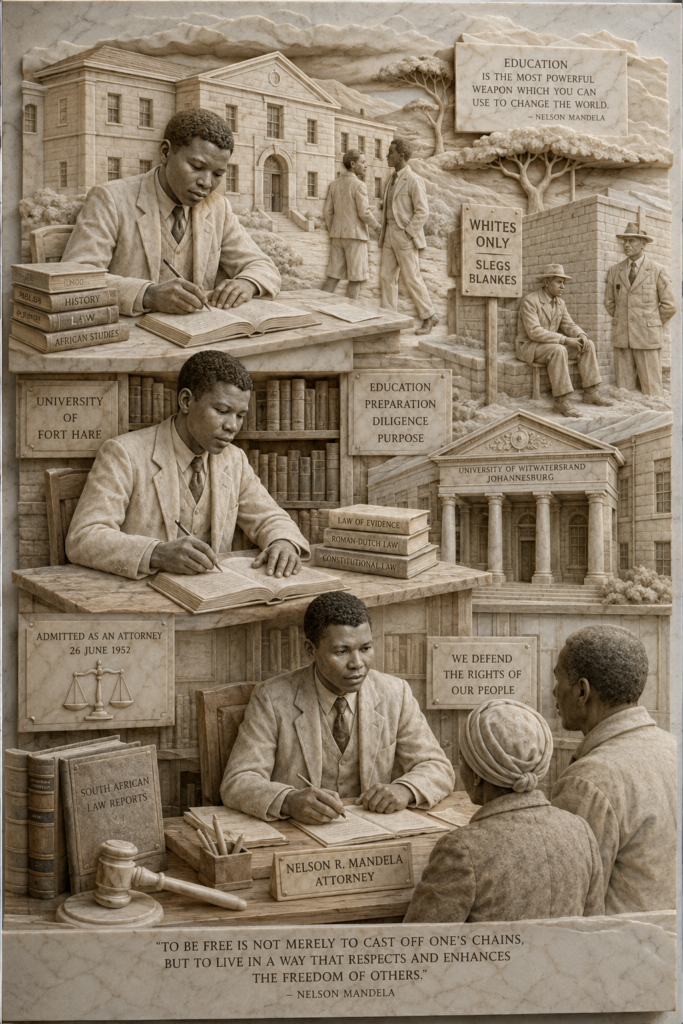
Figure 1. From Education and Law to Public Responsibility
2. Resistance to Apartheid — Diligence in Pursuing Justice
During the 1950s, Mandela became increasingly involved in organized resistance to apartheid. He participated in campaigns against discriminatory policies and helped develop strategies for maintaining political organization under repression.
The South African government repeatedly restricted Mandela’s activities. He was banned, arrested, and eventually prosecuted. The African National Congress was banned in 1960.
These circumstances demonstrate an important distinction between diligence and simple ambition.
Mandela’s persistence was connected to a larger objective: opposing a system based on racial discrimination and seeking political equality.
Righteousness Principle
Diligence becomes morally meaningful when persistent effort is directed toward justice, human dignity, and responsible service.
Table 2. From Conviction to Sustained Action
| Stage | Mandela’s Development | Righteousness Dimension |
|---|---|---|
| Recognition | Experienced and studied apartheid | Awareness |
| Preparation | Developed legal and organizational skills | Intellectual diligence |
| Participation | Joined organized resistance | Responsible action |
| Leadership | Helped lead anti-apartheid efforts | Courage |
| Perseverance | Continued despite repression | Commitment |
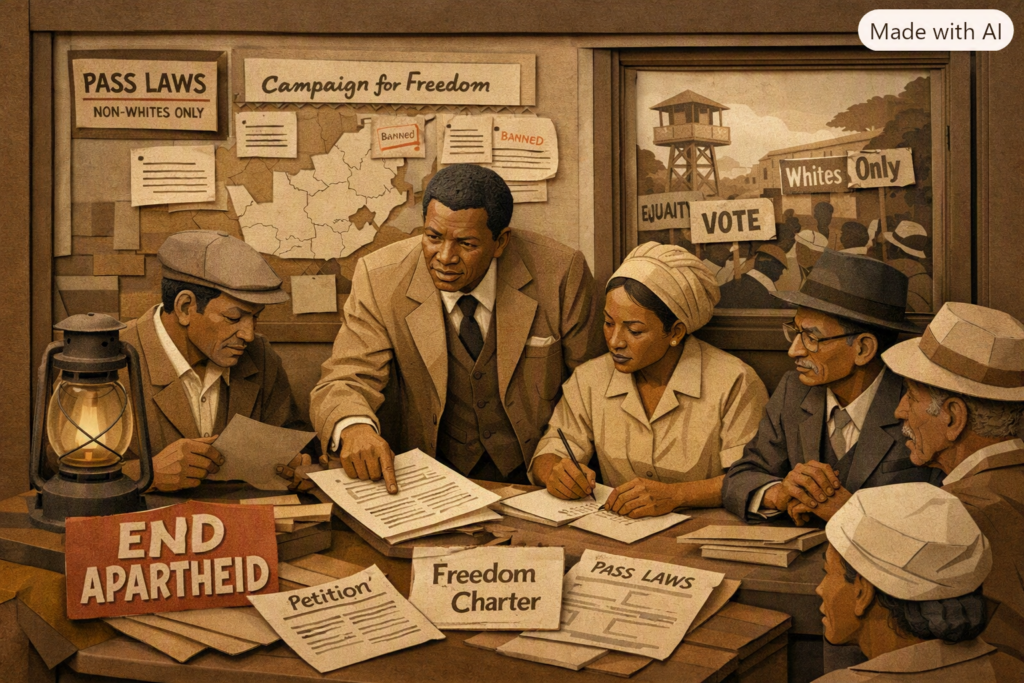
Figure 2. From Conviction to Action
3. Imprisonment — Perseverance Through 27 Years of Hardship
In 1964, Mandela and seven other defendants were sentenced to life imprisonment following the Rivonia Trial. He spent 18 years on Robben Island and was subsequently held at Pollsmoor and Victor Verster prisons before his release in 1990. In total, he spent more than 27 years in prison.
The length of this imprisonment makes Mandela particularly relevant to a hall focused on perseverance.
Perseverance is easy to praise when hardship lasts for a short period. Mandela’s experience presents a much more demanding question:
What happens when a worthy goal requires years—even decades—of patience?
During imprisonment, Mandela continued developing himself. He studied, read widely, learned about Afrikaans and Afrikaner history and culture, developed relationships with fellow prisoners, and continued pressing for better prison conditions.
He also rejected conditional offers of release that would have required him to compromise important political positions.
Righteousness Principle
Perseverance is the disciplined ability to continue pursuing a worthy responsibility when immediate results are impossible.
Table 3. Mandela’s Prison Years
| No. | Hardship | Mandela’s Response | Perseverance Lesson |
|---|---|---|---|
| 1 | Long imprisonment | Continued developing himself | Keep learning |
| 2 | Isolation | Built relationships | Strengthen community |
| 3 | Restricted freedom | Continued political engagement | Purpose can survive restriction |
| 4 | Difficult conditions | Pressed for improvements | Responsible persistence |
| 5 | Conditional release offers | Refused unacceptable conditions | Do not abandon core principles |
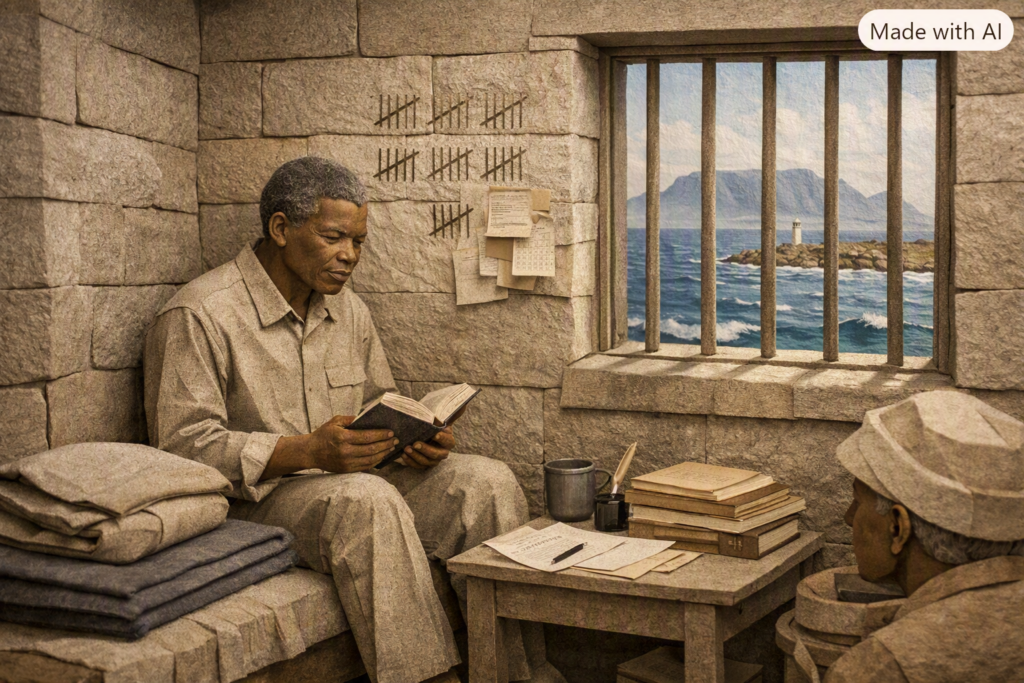
Figure 3. Twenty-Seven Years: Perseverance Through Time
4. Learning in Prison — Diligence Without Immediate Reward
One of the most powerful lessons from Mandela’s imprisonment is that diligence does not always produce an immediate visible reward.
There was no guarantee that studying, reading, learning languages, building relationships, or maintaining political discipline would result in freedom.
Yet Mandela continued developing himself.
This provides an important lesson for museum visitors:
A student may study today without receiving an award tomorrow.
A person may practice a skill for months before becoming good at it.
A responsible person may do the right thing without receiving immediate recognition.
Righteousness Principle
Diligence means faithfully doing the work that prepares us for future responsibility—even when nobody can yet see the result.
Table 4. Invisible Work and Future Responsibility
| Activity | Immediate Reward | Long-Term Value |
|---|---|---|
| Reading | Often none | Knowledge |
| Studying | Often difficult | Ability |
| Learning another language | Slow progress | Communication |
| Building relationships | Gradual | Trust |
| Maintaining discipline | Little recognition | Character |
| Preparing for negotiation | No immediate victory | Future leadership |

Figure 4. The Invisible Work of Perseverance
5. Release — Perseverance Becomes Responsibility
Mandela was released on February 11, 1990, after more than 27 years of imprisonment.
His release was not the end of his work.
Rather, it began another demanding stage.
After his release, Mandela became deeply involved in negotiations to end white-minority rule. In 1991, he became president of the African National Congress, and negotiations eventually produced a transition toward democratic elections.
This demonstrates an important principle:
Perseverance is not simply surviving hardship. It is continuing responsible work when the next responsibility arrives.
Righteousness Principle
Perseverance does not end when one obstacle disappears; it continues by accepting the responsibilities created by new opportunities.

Figure 5. From Prisoner to Negotiator
6. Reconciliation — Pursuing Justice Without Perpetuating Division
One of the most significant dimensions of Mandela’s later leadership was reconciliation.
The Nobel Committee awarded Mandela and F. W. de Klerk the 1993 Nobel Peace Prize for their work toward the peaceful termination of apartheid and the foundations of a new democratic South Africa.
Mandela’s approach does not mean that injustice should simply be forgotten.
Rather, his leadership demonstrated that pursuing justice can involve attempting to construct a society in which former opponents can participate in a shared political future.
This gives the hall an important distinction:
Pursuing righteousness is not merely defeating an opponent; it can also involve seeking a just future in which former opponents can live together with dignity.
Table 5. From Resistance to Reconciliation
| Stage | Historical Development | Righteousness Dimension |
|---|---|---|
| Resistance | Opposed apartheid | Justice |
| Perseverance | Endured prolonged imprisonment | Commitment |
| Negotiation | Worked toward political transition | Responsibility |
| Reconciliation | Sought peaceful coexistence | Restoration |
| Democracy | Participated in democratic transformation | Equality |
| Leadership | Became president | Public service |
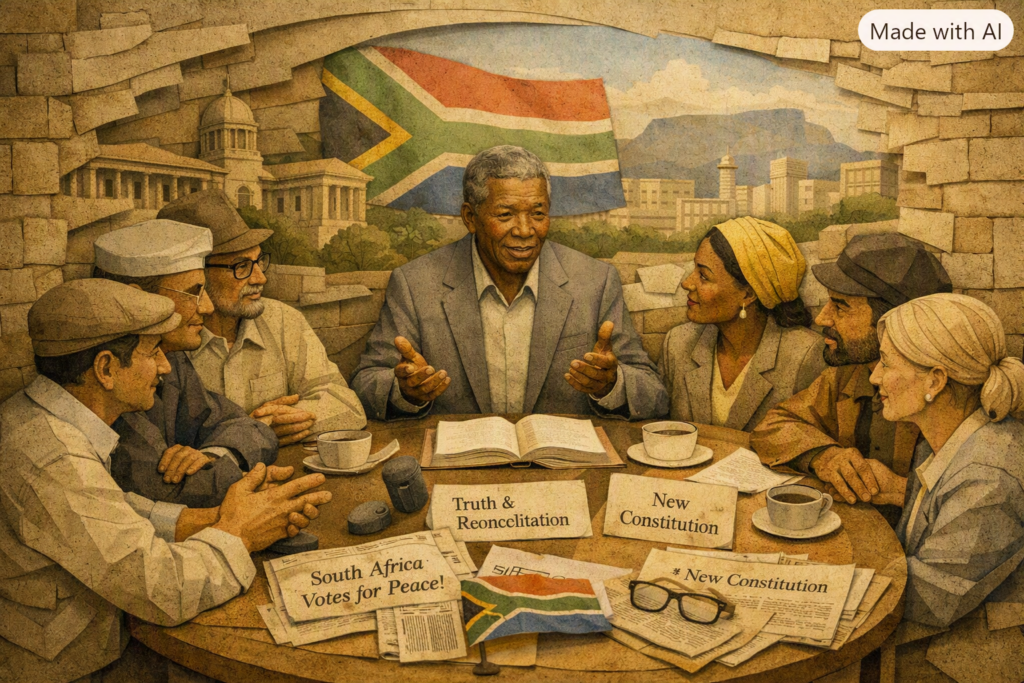
Figure 6. From Resistance to Reconciliation
7. Democratic Leadership — Turning Perseverance Into Public Service
On April 27, 1994, Mandela voted in South Africa’s first democratic elections. On May 10, 1994, he was inaugurated as South Africa’s first democratically elected president.
His presidency represents another stage in the relationship between diligence, perseverance, and righteousness.
The goal was no longer simply to oppose apartheid.
The challenge became building and governing a new democratic society.
Mandela’s later role required negotiation, compromise, institution-building, and reconciliation.
Righteousness Principle
The purpose of perseverance is not merely to overcome an obstacle; it is to become capable of responsibly using the opportunity that follows.
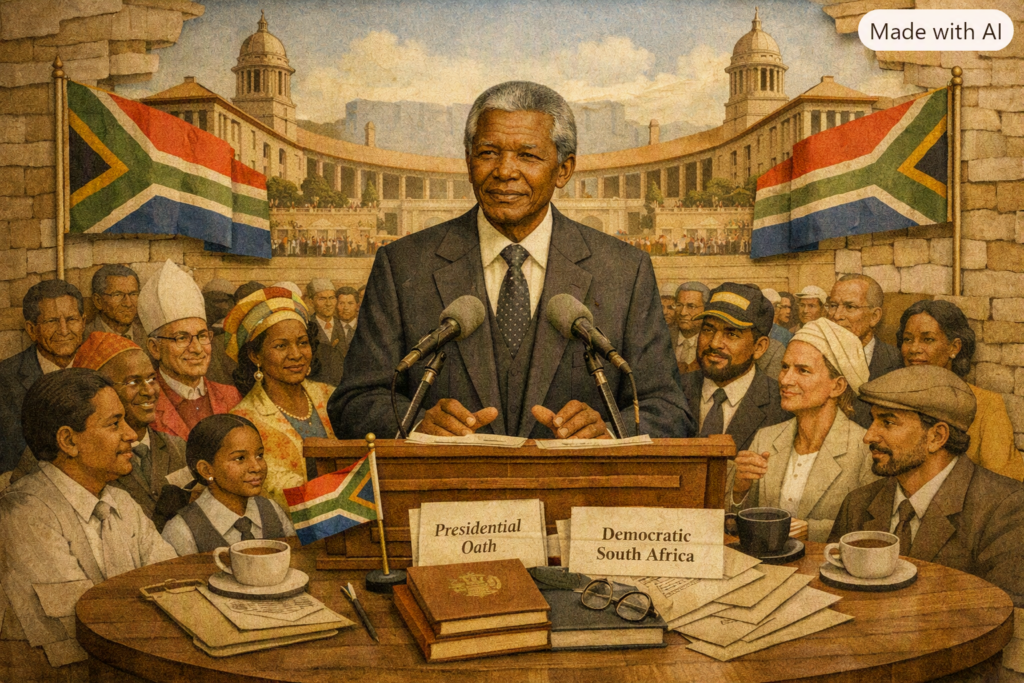
Figure 7. From Freedom Fighter to Democratic Leader
8. Legacy — Character Through Diligence & Perseverance
Mandela died on December 5, 2013, after a life that included education, legal work, political resistance, imprisonment, negotiation, reconciliation, democratic leadership, and public service.
Mandela’s life raises deeper questions:
- What are you willing to work for?
- What do you continue doing when results are delayed?
- What can you learn while facing hardship?
- Can perseverance remain connected to justice?
- Can achieving justice be followed by reconciliation?
- Can freedom become responsibility rather than merely personal benefit?
Righteousness Principle
Diligence develops capability.
Perseverance sustains commitment.
Righteousness directs the purpose.
Reconciliation seeks a just future beyond conflict.
Table 6. Mandela’s Diligence & Perseverance Framework
| No. | Life Dimension | Diligence | Perseverance | Connection to Pursuing Righteousness |
|---|---|---|---|---|
| 1 | Education | Developed knowledge | Continued learning | Responsible self-development |
| 2 | Law | Developed expertise | Continued professional work | Service |
| 3 | Resistance | Organized and prepared | Continued despite repression | Justice |
| 4 | Imprisonment | Studied and developed relationships | Endured more than 27 years | Faithfulness to purpose |
| 5 | Negotiation | Prepared for political transition | Continued despite conflict | Peaceful transformation |
| 6 | Reconciliation | Built relationships across divisions | Continued after victory | Human dignity |
| 7 | Presidency | Accepted national responsibility | Worked through complex challenges | Public service |
| 8 | Legacy | Continued service | Maintained commitment | Responsibility beyond position |
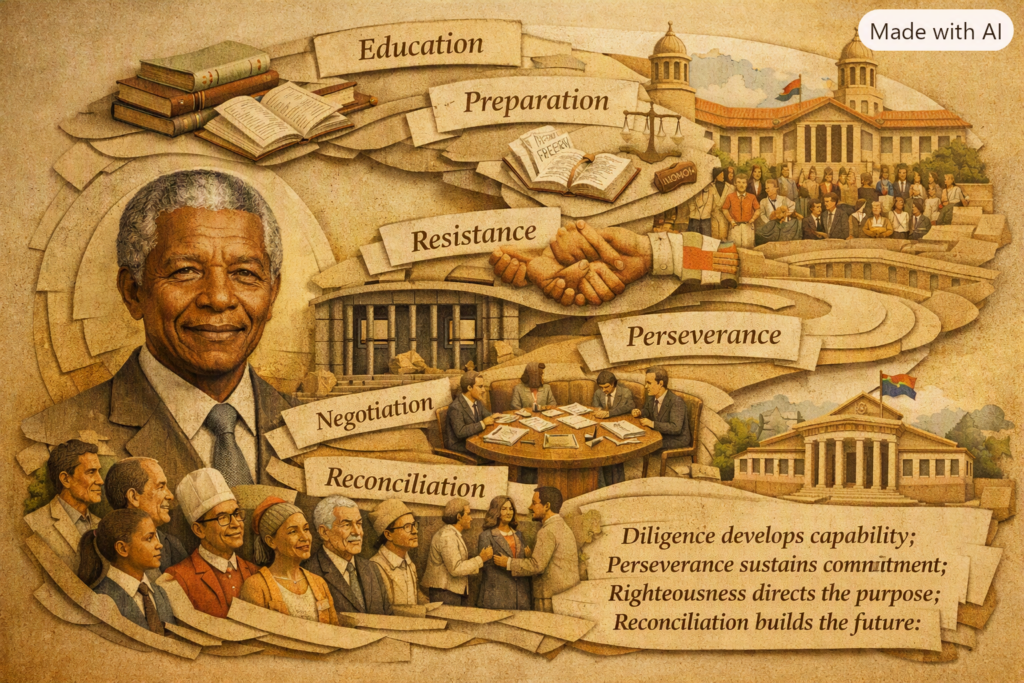
Figure 8. The Mandela Character Model
9. From Mandela’s Life to Everyday Character
Mandela’s story can be translated into practical character development.
A child does not need to experience extraordinary hardship to practice perseverance.
A student can practice diligence by:
- finishing homework before playing;
- studying when a subject is difficult;
- practicing after making mistakes;
- keeping a promise;
- helping someone who needs assistance;
- telling the truth when lying would be easier;
- continuing a worthwhile task when nobody is watching.
These actions appear small compared with Mandela’s historical struggles.
But character is normally developed through repeated decisions.
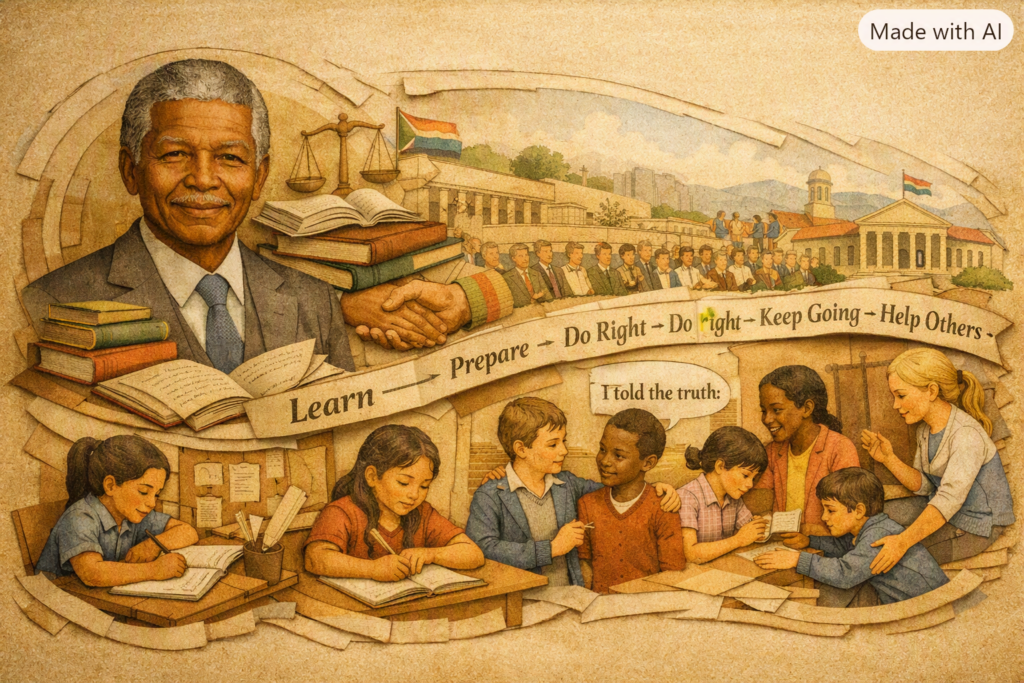
Figure 9. From Mandela’s Example to Everyday Choices
10. The Mandela Lesson
Mandela’s historical significance is not simply that he endured 27 years of imprisonment.
His larger story is a progression:
Education → Preparation → Justice → Perseverance → Negotiation → Reconciliation → Service
His life demonstrates that perseverance is most meaningful when it is connected to a purpose greater than personal comfort.
Diligence prepares us to do what is right.
Perseverance keeps us doing it when the path is difficult.
Reconciliation helps transform conflict into a more just future.
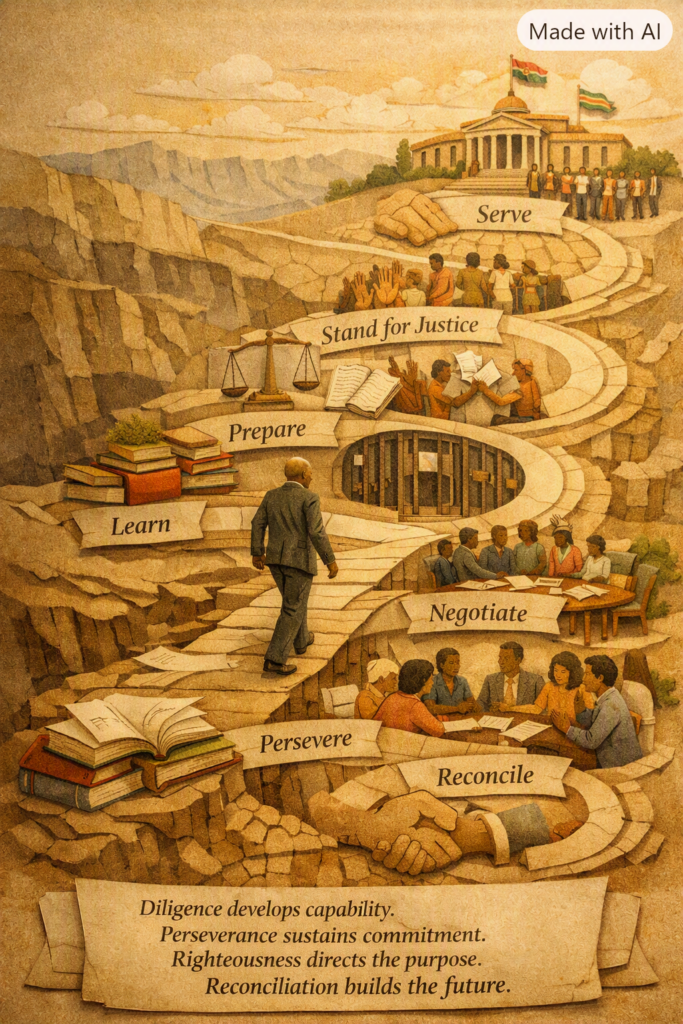
Figure 10. The Path of Diligence & Perseverance in Pursuing Righteousness
Curator’s Summary
Nelson Mandela represents diligence and perseverance not simply because he endured extraordinary hardship, but because hardship did not permanently end his commitment to transforming South Africa.
His life moved through education, legal preparation, resistance, imprisonment, continued learning, negotiation, reconciliation, democratic leadership, and public service.
For the Diligence & Perseverance in Pursuing Righteousness Hall, Mandela provides a particularly valuable case because his story allows visitors to see that:
Diligence is more than working hard.
Perseverance is more than refusing to quit.
Pursuing righteousness means directing sustained effort toward justice, human dignity, and responsible service.
And his later emphasis on reconciliation adds another dimension:
The goal of pursuing justice is not merely to win against another person. It can also be to build a better future for everyone.
Final Museum Message
Learn what is right.
Prepare yourself.
Do what is right.
Keep going when it becomes difficult.
Seek reconciliation.
Use your opportunity to serve others.
References
Mandela, N. (1994). Long walk to freedom: The autobiography of Nelson Mandela. Little, Brown.
Mandela, N. (2018). The prison letters of Nelson Mandela. Liveright Publishing.
Meredith, M. (1998). Nelson Mandela: A biography. St. Martin’s Press.
Sampson, A. (1999). Mandela: The authorized biography. Alfred A. Knopf.
South African Government. (n.d.). Life and times of Mandela.
South African Government. (n.d.). Milestones of 20 years of freedom.
Truth and Reconciliation Commission of South Africa. (1998). Truth and Reconciliation Commission of South Africa report. South African Government.
Nelson Mandela Foundation. (n.d.). Biography of Nelson Mandela.
Nelson Mandela Foundation. (n.d.). Learners’ biography: Nelson Mandela.
Nelson Mandela Foundation. (n.d.). Trials and prisons chronology.
Nelson Mandela Foundation. (n.d.). A prisoner in the garden.
Nobel Prize Outreach. (1993). Nelson Mandela – Biographical. NobelPrize.org.