
Learn to Question Assumptions, Examine Evidence, and Reconsider Your Thinking
Historical learning becomes more meaningful when you do more than accept an explanation. Critical Reflection invites you to examine what you think, why you think it, what assumptions influence your thinking, what evidence supports your conclusions, and whether another interpretation may be possible.
The goal is not simply to criticize an idea or disagree with someone.
The goal is to develop the ability to examine your own thinking carefully and fairly.
Critical Reflection can help develop critical thinking, intellectual humility, evidence-based reasoning, perspective-taking, ethical reasoning, and the ability to revise conclusions when new evidence or perspectives become available.
What Is Critical Reflection?
Critical Reflection is a structured learning method that asks learners to examine their assumptions, beliefs, interpretations, evidence, reasoning, and perspectives rather than accepting them automatically.
Instead of asking only:
“What do I think?”
Critical Reflection asks:
“Why do I think this—and what might cause me to reconsider?”
This distinction is important.
People do not interpret information in a completely neutral way. Previous experiences, beliefs, expectations, emotions, social environments, cultural contexts, and assumptions can influence how we understand an event.
Critical Reflection makes those influences visible.
The method therefore encourages you to move from:
“This is what I believe.”
to:
“This is what I believe, this is why I believe it, this is the evidence supporting it, these assumptions influence my interpretation, and these conditions could cause me to reconsider.”
Why Use Critical Reflection?
Critical Reflection transforms a visitor from a passive receiver of information into an active examiner of ideas.
Instead of simply accepting an interpretation, you are asked to:
- identify your initial understanding;
- distinguish evidence from interpretation;
- identify assumptions;
- examine the reasoning behind a conclusion;
- consider alternative explanations;
- recognize different perspectives;
- identify missing information;
- test the strength of an argument;
- reconsider your conclusion when warranted; and
- explain how and why your thinking changed.
The method therefore connects historical learning, critical thinking, metacognition, evidence evaluation, and reflective judgment.
Critical Reflection does not require you to reject an idea simply because it is unfamiliar.
Instead, it asks you to determine:
“What reasons and evidence justify accepting, modifying, or rejecting this interpretation?”
The Critical Reflection Process
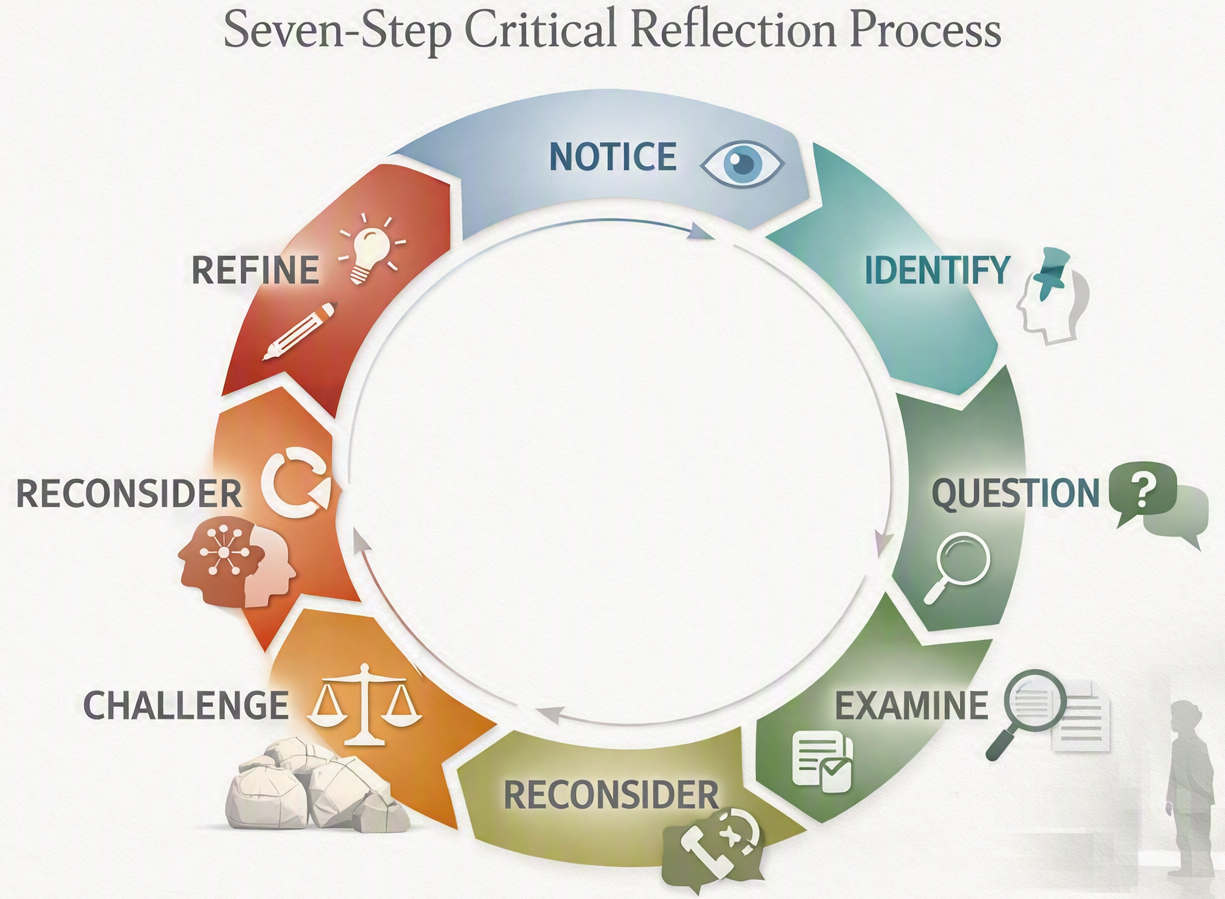
Figure 1. The Seven-Step Critical Reflection Process
NOTICE → IDENTIFY → QUESTION → EXAMINE → CHALLENGE → RECONSIDER → REFINE
Critical Reflection is a recursive process. A new piece of evidence or a stronger interpretation may cause you to return to an earlier step.
Step 1 — NOTICE: Identify Your Initial Understanding
Begin by recognizing what you currently think.
Ask:
- What do I think happened?
- What is my initial interpretation?
- What conclusion am I already leaning toward?
- What reaction did I have when I encountered this information?
- What seems obvious to me?
- What am I taking for granted?
Do not immediately try to prove yourself right.
First, identify your starting point.
Learning Challenge
Complete this statement:
“My initial understanding is…”
Then complete:
“I currently believe this because…”
This creates a starting point for reflection.
You cannot meaningfully examine your thinking until you recognize what your thinking currently is.
Step 2 — IDENTIFY: Separate Evidence, Interpretation, and Assumption
One of the most important skills in Critical Reflection is recognizing that evidence, interpretation, and assumption are not the same thing.
Evidence
What information can be supported by a reliable source or observable record?
Interpretation
What meaning are you assigning to that evidence?
Assumption
What are you accepting without having fully established it?
For example:
Evidence: A person repeatedly performed a particular action.
Interpretation: The repeated action may demonstrate persistence.
Assumption: The person always acted from the same motivation.
The first statement may be directly supported.
The second is an interpretation that should be justified.
The third may require additional evidence.
Critical Reflection teaches you to distinguish among them.
Step 3 — QUESTION: Challenge Your First Interpretation
Once you identify your initial interpretation, question it.
Ask:
“How do I know?”
Then ask:
- What evidence supports this interpretation?
- What evidence might challenge it?
- What assumptions am I making?
- Am I relying on incomplete information?
- Am I confusing correlation with causation?
- Am I judging the past using present-day information?
- Am I assuming that one person’s experience represents everyone?
- Am I ignoring information that does not fit my conclusion?
The purpose is not to create doubt for its own sake.
The purpose is to determine whether your conclusion is well supported.
Step 4 — EXAMINE: Evaluate the Evidence
Now examine the evidence more carefully.
Consider:
Source
Where did the information come from?
Reliability
How trustworthy is the source?
Relevance
Does the evidence actually address the question?
Completeness
What information may be missing?
Context
What circumstances surrounded the evidence?
Consistency
Does other evidence support or contradict it?
Limitations
What can the evidence tell us—and what can it not tell us?
Strong Critical Reflection does not simply collect more information.
It asks whether the information is relevant, reliable, sufficient, and appropriately interpreted.
Step 5 — CHALLENGE: Consider Alternative Perspectives
A conclusion can appear obvious when we examine it from only one perspective.
Now deliberately consider another viewpoint.
Ask:
- How might another person interpret this situation?
- What would someone who disagrees with me say?
- What information might they emphasize?
- What experiences could lead them to a different conclusion?
- What part of their argument might be reasonable?
- What evidence would strengthen or weaken their interpretation?
You do not have to accept every alternative perspective.
The goal is to understand it well enough to evaluate it fairly.
Intellectual Humility
A strong critical thinker can say:
“I disagree, but I understand why someone might reach a different conclusion.”
Even more importantly:
“I may need to reconsider part of my conclusion.”
Step 6 — RECONSIDER: Test Your Conclusion
After examining evidence, assumptions, and perspectives, return to your original conclusion.
Ask:
“Do I still believe what I believed at the beginning?”
There are several possible outcomes.
Keep
The evidence continues to support your original conclusion.
Modify
Your original conclusion remains partly valid, but needs qualification.
Expand
You discover additional factors that make the issue more complex.
Reject
The evidence or reasoning no longer supports your original conclusion.
Suspend Judgment
There is not enough reliable evidence to reach a responsible conclusion.
The last option is important.
Sometimes the most intellectually responsible conclusion is:
“I do not know yet.”
Step 7 — REFINE: Develop a Better Understanding
Critical Reflection should produce more than doubt.
It should produce a better-reasoned understanding.
Complete:
“At first, I thought…”
Then:
“After examining the evidence, I now think…”
Finally:
“My thinking changed because…”
If your thinking did not change, explain:
“My original conclusion remains because…”
This creates a visible connection between evidence, reasoning, reflection, and conclusion.
Table 1. Critical Reflection Evidence and Assumption Analysis Framework
| Statement or Claim | Evidence Supporting It | Evidence That Challenges It | Interpretation | Assumption | Alternative Explanation | Revised Understanding |
|---|---|---|---|---|---|---|
| Claim A | What supports it? | What challenges it? | What meaning am I assigning? | What am I assuming? | What else could explain it? | What do I think now? |
| Claim B | What supports it? | What challenges it? | What meaning am I assigning? | What am I assuming? | What else could explain it? | What do I think now? |
| Claim C | What supports it? | What challenges it? | What meaning am I assigning? | What am I assuming? | What else could explain it? | What do I think now? |
The purpose of this table is not to make historical thinking unnecessarily complicated.
It is to make your reasoning visible.
The Assumption Challenge
Critical Reflection becomes especially powerful when you identify assumptions that you normally do not notice.
Consider the statement:
“This person was courageous.”
Instead of immediately accepting the statement, ask:
What behavior demonstrates courage?
What evidence supports that interpretation?
What alternative explanation might exist?
What risks did the person actually face?
What did the person know at the time?
Would another person interpret the same behavior differently?
Then refine your conclusion:
“I consider this behavior courageous because…”
This transforms a general judgment into an evidence-based interpretation.
The Evidence Challenge
Consider a historical claim.
Before accepting it, ask:
What do I know?
List information supported by evidence.
What do I think?
List your interpretations.
What do I assume?
List ideas that have not been fully established.
What do I need to know?
Identify missing information.
This four-part process can prevent a visitor from confusing confidence with evidence.
The Perspective Challenge
Imagine that three people experience the same historical event.
Person A
What might Person A believe?
Person B
What might Person B believe?
Person C
What might Person C believe?
Then ask:
Can different perspectives contain different pieces of the truth?
The purpose is not to say that every perspective is equally accurate.
The purpose is to recognize that understanding can improve when we examine multiple perspectives and the evidence behind them.
Avoid Confirmation Bias
Critical Reflection requires awareness of confirmation bias—the tendency to favor information that supports what we already believe while paying less attention to information that challenges us.
Ask yourself:
“If I already believed the opposite, would I evaluate this evidence differently?”
Then deliberately search for:
Supporting Evidence
What supports my interpretation?
Contradictory Evidence
What challenges my interpretation?
Missing Evidence
What information do I still need?
This practice helps you avoid selecting only the evidence that makes your existing conclusion feel comfortable.
Avoid Hindsight Bias
Historical reflection also requires awareness of hindsight.
We know how many historical events ended.
People living at the time did not.
Therefore, ask:
“What did people know at that moment?”
before asking:
“Why didn’t they simply make a better decision?”
Critical Reflection requires us to distinguish between:
What was knowable then
and
What became known later.
This helps us evaluate historical decisions more fairly.
From Initial Belief to Refined Understanding
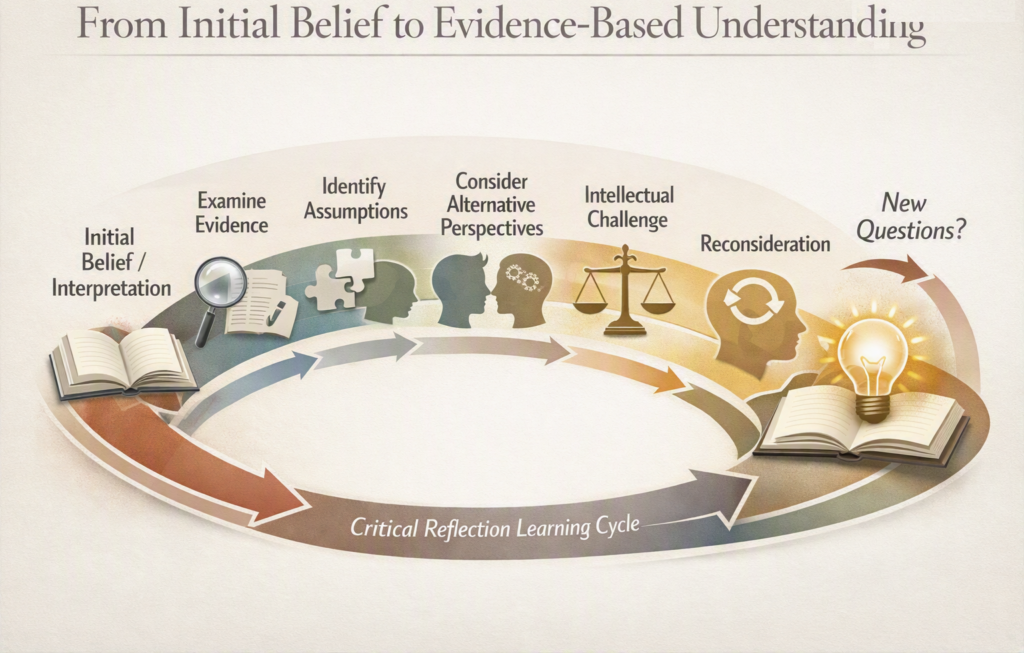
Figure 2. From Initial Belief to Evidence-Based Understanding: The Critical Reflection Learning Cycle
Initial Belief → Evidence → Assumptions → Alternative Perspectives → Challenge → Reconsideration → Refined Understanding → New Questions
Critical Reflection Is Not Simply Criticism
The word critical does not mean finding fault with everything.
Critical Reflection is not:
“Find something wrong.”
It is:
“Examine the reasoning carefully before accepting, rejecting, or revising a conclusion.”
A critical thinker can:
- agree with an argument;
- disagree with an argument;
- partially agree;
- ask for more evidence;
- revise an interpretation; or
- suspend judgment.
The important question is:
“Can I explain why?”
Critical Reflection Is Not Just a Debate
A debate often focuses on defending a position.
Critical Reflection goes one step further.
Instead of asking only:
“How can I prove that I am right?”
ask:
“What evidence could show that I need to change my thinking?”
This creates an important difference between defending a position and learning from examination.
A strong critical thinker should be willing to improve a conclusion when better evidence becomes available.
Can You Change Your Mind?
The Three-Position Challenge
Start with:
My original position
Then examine:
The strongest evidence supporting it
Then examine:
The strongest evidence challenging it
Finally choose:
KEEP
My original conclusion remains well supported.
MODIFY
My conclusion needs adjustment.
EXPAND
I now see additional complexity.
RECONSIDER
I need to rethink my conclusion.
SUSPEND
I need more evidence before reaching a conclusion.
There is no requirement that your answer must change.
The goal is to demonstrate that you examined your reasoning honestly.
Apply Critical Reflection to Museum Exhibits
Critical Reflection becomes most powerful when visitors apply it to real historical cases.
Irena Sendler
In the Diligence & Perseverance in Pursuing Righteousness Hall, visitors can examine how evidence supports interpretations of diligence, perseverance, courage, cooperation, and moral responsibility.
Consider the statement:
“Irena Sendler demonstrated extraordinary perseverance.”
Instead of simply accepting the statement, ask:
- What specific behaviors demonstrate perseverance?
- How frequently or consistently did these behaviors occur?
- What obstacles did she encounter?
- What evidence documents her actions?
- What alternative explanations might exist?
- How does the historical context affect our interpretation?
- What distinguishes perseverance from a single courageous action?
Then develop your own conclusion:
“I consider her actions evidence of perseverance because…”
This encourages visitors to move from admiration to evidence-based understanding.
→ Continue to the Irena Sendler Exhibit
Volkswagen
In the Volkswagen Business Reflection Hall, Critical Reflection can be used to examine organizational responsibility, ethical reasoning, incentives, assumptions, and competing explanations.
Consider:
“Organizational pressure caused unethical behavior.”
Now ask:
- What evidence supports this explanation?
- What other factors may have contributed?
- What assumptions are embedded in the claim?
- Who had decision-making authority?
- What incentives existed?
- What alternative explanations should be considered?
- What evidence would distinguish one explanation from another?
The objective is not to excuse unethical conduct.
It is to understand how evidence, organizational structures, incentives, decisions, and responsibility interact.
→ Continue to the Volkswagen Exhibit
What You Learn Through Critical Reflection
By completing Critical Reflection activities, you practice:
Evidence-Based Reasoning
Distinguishing evidence from interpretation and assumption.
Critical Thinking
Examining claims, reasoning, alternatives, and conclusions.
Intellectual Humility
Recognizing that your first interpretation may be incomplete.
Perspective-Taking
Understanding how different people may interpret the same situation.
Metacognition
Recognizing how your own thinking develops.
Historical Thinking
Interpreting evidence within its historical context.
Ethical Reasoning
Examining values, responsibilities, competing interests, and consequences.
Adaptability
Revising your understanding when stronger evidence becomes available.
Try the Method Yourself
Think about something you strongly believe.
It could involve:
- history;
- school;
- science;
- politics;
- business;
- technology;
- leadership;
- relationships;
- or another subject.
Now complete the sequence.
NOTICE
What do I currently believe?
IDENTIFY
What evidence supports my belief?
QUESTION
What assumptions am I making?
EXAMINE
What evidence challenges my belief?
CHALLENGE
What would someone who disagrees with me say?
RECONSIDER
Has my thinking changed?
REFINE
What is my best-supported conclusion now?
Finally complete:
“I originally thought…”
“After examining the evidence…”
“I now think…”
“My thinking changed / did not change because…”
Critical-Reflection Formula
NOTICE → QUESTION → EXAMINE → CHALLENGE → RECONSIDER → REFINE
Critical Reflection does not require you to doubt everything.
It teaches you to know why you believe what you believe.
It helps you move from:
“I think this is true.”
to:
“I have examined the evidence, identified my assumptions, considered alternative perspectives, and can explain why I currently believe this.”
And when the evidence changes:
“I am willing to reconsider.”
That willingness to learn is an important part of responsible thinking.
Reflection Methods Hall
Critical Reflection is the second of three core reflection methods in the Reflection Methods Hall.
🎯 Decision Simulation
What would I do?
🧠 Critical Reflection
Why do I think this way?
🚀 Life Application
How can I use what I learned?
Together, these methods create a progression:
DECIDE → THINK → APPLY
A museum visit does not have to end when you finish reading an exhibit.
It can continue through your questions, your reasoning, your reflection, and your actions.
→ Explore the Decision Simulation Method
→ Explore the Life Application Method
References
Brookfield, S. D. (2017). Becoming a critically reflective teacher (2nd ed.). Jossey-Bass.
Dewey, J. (1933). How we think: A restatement of the relation of reflective thinking to the educative process. D. C. Heath.
Facione, P. A. (1990). Critical thinking: A statement of expert consensus for purposes of educational assessment and instruction. The Delphi Report. American Philosophical Association.
Kahneman, D. (2011). Thinking, fast and slow. Farrar, Straus and Giroux.
Mezirow, J. (1991). Transformative dimensions of adult learning. Jossey-Bass.
Schön, D. A. (1983). The reflective practitioner: How professionals think in action. Basic Books.