
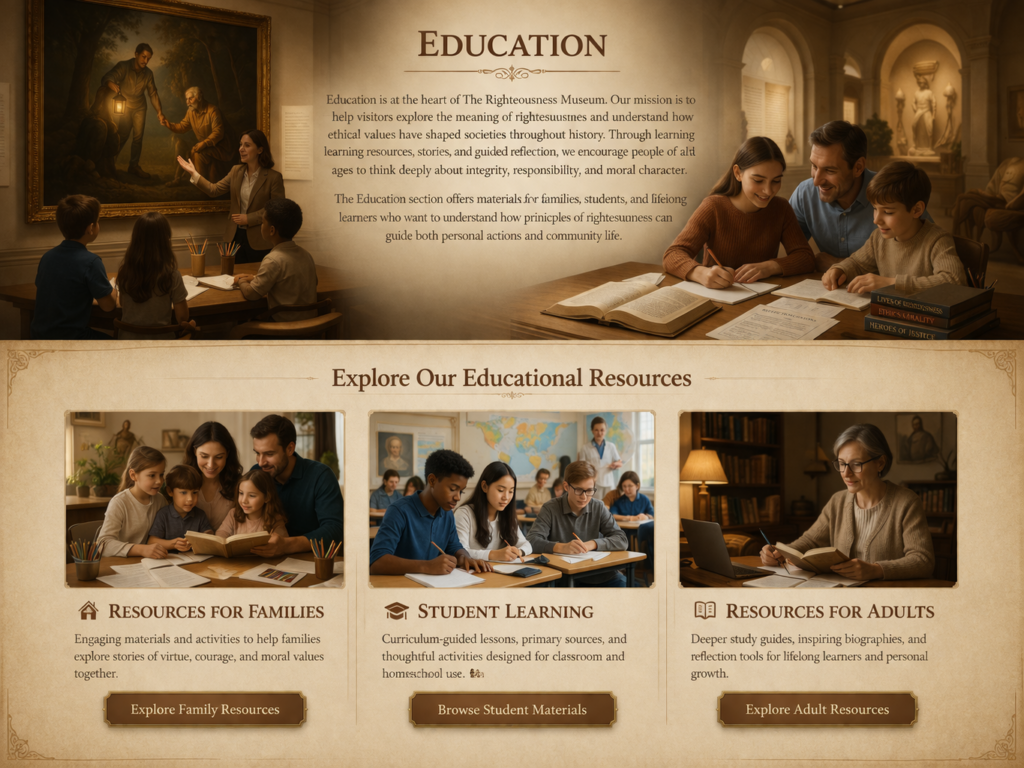
Education is at the heart of The Righteousness Museum. Our mission is to help visitors explore the meaning of righteousness and understand how ethical values have shaped societies throughout history. Through learning resources, stories, and guided reflection, we encourage people of all ages to think deeply about integrity, responsibility, and moral character.
The Education section offers materials for families, students, and lifelong learners who want to understand how principles of righteousness can guide both personal actions and community life.
Learning About Righteousness
Righteousness is the idea of living according to what is morally right. Across cultures and historical traditions, people have emphasized the importance of honesty, integrity, fairness, and responsibility.
Learning about righteousness helps individuals understand how moral choices influence relationships, communities, and societies. By studying ethical teachings and historical examples, visitors can explore how individuals throughout history have sought to act with integrity and uphold what is right.
The museum’s educational resources examine themes such as:
- moral character and integrity
- ethical decision-making
- responsibility toward others
- courage to uphold what is right
These topics encourage thoughtful reflection about how values shape both individual behavior and the broader world.
Museum Test Prep App – Global Righteous Figures Hall (SAT/PSAT/ACT)
Museum Test Prep App – Global Righteous Events Hall (SAT/PSAT/ACT)
Personalized Story App for Righteousness
Education for Kids
Teach a child righteousness, and they will carry it for life. A single lesson can shape a lifetime of good choices.
Children begin learning about right and wrong at an early age. The museum provides educational materials designed to help young learners explore ideas such as honesty, responsibility, and fairness.
Kid-friendly learning activities encourage children to think about situations they may encounter in everyday life and consider how righteous actions can guide their choices. These lessons help build strong moral foundations while encouraging curiosity and discussion.
🎮 Our Three Righteous Learning Games
| Game | Age | What It Teaches |
|---|---|---|
| Righteous Animals Memory Match | Ages 4–7 | Memory + animal hero facts |
| Righteous Choices Game | Ages 5–10 | Kindness, courage & moral decisions |
| Animal Hero Facts | Ages 6–10 | Real stories of heroic animals |
“What children learn about righteousness today, they will remember and live tomorrow.”
Education for Students
The Righteousness Museum introduces a groundbreaking educational method: connecting historical and philosophical examples of moral leadership directly to the critical reasoning, analytical writing, and ethical judgment skills tested on major standardized exams such as the SAT, PSAT, and beyond.
Students studying history, philosophy, or ethics can explore deeper questions about righteousness and moral responsibility. Educational materials in this section examine how ethical ideas have developed across different societies and time periods. But here, Museum Test Prep Mag helps students also learn to apply those insights to exam passages, essay prompts, logical reasoning questions, and ethical case studies — at every level of assessment.
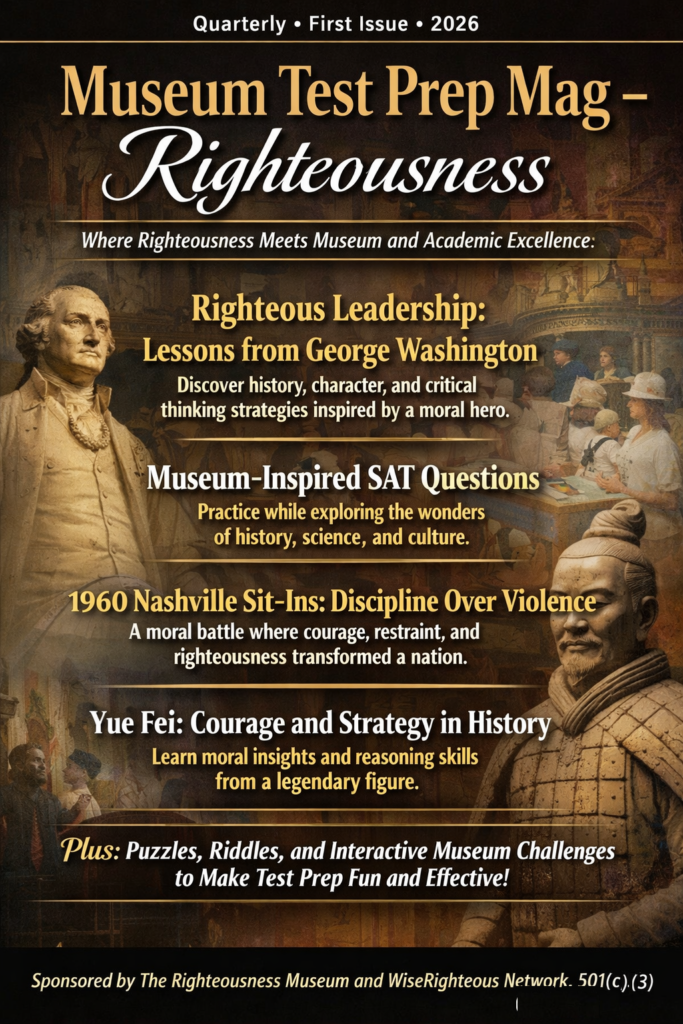
For Museum education resource, our organization has developed a pioneering approach to SAT/PSAT/ACT® test preparation. Our apps turn students’ natural interests into effective, engaging test prep experiences.
1. Personalized Test Prep with Righteousness
Transform interest in righteous figures into SAT/PSAT/ACT® success. Select fields and figures, generate custom questions, and master exams with answer keys and explanations.
2. Righteousness Prompt Builder
Turn righteous figures into ready-to-copy AI prompts. Choose fields and figures, copy, paste into ChatGPT or Gemini, and receive personalized test questions instantly.
Resources for Teachers
Teachers play a vital role in helping students think critically about ethical ideas. The Righteousness Museum provides resources that educators can use to support classroom discussions about moral reasoning, character development, and responsible citizenship.
Teaching materials may include:
- discussion questions about ethical situations
- historical examples of integrity and moral courage
- classroom activities that encourage reflection and dialogue
These resources support subjects such as social studies, philosophy, ethics, and civic education.
Lifelong Learning
Education about righteousness is not limited to classrooms. People continue learning about ethical responsibility throughout their lives. The museum encourages lifelong learning by providing thoughtful materials that inspire visitors to reflect on their values and actions.
By studying the ideas and experiences of people across history, visitors can gain insight into how moral principles guide decisions and shape communities.
The Purpose of Moral Education
Understanding righteousness helps individuals develop strong character and a sense of responsibility toward others. Education in ethics encourages people to consider the consequences of their actions, act with integrity, and contribute positively to society.
Through education, the museum seeks to inspire thoughtful reflection and promote a deeper understanding of the values that support justice, trust, and human dignity.