
Righteous Decisions of the Field Gallery
Business: Paul Polman (UK/Netherlands) (2009)
The leadership of Paul Polman represents a powerful example of righteous innovation in corporate sustainability and ethical business leadership.
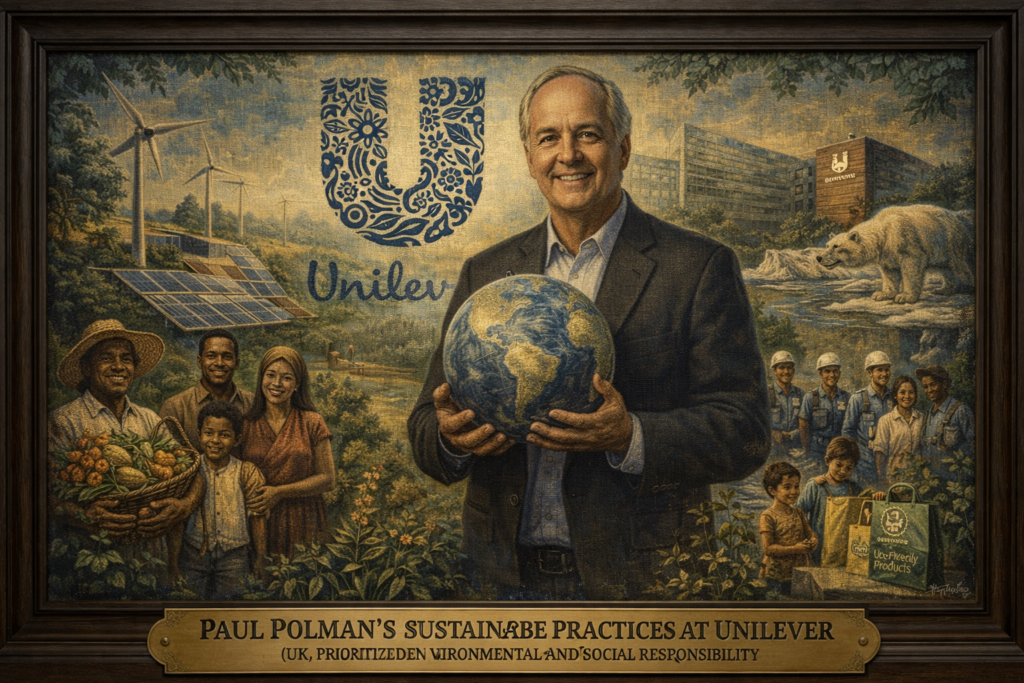
Righteous Act
In 2009, upon becoming CEO of Unilever, Paul Polman reoriented the company’s strategy toward long-term sustainability.
He emphasized reducing environmental impact, improving social outcomes, and integrating ethical responsibility into core business operations.
This included commitments to sustainable sourcing, reducing carbon emissions, and enhancing the livelihoods of workers across global supply chains.
Righteous Innovation
Polman’s leadership represents a righteous innovation in sustainable corporate governance.
He introduced a model in which:
- Businesses prioritize long-term societal value over short-term profit
- Environmental sustainability is integrated into core strategy
- Corporate success is measured by both financial and social impact
He also moved away from short-term earnings guidance, encouraging a broader vision of responsible capitalism.
Why It Was Righteous
His actions demonstrated:
- Commitment to environmental and social responsibility
- Courage to challenge traditional profit-focused models
- Dedication to aligning business with the common good
Impact and Influence
Polman’s approach influenced global discussions on corporate social responsibility and sustainable development.
It encouraged other companies and leaders to adopt more responsible business practices.
His leadership also supported international sustainability initiatives and partnerships.
Reflection
Polman’s work invites reflection on the role of corporations in addressing global challenges.
It raises important questions: Should businesses be responsible for environmental and social outcomes? How can profit and purpose be balanced effectively?
It highlights that righteous leadership in business can reshape markets to serve both people and the planet.
Legacy
Paul Polman is recognized as a leading figure in sustainable business transformation.
His legacy demonstrates that ethical leadership can redefine corporate success and contribute to a more sustainable and equitable world.
References
Polman, P., & Winston, A. (2021). Net positive. Harvard Business Review Press.
Eccles, R. G., & Klimenko, S. (2019). The investor revolution. Harvard Business Review.
Unilever. (2010). Unilever Sustainable Living Plan. Unilever Reports.