
Righteous Decisions of the Field Gallery
Sports: Colin Kaepernick (USA) (2016)
The actions of Colin Kaepernick represent a powerful example of righteous courage in sports and moral conviction in public life.
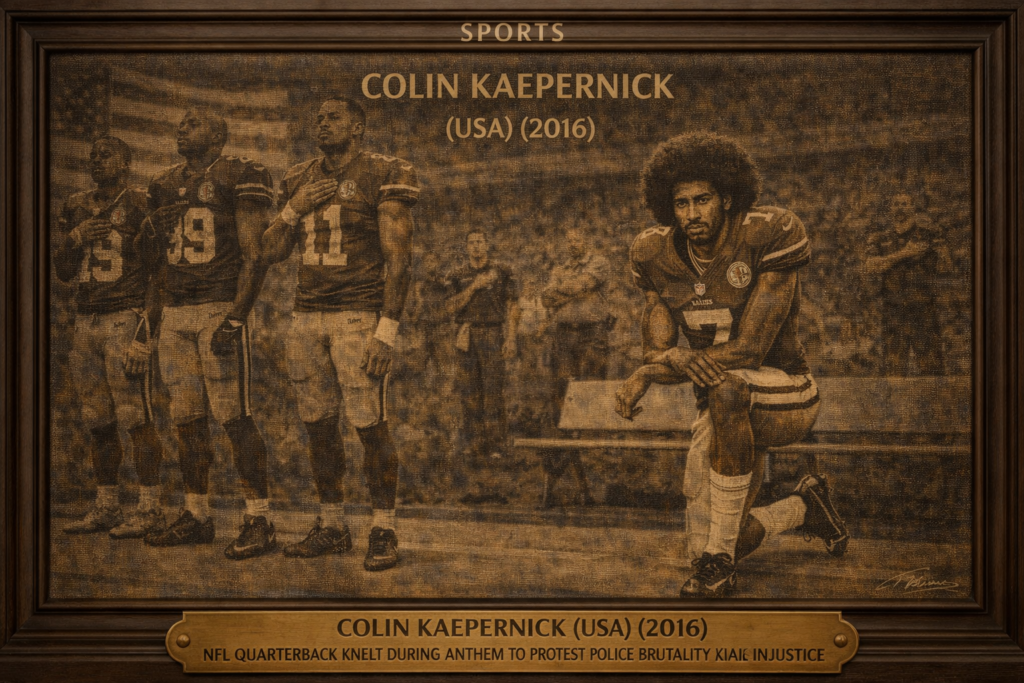
Righteous Act
In 2016, Colin Kaepernick chose to kneel during the U.S. national anthem before games in the National Football League, protesting racial injustice and police brutality.
His action was a peaceful form of protest intended to bring attention to systemic inequality.
As a result, he faced widespread criticism, professional consequences, and effectively lost his position in the league.
Despite these consequences, he maintained his stance, prioritizing principle over career.
Righteous Innovation
Kaepernick’s decision represents a righteous innovation in athlete-led peaceful protest.
It established a model in which:
- Athletes use their platform to advocate for social justice
- Peaceful symbolic actions can generate national and global awareness
- Sports become a stage for civic and moral expression
This expanded the role of athletes as active participants in societal dialogue.
Why It Was Righteous
His actions demonstrated:
- Courage to challenge societal norms
- Commitment to justice and equality
- Willingness to sacrifice career opportunities for principle
Impact and Influence
Kaepernick’s protest sparked nationwide and global conversations about race, justice, and the role of protest in public life.
It inspired other athletes across multiple sports to engage in similar demonstrations and advocacy efforts.
Reflection
Kaepernick’s decision invites reflection on the balance between professional roles and moral responsibility.
It raises important questions: Should public figures use their platforms to address injustice? What risks are associated with standing for one’s beliefs?
It reminds us that righteous action may challenge norms, but can reshape public awareness and dialogue.
Legacy
Colin Kaepernick is remembered as a symbol of modern athlete activism and moral courage.
His legacy continues to influence discussions on justice, protest, and the evolving role of sports in society.
References
Zirin, D. (2018). Things that make white people uncomfortable. Haymarket Books.
Coombs, D. S., & Cassilo, D. (2017). Athletes and activism. Communication & Sport.
Edwards, H. (2016). The revolt of the Black athlete (revisited). University of Illinois Press.