
Abolition of the Slave Trade Act 1807 — United Kingdom (1807)
Overview
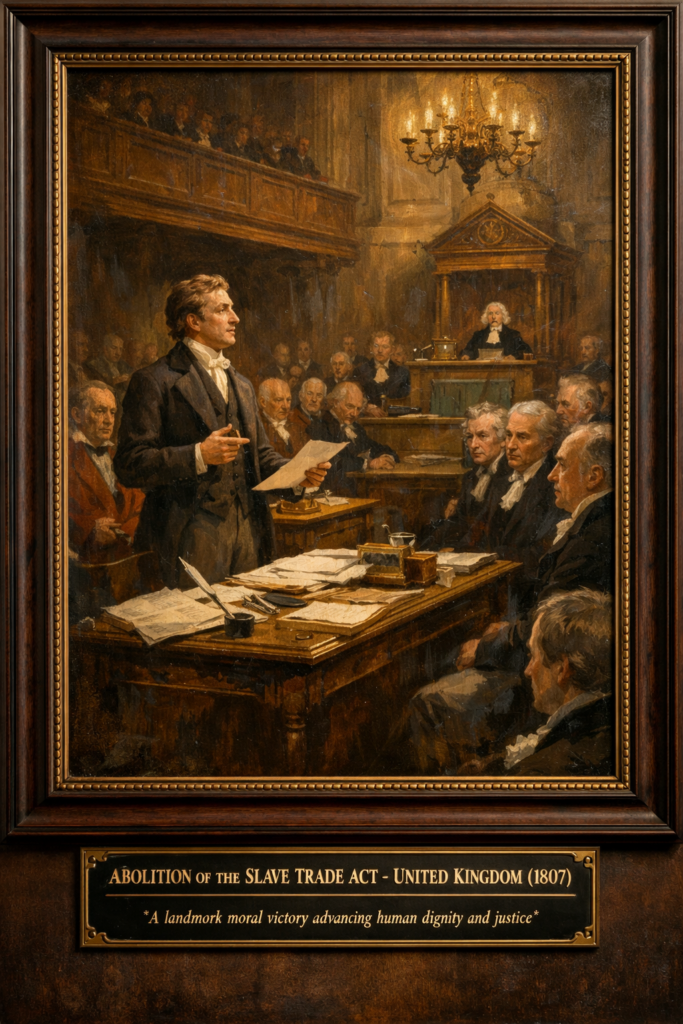
The Abolition of the Slave Trade Act (1807) stands as one of the most significant moral turning points in modern history. Passed by the British Parliament, the Act made it illegal for British ships to participate in the transatlantic slave trade. At a time when slavery was deeply embedded in global economic systems, this decision reflected a bold commitment to human dignity over profit.
Historical Background
During the 17th and 18th centuries, Britain was a dominant force in the transatlantic slave trade, transporting millions of Africans under brutal and inhumane conditions. Enslaved people were treated as property, deprived of freedom, identity, and basic human rights.
Opposition to slavery grew in the late 18th century, led by groups such as the Religious Society of Friends and humanitarian reformers. Public awareness campaigns, firsthand testimonies, and graphic depictions of slave ship conditions awakened the moral conscience of the nation.
Righteous Leadership and Advocacy
The movement to abolish the slave trade was driven by individuals committed to justice and ethical responsibility:
- William Wilberforce: A Member of Parliament who led a decades-long campaign rooted in moral conviction.
- Thomas Clarkson: Collected critical evidence exposing the cruelty of the trade.
- Olaudah Equiano: Shared powerful firsthand narratives that humanized the suffering of enslaved people.
Their work transformed a moral cause into a legislative achievement.
The Act and Its Impact
Passed on March 25, 1807, the Act prohibited British ships from engaging in the slave trade and imposed penalties on violators.
Key impacts:
- Ended Britain’s legal involvement in the slave trade
- Enabled enforcement by the Royal Navy to suppress illegal trafficking
- Influenced international movements toward abolition
- Advanced the recognition of universal human rights
Although slavery itself persisted in British colonies until 1833, the Act marked a decisive step toward systemic change.
Righteousness in Action
This event embodies righteousness through:
- Moral Courage: Opposing a powerful system of exploitation
- Perseverance: Sustaining advocacy despite repeated setbacks
- Empathy: Recognizing the humanity of the oppressed
- Justice: Aligning law with ethical principles
Legacy
The Act helped lay the foundation for the eventual abolition of slavery throughout the British Empire and influenced global human rights movements. It demonstrates how moral conviction, when combined with persistent action, can transform societies and challenge injustice.
References (APA Format)
- British Parliament. (1807). Abolition of the Slave Trade Act 1807. London: UK Government.
- BBC. (n.d.). The abolition of the slave trade. Retrieved from https://www.bbc.co.uk/history
- Encyclopaedia Britannica. (n.d.). Slave trade: Abolition. Retrieved from https://www.britannica.com
- UK National Archives. (n.d.). Abolition of the slave trade. Retrieved from https://www.nationalarchives.gov.uk