
Fall of Apartheid — South Africa (1990–1994)
Overview
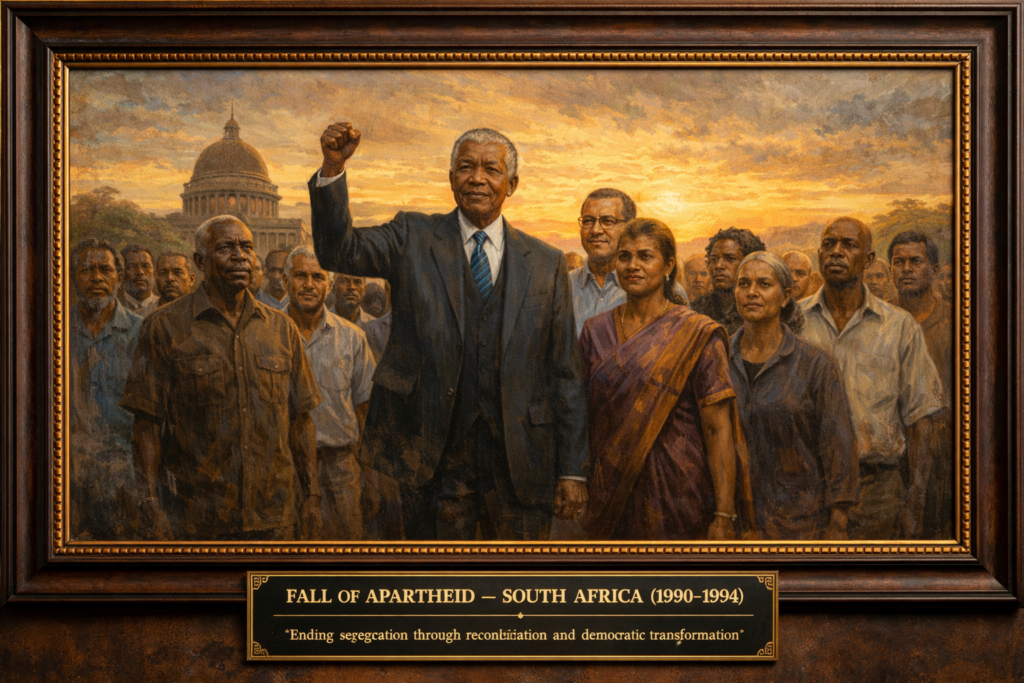
The Fall of Apartheid marks a historic triumph of justice, equality, and human dignity over institutionalized oppression. Between 1990 and 1994, South Africa dismantled its system of racial segregation and transitioned peacefully into a democratic nation—a powerful example of moral leadership and reconciliation.
Historical Background
Apartheid, established in 1948, enforced racial discrimination and denied nonwhite citizens basic rights. Black South Africans faced restrictions on movement, education, employment, and political participation.
Resistance grew through activism, global pressure, and internal unrest. The African National Congress played a key role in organizing opposition and mobilizing the fight for freedom and equality.
Righteous Leadership and Advocacy
- Nelson Mandela: Embodied resilience and led with a vision of peaceful reconciliation after 27 years of imprisonment.
- F. W. de Klerk: Initiated reforms and worked to dismantle apartheid laws.
- Desmond Tutu: Promoted nonviolence and restorative justice, helping guide national healing.
Key Events (1990–1994)
- 1990: Nelson Mandela released; political bans lifted
- 1991: Apartheid laws repealed
- 1993: Interim constitution; Nobel Peace Prize awarded
- 1994: First multiracial democratic elections; Mandela elected President
Challenges
The path to ending apartheid was filled with profound obstacles and risks:
- Deep Social Division: Decades of enforced racial segregation created mistrust, fear, and inequality across communities
- Political Violence: Clashes between rival groups and state forces threatened to derail peaceful negotiations
- Economic Inequality: Vast disparities in wealth and opportunity made true equality difficult to achieve
- Fear of Retaliation: Many feared a cycle of revenge after years of oppression
- Uncertain Transition: Negotiating a new political system required compromise from deeply opposed sides
Despite these challenges, leaders and citizens chose dialogue, forgiveness, and cooperation over conflict.
Righteousness in Action
- Forgiveness over Revenge
- Moral Courage in Negotiation
- Commitment to Equality
- Unity in Diversity
Legacy
The Fall of Apartheid transformed South Africa into a symbol of hope and moral renewal. It showed that even entrenched injustice can be overcome through ethical leadership, perseverance, and a shared commitment to human rights.
References (APA Format)
- Encyclopaedia Britannica. (n.d.). Apartheid. Retrieved from https://www.britannica.com
- Nelson Mandela Foundation. (n.d.). End of apartheid. Retrieved from https://www.nelsonmandela.org
- BBC. (n.d.). The end of apartheid. Retrieved from https://www.bbc.co.uk/history
- South African Government. (n.d.). History of apartheid and democracy. Retrieved from https://www.gov.za