
Righteous Events of the Field Gallery
Science: Human Genome Project (Global) (1990–2003)
The Human Genome Project represents a powerful example of righteous collaboration in global science and shared human knowledge.
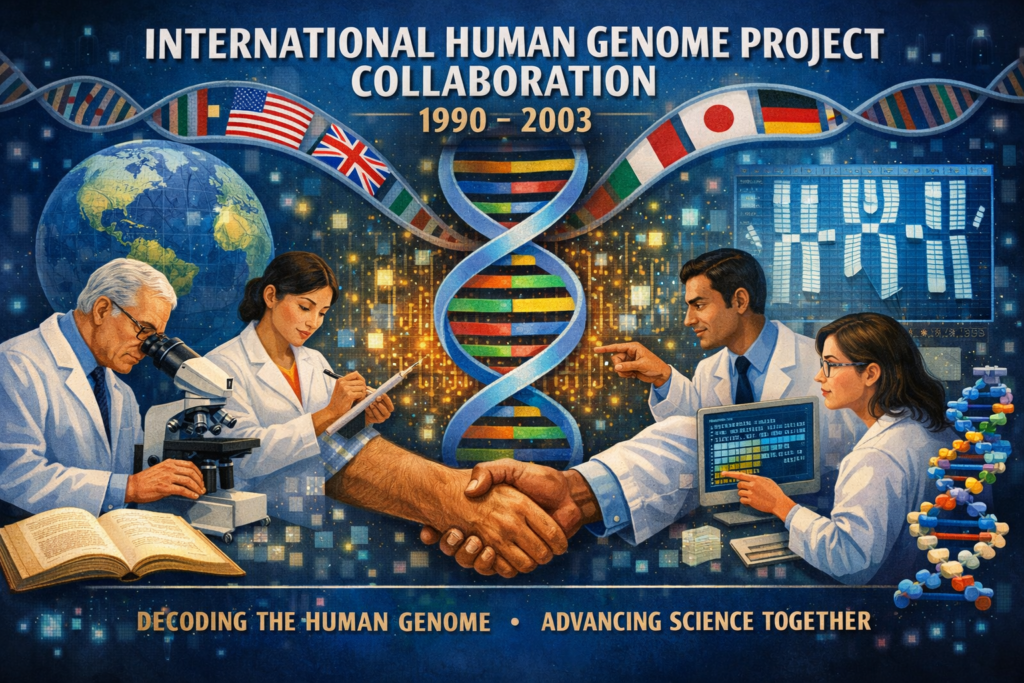
Righteous Act
From 1990 to 2003, scientists from multiple countries worked together to map and sequence the entire human genome.
This unprecedented collaboration involved researchers, institutions, and governments sharing data openly to advance understanding of human genetics.
The project prioritized accuracy, cooperation, and transparency in scientific discovery.
Righteous Innovation
The Human Genome Project represents a righteous innovation in global, open scientific collaboration.
It established a new model in which:
- Scientific genome data is shared freely across nations and institutions
- Collaboration replaces competition in addressing global challenges
- Knowledge is treated as a common good for humanity
This approach accelerated discovery and set ethical standards for large-scale scientific human genome research.
Why It Was Righteous
This effort demonstrated:
- Commitment to collective human advancement
- Transparency and openness in research
- Dedication to using science for the benefit of all people
Participants placed shared progress above individual or national gain.
Impact and Influence
The project transformed biology and medicine by providing a foundational map of human DNA.
It enabled advances in genetic research, disease diagnosis, and personalized medicine.
It also influenced policies on data sharing and collaboration in future scientific initiatives.
Legacy
The Human Genome Project remains a landmark example of how global cooperation and ethical principles can drive scientific progress.
It demonstrated that humanity can work together to expand knowledge for the common good.
References
Collins, F. S., & McKusick, V. A. (2001). Implications of the Human Genome Project for medical science. JAMA.
International Human Genome Sequencing Consortium. (2004). Finishing the euchromatic sequence of the human genome. Nature.
Sulston, J., & Ferry, G. (2002). The common thread: A story of science, politics, ethics and the human genome. Corgi.