
From: The Legend of the Condor Heroes (1957–1959) by Jin Yong (China)
Research Wing — Literary Righteousness Research Hall
The Righteous Museum
Overview
This exhibition presents a scholarly analysis of the character Guo Jing (郭靖) from Jin Yong’s The Legend of the Condor Heroes, examining how his life and choices illustrate a distinct Eastern vision of righteousness: righteousness as public duty, unwavering loyalty, and self-sacrifice for the greater good. Guo Jing represents a vision of righteousness that prioritizes the common good over personal ambition — a powerful counterpoint to Western individualism.
This analysis is created for educational and research purposes, exploring themes of morality, justice, and ethical leadership within the framework of literary study.

Figure 1: Guo Jing on the Xiangyang City Wall: The Righteous Warrior’s Creed
An original artistic interpretation of an anonymous frontline defender standing atop an ancient fortress wall under moonlight. His expression is calm yet resolute, gazing steadily into the distance—the posture of a guardian who has chosen his path and will not waver. In the background, distant campfires flicker like countless stars across a vast landscape, a constant reminder of an overwhelming force that awaits. The scene captures the timeless weight of moral conviction: righteousness is not about winning—it is about standing firm.
Case Study: The Warrior’s Credo in the Shadow of Defeat
In traditional heroic archetypes, the true test of moral clarity does not arrive during times of triumph, but at the absolute threshold of systemic collapse. A frontline defender—a warrior rather than a philosopher—standing atop a beleaguered fortification on a quiet night, encapsulates a profound ethical shift: righteousness is decoupled from pragmatic outcomes.
When facing the imminent fall of a dynasty or a civilization, the core of duty transforms. True moral steadfastness is defined not by the calculation of winning or losing, but by the unyielding commitment to stand firm for what is right, even when victory is impossible. This confession of faith elevates the archetype of the defender from a mere combatant to a timeless symbol of transcendent moral integrity.
Creator’s Note: This illustration is an AI generated original artistic interpretation created solely for this educational exhibition.
Context: Jin Yong and the Wuxia Tradition
Jin Yong (1924–2018), born Zha Liangyong, is widely regarded as the greatest Chinese martial arts novelist of the 20th century. His works have shaped the moral imagination of generations across East Asia and beyond. His wuxia (martial arts) novels are not merely tales of swordplay and adventure—they are profound explorations of ethics, loyalty, and the nature of justice.
The Legend of the Condor Heroes, first serialized in 1957, is one of his most celebrated works. It follows the journey of Guo Jing from a simple, slow-witted boy to a legendary warrior who must choose between personal gain and national duty. The novel is set during the Song dynasty (960–1279 CE), a period of constant conflict between the Han Chinese Song Empire and the Mongol Empire to the north.
Guo Jing is raised in Mongolia but is of Han Chinese descent. His life is a constant negotiation between two worlds, two loyalties, and two visions of what it means to be a good man. His greatest challenge comes when he must decide whether to defend the Song dynasty against the Mongol invasion — a decision that pits his personal relationships against his moral convictions.
The Making of a Righteous Man
A Slow Learner with a Pure Heart
Guo Jing is not a natural genius. He is slow, simple, and often underestimated. His father, Guo Xiaotian, was killed when Guo Jing was still a child, and his mother, Li Ping, raised him in exile among the Mongols. He learned martial arts from the Seven Freaks of Jiangnan, a group of disparate masters who each taught him different skills, but his progress was often slow.
Yet it is precisely his simplicity that makes him righteous. He does not overthink morality. He does not rationalize wrongdoing. He has a clear sense of right and wrong, and once he understands what is right, he pursues it with unwavering determination.
His righteousness is not intellectual — it is instinctive. It comes from a pure heart rather than a sharp mind.
The Influence of Hong Qigong
One of the most important influences on Guo Jing’s moral development is his teacher, Hong Qigong — the leader of the Beggars’ Sect and one of the greatest martial artists of his time. Hong Qigong embodies a form of righteousness that is practical, compassionate, and fearless. He is not a distant moralizer; he is a man who has lived, fought, and suffered. He teaches Guo Jing that true martial arts are not for personal glory but for the protection of the innocent.
Hong Qigong’s famous principle — to have killed “231 great villains” in his lifetime — represents a vision of righteousness that is active and decisive. Righteousness is not passive virtue; it is the willingness to confront evil.
Righteousness as Public Duty
In many Western narratives, righteousness is often framed as individual integrity — speaking truth to power, resisting temptation, following one’s conscience. Guo Jing’s righteousness shares these qualities, but with an added dimension: public duty.
Guo Jing is not a solitary rebel. He is a defender. His righteousness is not about standing apart from society but about standing for it. When he chooses to defend the Song dynasty against the Mongol army led by his childhood friend and brother-in-law, he does not do so out of hatred. He does so because he believes that a righteous person must protect the innocent, even at great personal cost.
This reflects the Chinese ideal of “侠之大者,为国为民” — “the great hero serves the nation and the people.” Righteousness is not merely personal virtue; it is social responsibility.
In this vision, a righteous person is not defined by personal achievements or martial prowess but by the willingness to serve a cause greater than oneself. This is what distinguishes Guo Jing from many other martial arts heroes. He is not seeking fame, power, or revenge. He is seeking to protect the vulnerable.
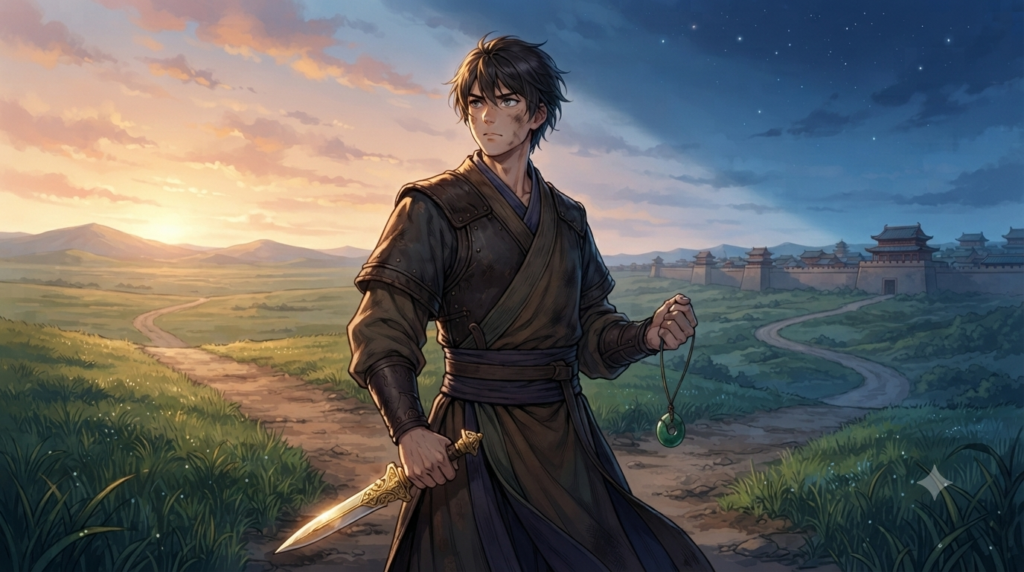
Figure 2:Guo Jing’s Choice: Between Two Worlds
Figure Description: An original artistic interpretation of a pivotal moment from The Legend of the Condor Heroes — the young Guo Jing standing at a crossroads, torn between his Mongol upbringing and his Han Chinese heritage. In one hand he holds the golden dagger given by Genghis Khan (symbol of his Mongol identity); in the other, the jade pendant from his Han Chinese father. Behind him, two paths diverge — one leads toward the vast Mongol steppe, the other toward the Song dynasty’s walled cities. His expression is conflicted but resolved — a boy on the verge of becoming a man who must choose what kind of righteousness he will live by.
Scene Context: This scene represents one of the earliest and most consequential decisions in Guo Jing’s journey. The choice between two worlds is not merely a matter of politics — it is a choice between two visions of what he will become. His Mongol upbringing taught him strength and honor; his Han heritage taught him duty and service. The young Guo Jing realizes that righteousness requires not just strength of arms but strength of identity.
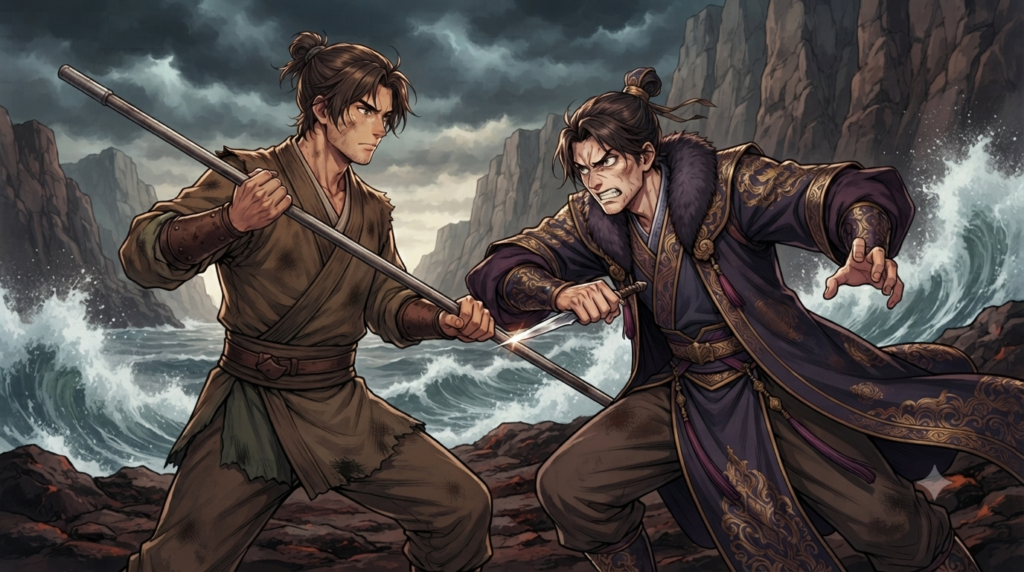
Figure 3:The Island Duel: Righteousness vs Survival
Figure Description: An original artistic interpretation of a pivotal moment from The Legend of the Condor Heroes — the duel on the desolate island. Guo Jing and Yang Kang face each other, both bound by a promise to fight to the death. But while Yang Kang fights with cunning and deception, Guo Jing fights with honor — even when he knows that honor may cost him his life. In this moment, Yang Kang has just secretly snapped a hairpin, intending to use its sharp edge as a hidden weapon. Guo Jing, even in the heat of battle, refuses to strike a killing blow against a defenseless opponent. The scene captures the moment of choice: Yang Kang chooses survival at any cost; Guo Jing chooses righteousness over survival.
Scene Context: This scene occurs in the middle of The Legend of the Condor Heroes when Guo Jing and Yang Kang are trapped on a deserted island by Huang Yaoshi. They are forced to duel — a promise made under duress that only one will leave alive. Yang Kang, ever the pragmatist, secretly snaps a hairpin to use as a hidden weapon. Guo Jing, who could have killed Yang Kang several times over, holds back — not because he is weak, but because he believes that righteousness means fighting fairly. This moment defines their moral difference: Yang Kang will cheat to survive; Guo Jing will die rather than cheat.
The Righteous Dilemma: Loyalty vs. Justice
One of the most compelling aspects of Guo Jing’s character is his loyalty. He is deeply loyal to his mother, his teachers, his friends, and his country. But what happens when these loyalties conflict?
Table 1: Guo Jing’s Loyalties in Conflict
| Loyalty | To Whom/What | The Conflict |
|---|---|---|
| Family | His mother, Li Ping | His mother raised him among the Mongols |
| Friendship | Tolui (Mongol prince), his sworn brother | Tolui is the son of Genghis Khan |
| Heritage | His Han Chinese ancestry | His father was killed by the Jin, and his homeland is Song China |
| Love | Huang Rong, the woman he loves | She shares his commitment to justice |
| Nation | The Song dynasty | The Song is weak, corrupt, and on the verge of collapse |
| Duty | The innocent people of China | They are about to be conquered by the Mongols |
When the Mongol Empire — the nation that raised him — threatens to invade the Song dynasty — the nation of his ancestors — Guo Jing must choose. His loyalty to his adopted family, his sworn brother, and his military comrades pulls him one way. His loyalty to his heritage, his sense of justice, and his belief in protecting the innocent pulls him another.
He chooses justice over personal loyalty. He chooses the many over the few. This is not an easy choice. In the novel, he agonizes over it. He struggles with it. He questions himself. But he makes it. And in making it, he embodies a vision of righteousness that prioritizes the common good over private obligation.
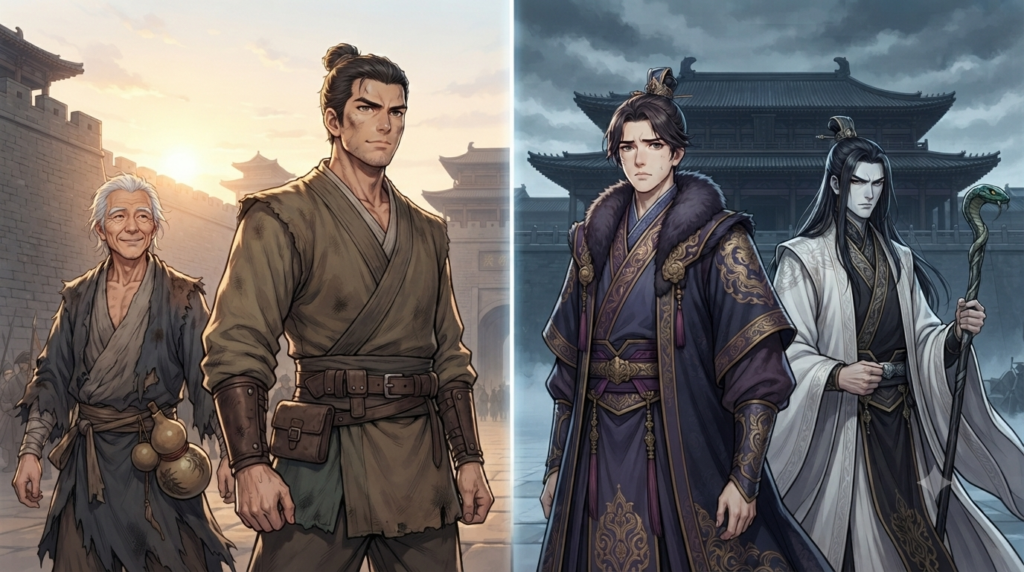
Figure 4:Guo Jing vs Yang Kang: The Path of Righteousness
Figure Description: An original artistic interpretation of one of the most powerful contrasts in The Legend of the Condor Heroes — the confrontation between Guo Jing and Yang Kang. The composition is split in two. On the left side stands Guo Jing in simple, honest warrior attire, his posture firm, his expression steady, standing beside his master Hong Qigong. Behind him, the walls of Xiangyang rise in the distance — symbols of duty and sacrifice. On the right side stands Yang Kang in ornate Jin dynasty robes, his expression shifting and uncertain, standing beside his mentor Ouyang Feng. Behind him, a palace shrouded in shadow — symbols of ambition and deceit. Between them, a clear line divides the frame — not just two men, but two ways of life: righteousness vs selfishness, service vs ambition.
Scene Context: Guo Jing and Yang Kang are the two central characters of The Legend of the Condor Heroes, representing opposing paths. Both are sons of righteous fathers. Both grow up without their birth parents. But while Guo Jing chooses humility, faithfulness, and service to others, Yang Kang chooses power, status, and self-interest. Their contrasting fates — Guo Jing honored and remembered as a hero, Yang Kang dying in disgrace — illustrate the ultimate consequence of righteousness and its absence.
This scene is not a single moment from the novel but a visual summation of their entire contrast — the embodiment of the novel’s moral lesson: a man’s choices define him far more than his circumstances.
The Siege of Xiangyang: Righteousness in Action
The climax of Guo Jing’s story comes at the Siege of Xiangyang (1267–1273 CE). The Mongol army, led by Kublai Khan, has surrounded the city. Guo Jing and his wife, Huang Rong, have chosen to defend the city — not because they believe they can win, but because they believe it is the right thing to do.
This is the essence of Guo Jing’s righteousness: doing what is right even when victory is impossible. He is not fighting for victory. He is fighting for principle. He knows the city will fall. He knows the Song dynasty is doomed. But he still stands.
This echoes the Chinese concept of “知其不可而为之” — “knowing it cannot be done, yet still doing it.” This is not foolishness. This is courage in the face of certain defeat. This is righteousness as witness — refusing to abandon what is right, even when it is futile.
The Nature of Righteousness in Guo Jing’s World
Guo Jing’s righteousness is not a philosophical abstraction. It is expressed through concrete actions:
- Protecting the Vulnerable: He defends the weak, even when it costs him personally.
- Standing for Principle: He does what is right, even when it is unpopular or dangerous.
- Serving the Greater Good: He prioritizes the common good over personal ambition.
- Maintaining Integrity: He remains true to his values, even when it means losing everything.
- Accepting Sacrifice: He is willing to pay the price of righteousness.
This vision of righteousness is not individualistic. It is communal. It is about duty, responsibility, and the willingness to bear burdens for the sake of others.
Table 2: Guo Jing’s Righteous Journey
| Aspect | Description |
|---|---|
| Core Virtue | Righteousness as public duty and self-sacrifice |
| Defining Quote | “俠之大者,為國為民” — “The great hero serves the nation and the people.” |
| Key Challenge | Choosing to defend the Song dynasty against the Mongol Empire, even when it means opposing his childhood friend and sworn brother |
| Moral Complexity | Loyalty vs. justice; personal bonds vs. public responsibility |
| Righteous Outcome | Guo Jing becomes a symbol of moral clarity and sacrificial courage, remembered not as a victor but as a witness to righteousness |
Comparison: Guo Jing and Western Heroes
| Hero | Tradition | Vision of Righteousness |
|---|---|---|
| Guo Jing | East Asian wuxia | Public duty, self-sacrifice, service to the nation |
| Odysseus | Greek epic | Personal endurance, wisdom, return to family |
| Harry Potter | British fantasy | Love, friendship, individual choice against evil |
| King Arthur | British legend | Justice, order, rule of law |
| Raskolnikov | Russian literature | Guilt, redemption, intellectual arrogance |
Each of these heroes represents a different vision of righteousness. Guo Jing’s vision is distinctive in its emphasis on public duty and sacrificial service. He is not trying to save his own soul. He is trying to save his country, even though he knows it cannot be saved.
Lessons on Righteousness
Table 3 — Lessons from Guo Jing
| Lesson | Application |
|---|---|
| Righteousness is not easy | Guo Jing’s choices come at great personal cost. Righteousness is not the path of least resistance. |
| Righteousness requires discernment | He must weigh competing loyalties and decide which is higher. |
| Righteousness is public as well as private | Individual integrity matters, but so does social responsibility. |
| Righteousness is a choice, not a feeling | Guo Jing chooses what is right even when it hurts. |
| Righteousness is not about winning | He defends Xiangyang even though he knows it will fall. Righteousness is about witness, not victory. |
| Righteousness is sacrificial | He sacrifices his personal relationships, his safety, and ultimately his life for what is right. |
The Enduring Legacy of Guo Jing
Guo Jing has become an enduring symbol of righteousness in Chinese culture. He represents the ideal of a person who serves others, who stands firm in his values, and who sacrifices himself for the common good. He is not celebrated for his martial prowess alone — he is celebrated for his moral clarity and unwavering courage.
In a world often defined by cynicism and self-interest, Guo Jing reminds us that righteousness is possible. It is not easy. It is not comfortable. But it is possible.
He is not a perfect hero. He is slow. He is naive. He makes mistakes. But that is precisely what makes him a meaningful example of righteousness. He does not succeed because he is a genius. He succeeds because he is faithful.
His story teaches us that righteousness is not about being the smartest or the strongest. It is about being true. It is about choosing what is right, again and again, even when it costs everything.
Research Recommendations
For those interested in exploring the theme of righteousness in Jin Yong’s works further, the following scholarly resources are suggested:
- Hamm, J. C. (2005). Paper swordsmen: Jin Yong and the modern Chinese martial arts novel. University of Hawaiʻi Press.
- Chen, Y. (2017). “侠义精神与中国传统文化” [The Spirit of Chivalry and Traditional Chinese Culture]. Journal of Chinese Literature, 12(3), 45–62.
- Liao, M. (2021). “Ethics and morality in Jin Yong’s wuxia novels.” Asian Literature Studies, 8(2), 112–129.
- Zhang, W. (2019). “The concept of righteousness in contemporary Chinese martial arts fiction.” Comparative Literature Review, 45(1), 88–105.
- Liu, J. (2015). “Heroism and morality in Jin Yong’s fiction.” East Asian Literature Quarterly, 33(4), 201–218.
Copyright & Fair Use Notice
“The Legend of the Condor Heroes” and the character Guo Jing are the intellectual property of Jin Yong and his estate. This exhibition is an independent, non-commercial educational and research project and is not affiliated with or endorsed by Jin Yong or his estate. Original text, commentary, analysis, and AI-generated concept illustrations have been independently created solely for educational, commentary, and critical discussion purposes. Quotations from the novel are limited to brief excerpts used for the purpose of analysis and are properly attributed. This use is intended to fall within the boundaries of fair use / fair dealing for the purpose of literary criticism and research.
This page is intentionally designed to comply with fair use / fair dealing provisions. It is an academic commentary on a literary work, not a reproduction of that work.