
Righteous Figures of the Field — Healthcare Category
Healthcare: Florence Nightingale (UK) (1854–1856)
The work of Florence Nightingale represents a powerful example of righteous leadership in healthcare and humanitarian service.
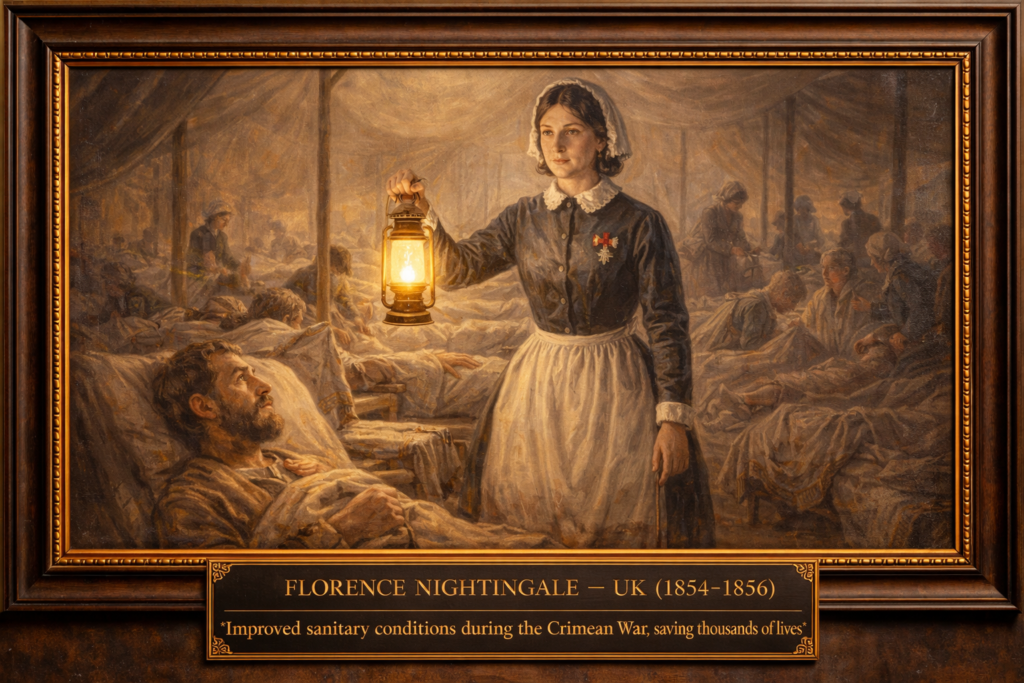
Righteous Act
During the Crimean War, Florence Nightingale worked in military hospitals where she observed severe overcrowding, poor sanitation, and high mortality rates.
She implemented improved hygiene practices, sanitation systems, and patient care standards, significantly reducing death rates among wounded soldiers.
Her work demonstrated the life-saving importance of clean environments, organized care, and compassionate treatment.
Righteous Innovation
Florence Nightingale’s efforts represent a righteous innovation in modern healthcare practices.
She introduced a new model in which:
- Sanitation and hygiene are central to medical care
- Healthcare decisions are guided by data and observation
- Patient care includes both medical treatment and environmental conditions
She also used statistical analysis to demonstrate the impact of sanitation, helping to establish evidence-based healthcare practices.
Why It Was Righteous
Her actions demonstrated:
- Compassion for the suffering
- Commitment to truth through data and observation
- Dedication to improving systems for the well-being of others
She worked tirelessly under harsh conditions to save lives and reform healthcare practices.
Impact and Influence
Nightingale’s reforms led to widespread improvements in hospital design, sanitation standards, and nursing practices.
Her work laid the foundation for modern nursing and influenced healthcare systems around the world.
She also helped establish nursing as a respected profession, opening opportunities for women in medicine.
Legacy
Florence Nightingale is remembered as a pioneer of modern healthcare and a symbol of compassion, discipline, and ethical service.
Her legacy continues to shape medical practices and public health standards today.
References
Nightingale, F. (1860). Notes on nursing: What it is, and what it is not. Harrison.
Cook, E. T. (1913). The life of Florence Nightingale. Macmillan.
Bostridge, M. (2008). Florence Nightingale: The making of an icon. Farrar, Straus and Giroux.