
From: Les Misérables (1862) by Victor Hugo
Literary Figures of Righteousness Hall — Righteous Museum
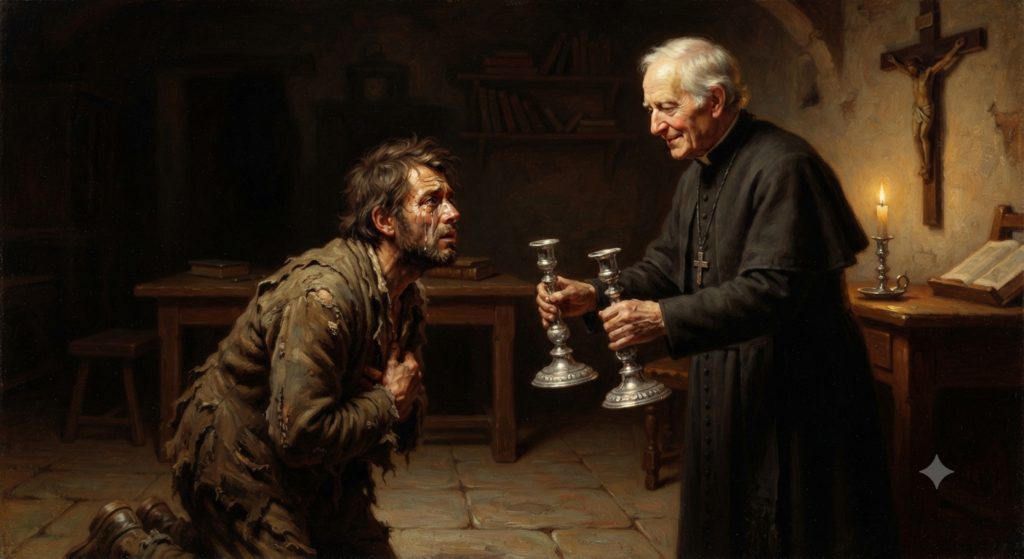
Figure 1 — Jean Valjean: The Moment of Transformation
Figure 1. Jean Valjean kneeling before Bishop Myriel, receiving the silver candlesticks—a visual metaphor for the moment mercy transforms a hardened criminal into a redeemed soul.
Figure Description: A former convict in worn prison clothes kneels before an elderly bishop in a simple room. The bishop holds two silver candlesticks, offering them to the kneeling man. The convict‘s face shows shock and tears—he cannot believe he is being shown mercy. The room is dim, lit by candlelight, with a simple wooden table and cross on the wall. The mood is sacred and transformative—capturing the exact moment Valjean’s heart is broken open by grace.
Introduction
Jean Valjean is the protagonist of Victor Hugo‘s epic novel Les Misérables, first published on March 31, 1862. The novel is considered one of the greatest works of the 19th century, examining the nature of law and grace, justice, religion, and moral philosophy.
Valjean begins his journey as a poor peasant who steals a loaf of bread to feed his sister’s starving children. He is sentenced to five years in the galleys, but multiple escape attempts extend his imprisonment to nineteen years. Upon release, he is hardened, bitter, and filled with hatred toward a society that has condemned him for a single desperate act.
“During the years of suffering he reached the conclusion that life was war in which he was one of the defeated. Hatred was his only weapon, and he resolved to sharpen it in prison and carry it with him when he left.” (Hugo, 1862)
Valjean encounters Bishop Myriel, who shows him unexpected mercy, and this moment transforms him forever. Valjean breaks his parole, changes his identity, becomes a wealthy factory owner and mayor, adopts an orphaned girl named Cosette, and spends the rest of his life trying to do good—all while being relentlessly pursued by Inspector Javert, a lawman who cannot accept that a convict can change.
Jean Valjean stands at the center of Les Misérables and becomes a trial figure for Hugo‘s grand theories about the redemptive power of compassion and love. His journey from hatred to love, from bitterness to mercy, makes him one of literature’s most powerful examples of righteousness through redemption.
The Righteous Dilemma: Law vs. Mercy
Jean Valjean‘s story forces us to confront one of the most profound questions of righteousness: When the law condemns the innocent and the desperate, is it righteous to break the law in the name of mercy?
The novel presents two opposing forces:
- Valjean represents mercy, grace, and redemption—the belief that people can change, that compassion is higher than punishment.
- Javert represents law, judgment, and rigid justice—the belief that the law is absolute and that a convict can never change.
Table 1. The Righteousness Paradox: Law vs. Mercy in Les Misérables
| Jean Valjean (Mercy) | Inspector Javert (Law) |
|---|---|
| Imprisoned for stealing bread to feed starving children | Believes the law is absolute and unchanging |
| Transformed by unexpected mercy | Cannot understand or accept mercy |
| Breaks parole to build a new, honest life | Hunts Valjean for decades to enforce the law |
| Spares Javert‘s life when he has the power to kill him | Cannot live with the contradiction of being shown mercy |
| Dies in peace, surrounded by love | Commits suicide, unable to reconcile law and grace |
Note. This table contrasts Valjean‘s journey of mercy and redemption with Javert’s rigid adherence to law. The central righteous question is: Is justice found in strict enforcement of rules, or in compassion for the suffering?
The critical difference between the two characters is that Valjean is willing to live out a life of mercy—he is willing to both give and receive it. Javert, by contrast, bases his entire sense of identity and purpose on his own righteousness, and he literally cannot face a world where that righteousness is challenged. When Valjean spares Javert‘s life, Javert finds he cannot live in the contradiction between the judgment he has bestowed upon Valjean and the mercy that Valjean has shown him. He chooses death.
“The guilty one is not the person who has committed the sin, but the person who has created the shadow.” (Hugo, 1862)
Key Scenes of Moral Choice
Scene 1: The Bishop‘s Candlesticks — Mercy That Transforms
After nineteen years in prison, Valjean is released but rejected by everyone. He is homeless and starving. Bishop Myriel welcomes him into his home, feeds him, and gives him a bed. That night, Valjean steals the bishop’s silver plates and flees. When the police catch him and bring him back, the bishop does something extraordinary: he tells the police that he gave the silver to Valjean, and he scolds Valjean for forgetting the two silver candlesticks as well.
“Jean Valjean, my brother, you no longer belong to evil. With this silver, I have bought your soul. I‘ve ransomed you from fear and hatred, and now I give you back to God.” (Hugo, 1862)
The bishop makes Valjean promise to use the silver to become an honest man. Valjean is in tears. This single act of mercy shatters his hardened heart and sets him on a new path.
The Question: Can one act of mercy undo nineteen years of suffering and hatred? What does it take for a person to truly change?
The Righteous Lesson: Mercy has the power to transform. The bishop‘s gift was not just silver—it was trust, dignity, and a second chance. Valjean’s transformation begins when someone treats him as a human being, not a criminal.
Scene 2: Petit Gervais — Choosing to Become Honest
After his encounter with the bishop, Valjean is still struggling with his old habits. He encounters a young boy named Petit Gervais who drops a coin. Valjean instinctively places his foot on the coin and refuses to return it, even threatening to beat the boy. But then he remembers the bishop‘s words. He is overcome with shame, searches desperately for the boy, and when he cannot find him, he weeps.
“Valjean… after the theft of the coin from Petit Gervais, he is overcome with remorse and decides to keep the promise he made to the bishop.”
The Question: What does it mean to truly change? Is a single moment of weakness proof that a person hasn’t changed at all?
The Righteous Lesson: Change is a process, not a single event. Valjean‘s instinct to steal returns, but his conscience now stops him. He is becoming a new person—not perfectly, but genuinely.
Scene 3: The Champmathieu Dilemma — Sacrificing Everything for Justice
Valjean has become Monsieur Madeleine, a wealthy factory owner and mayor of Montreuil-sur-mer. He is respected, successful, and beloved. Then he learns that a man named Champmathieu has been arrested and is about to be tried—as Jean Valjean. An innocent man will go to prison for life because of Valjean’s false identity.
Valjean faces an impossible choice:
- Remain silent: Keep his wealth, his position, his good name—and let an innocent man rot in prison.
- Confess: Lose everything—his freedom, his work, his ability to care for others—but save an innocent man.
Valjean confesses. He travels to the trial and reveals his true identity, sacrificing everything for the sake of justice.
“He asked himself… whether it was not outrageous for society to treat thus precisely those of its members who were the least well endowed in the division of goods made by chance, and consequently the most deserving of consideration.” (Hugo, 1862)
The Question: Is it righteous to sacrifice your own life for a stranger? What is the value of one innocent life?
The Righteous Lesson: True righteousness requires sacrifice. Valjean could have stayed silent and no one would have known. But he chose justice over comfort, truth over safety.
Scene 4: Rescuing Fantine and Adopting Cosette — Loving the Vulnerable
Valjean encounters Fantine, a dying woman who has been forced into prostitution to support her daughter, Cosette. Fantine has been cruelly treated by society and by Valjean‘s own factory foreman. Valjean, now revealed as a former convict, promises Fantine that he will rescue Cosette and raise her as his own.
Valjean rescues eight-year-old Cosette from the abusive Thénardiers and raises her with love and devotion. He gives her the childhood she never had, educating her and protecting her.
The Question: What responsibility do we have to those who are vulnerable and suffering? Is adopting a child an act of righteousness?
The Righteous Lesson: Righteousness is not just about avoiding evil—it is about actively doing good. Valjean could have sent money and forgotten about Cosette. Instead, he gave her his life, his love, and his protection.
Scene 5: Sparing Javert — Mercy for the Enemy
During the June Rebellion of 1832, Javert is captured by the revolutionaries. Valjean volunteers to execute him—but instead, he cuts Javert‘s ropes and sets him free.
“Jean Valjean cut the martingale which Javert had about his neck, then he cut the ropes … and, rising, he said to him: ‘You are free.’” (Hugo, 1862)
Javert cannot comprehend this. His entire worldview is built on the idea that justice is punishment, that law is absolute, that a convict can never change. Valjean has just proven that mercy is higher than law—and Javert cannot live with this contradiction. He kills himself by jumping into the Seine River.
The Question: Can mercy ever be wrong? Is showing compassion to an enemy a weakness or a strength?
The Righteous Lesson: Mercy is the highest form of righteousness. Valjean had every reason to kill Javert—the man who had hunted him for decades. But he chose mercy, and that choice revealed the true depth of his transformation.
Scene 6: Rescuing Marius — Sacrifice for Love
Valjean goes to the barricades to save Marius, the young man his adopted daughter Cosette loves. He carries the wounded and unconscious Marius through the dangerous sewers of Paris, nearly dying in the process. He refuses to let Marius know that he saved him, because revealing the truth might separate him from Cosette.
The Question: What is the value of anonymous sacrifice? Is a good deed still righteous if no one knows you did it?
The Righteous Lesson: True righteousness seeks no reward. Valjean saved Marius not for gratitude or recognition, but simply because it was the right thing to do.
Memorable Quotes
Table 2. Key Quotes from Les Misérables on Mercy, Justice, and Redemption
| Quote | Speaker | Significance |
|---|---|---|
| “Jean Valjean, my brother, you no longer belong to evil. With this silver, I have bought your soul. I’ve ransomed you from fear and hatred, and now I give you back to God.” | Bishop Myriel | The moment of mercy that transforms Valjean‘s life |
| “To remain in paradise and become a demon! To re-enter hell and become an angel!” | Narrator | Valjean‘s internal struggle—choosing between safety and righteousness |
| “He asked himself… whether it was not outrageous for society to treat thus precisely those of its members who were the least well endowed…” | Narrator | Valjean’s questioning of social injustice |
| “The guilty one is not the person who has committed the sin, but the person who has created the shadow.” | Narrator | Hugo‘s argument that society bears responsibility for creating criminals |
| “He sleeps. Although his fate was very strange, he lived. He died when he had no longer his angel.” | Narrator | Valjean’s peaceful death—surrounded by love |
| “Let us never fear robbers nor murderers. Those are dangers from without, petty dangers. Let us fear ourselves.” | Narrator | The greatest dangers come from within—prejudice and vice |
Note. These passages capture the novel‘s central message: mercy is higher than judgment, love is stronger than hatred, and redemption is possible for everyone.
Lessons on Righteousness from Jean Valjean
Table 3. Lessons on Righteousness from Les Misérables
| Lesson | Application |
|---|---|
| Mercy is higher than law | Valjean‘s transformation begins when he receives mercy, and his greatest act of righteousness is showing mercy to Javert. Justice without mercy is not justice—it is cruelty. |
| People can change | Valjean was a hardened criminal who became a compassionate savior. No one is defined by their past mistakes. Redemption is always possible. |
| Righteousness requires sacrifice | Valjean sacrificed his wealth, his position, and his freedom to do what was right. True righteousness is not comfortable. |
| Society creates criminals | Valjean was not born evil—he was made desperate by poverty and injustice. A righteous society addresses the root causes of crime, not just the symptoms. |
| Love is the highest righteousness | Valjean‘s love for Cosette transforms him from a bitter ex-convict into a devoted father. The capacity to love is the measure of a righteous life. |
| Anonymous goodness is still goodness | Valjean saves Marius and asks for nothing in return. Righteousness seeks no reward. |
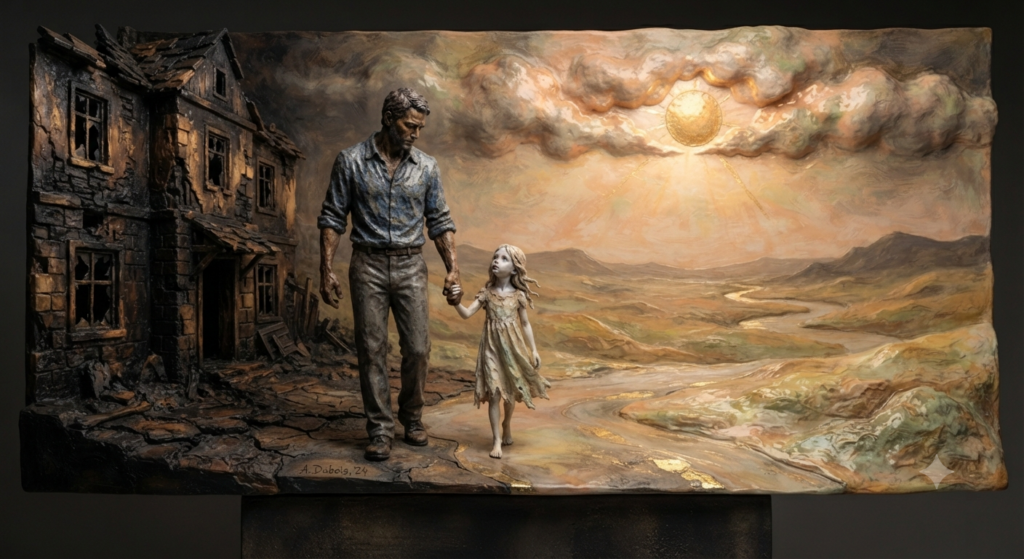
Figure 2 — Jean Valjean and Cosette: Love That Redeems
Figure 2. Jean Valjean holding young Cosette‘s hand as they walk away from the Thénardiers‘ inn—a visual metaphor for the love that redeems and the promise of a new beginning.
Figure Description: A tall, strong man in simple 19th-century clothing walks hand-in-hand with a small, thin girl in a ragged dress. They are leaving a dark, dilapidated inn behind them, walking toward a brighter landscape ahead. The man looks down at the girl with protective tenderness. The girl looks up at him with trust and hope. The mood is hopeful and tender—capturing the moment Valjean rescues Cosette from a life of misery and gives her a future.
Further Resources
- Read the full text: Hugo, V. (1862). Les Misérables. Brussels: A. Lacroix, Verboeckhoven & Cie. The novel is in the public domain in the United States and available for free through Project Gutenberg and Standard Ebooks.
- Listen to the audiobook: Free public domain recordings are available through Librivox.
- Watch the film adaptations:
- Les Misérables (1998). Directed by Bille August. Columbia Pictures. Starring Liam Neeson as Jean Valjean and Geoffrey Rush as Javert.
- Les Misérables (2012). Directed by Tom Hooper. Universal Pictures. Starring Hugh Jackman as Jean Valjean and Russell Crowe as Javert.
- Explore the musical: The stage musical Les Misérables by Claude-Michel Schönberg and Alain Boublil has been performed worldwide since 1980.
- Explore more: Visit the Literary Figures of Righteousness Hall to discover other literary characters who faced moral dilemmas.
References
Hugo, V. (1862). Les Misérables. A. Lacroix, Verboeckhoven & Cie.
August, B. (Director). (1998). Les Misérables [Film]. Columbia Pictures.
Hooper, T. (Director). (2012). Les Misérables [Film]. Universal Pictures.