
Turn Historical Learning Into Personal Understanding, Growth, and Action
A museum visit should not end when you finish reading an exhibit.
The most meaningful learning can continue when you ask:
“How can I use what I learned in my own life?”
The Life Application Method helps visitors move from historical knowledge and reflection to personal understanding, practical application, and intentional action.
Instead of simply asking:
“What did I learn?”
Life Application asks:
“What can I do differently because of what I learned?”
The goal is not to copy the life of a historical figure or assume that every historical situation can be reproduced today. Instead, visitors identify principles, behaviors, strategies, and lessons that can be thoughtfully adapted to contemporary circumstances.
Life Application can help develop personal responsibility, character development, goal setting, problem solving, ethical decision-making, perseverance, and action-oriented learning.
What Is the Life Application Method?
Life Application is a structured learning method that helps learners transfer knowledge, principles, insights, and lessons from a historical case or educational experience into relevant situations in their own lives.
The method connects:
Historical Learning → Personal Meaning → Practical Application → Action → Evaluation
A visitor first understands the case, then identifies a meaningful lesson, determines where that lesson may apply, develops a realistic action, and later evaluates the result.
Life Application therefore moves beyond:
“That was interesting.”
toward:
“That matters to me because…”
and ultimately:
“Here is what I can do with what I learned.”
Why Use Life Application?
Historical knowledge becomes more powerful when visitors can connect it with real-world situations.
Life Application encourages visitors to:
- identify meaningful lessons;
- distinguish principles from specific historical circumstances;
- connect historical behavior with contemporary situations;
- recognize opportunities for personal growth;
- develop realistic actions;
- anticipate obstacles;
- establish measurable goals;
- seek support when appropriate;
- evaluate their progress; and
- revise their approach based on experience.
The method therefore connects historical learning, reflection, character development, goal setting, and action.
An Important Principle: Apply the Lesson, Not Necessarily the Circumstances
Historical situations are unique.
A visitor should not assume:
“I need to do exactly what this historical person did.”
Instead ask:
“What principle or behavior can I learn from this situation, and how might that principle apply appropriately today?”
For example, learning from Irena Sendler does not mean recreating the circumstances of wartime Poland.
Instead, visitors might examine principles such as:
- persistence;
- preparation;
- responsibility;
- cooperation;
- courage;
- concern for vulnerable people;
- commitment to a difficult responsibility.
The challenge is to translate a historical lesson into a responsible contemporary application.
The Life Application Process
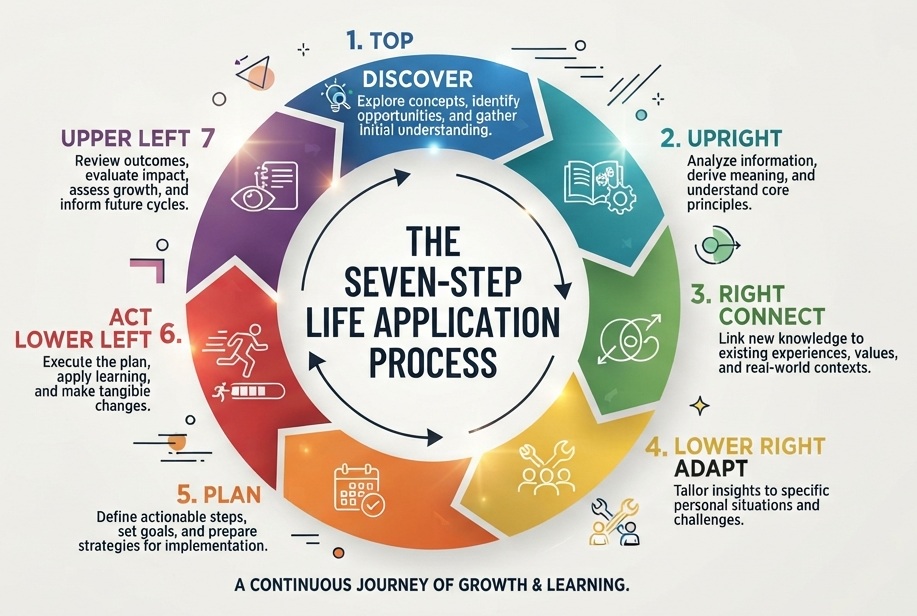
Figure 1. The Seven-Step Life Application Process
DISCOVER → INTERPRET → CONNECT → ADAPT → PLAN → ACT → REFLECT
The process begins with learning from a historical case and ends with evaluating what happened after the learner attempted to apply the lesson.
Step 1 — DISCOVER: Identify the Lesson
Begin by identifying what you learned.
Ask:
- What happened?
- What did the person or organization do?
- What challenge did they face?
- What behavior or decision stands out?
- What principle or quality appears important?
- What evidence supports this interpretation?
Do not rush directly to application.
First understand the lesson.
Complete:
“The most important lesson I discovered is…”
Then ask:
“What evidence from the exhibit supports this lesson?”
This prevents visitors from applying a lesson that they have not adequately understood.
Step 2 — INTERPRET: Determine What the Lesson Means
A historical behavior can have several possible meanings.
For example:
Perseverance
might mean:
- continuing despite difficulty;
- maintaining commitment to a responsibility;
- adapting strategies rather than giving up;
- repeatedly working toward a meaningful goal.
Therefore, ask:
“What exactly am I learning from this example?”
Distinguish between:
Behavior
What did the person actually do?
Character or Principle
What quality or principle might that behavior demonstrate?
Lesson
What can I learn from it?
This distinction helps prevent superficial imitation.
Step 3 — CONNECT: Find a Relevant Situation in Your Life
Now identify where the lesson might apply.
Consider:
School
How might the lesson apply to studying, completing assignments, preparing for tests, or working with classmates?
Work
How might it apply to responsibility, teamwork, persistence, leadership, or ethical challenges?
Family
How might it influence communication, responsibility, patience, or cooperation?
Community
How might it influence service, fairness, responsibility, or helping others?
Personal Goals
How might it help you deal with obstacles or pursue an important goal?
The application should be relevant and realistic.
Complete:
“This lesson is relevant to me because…”
Step 4 — ADAPT: Translate the Historical Lesson to Today
Not every historical action should be copied literally.
The goal is to identify the underlying principle and adapt it to a contemporary situation.
For example:
Historical Behavior
Repeatedly continue difficult work despite obstacles.
↓
Underlying Principle
Perseverance.
↓
Contemporary Situation
Preparing for an important examination despite setbacks.
↓
Possible Application
Create a consistent study schedule and continue improving after mistakes.
This process is called adaptive application.
You are not copying the historical circumstances.
You are transferring an appropriate principle or strategy.
Step 5 — PLAN: Create a Specific Action
A lesson becomes useful when it becomes specific.
Instead of:
“I will work harder.”
create a more concrete plan:
“For the next two weeks, I will study mathematics for 30 minutes after school on Monday, Wednesday, and Friday and review the questions I answered incorrectly.”
A useful action plan should answer:
- What will I do?
- When will I do it?
- Where will I do it?
- How often?
- What resources do I need?
- Who can support me?
- What obstacles might appear?
- What will I do if I encounter those obstacles?
Table 1. Life Application Planning Framework
| Historical Lesson | Personal Situation | Principle or Quality | Possible Application | Specific Action | Potential Obstacle | Support Needed | Evidence of Progress |
|---|---|---|---|---|---|---|---|
| What did I learn? | Where is it relevant? | What principle is involved? | How could I adapt it? | What will I actually do? | What could interfere? | Who/what can help? | How will I know I improved? |
| Example | |||||||
| Example |
The purpose of this table is to move from a general inspirational statement to a specific and observable action.
Step 6 — ACT: Put the Lesson Into Practice
Now take the action.
The action should be:
Specific
Clearly defined.
Realistic
Possible within your circumstances.
Meaningful
Connected to the lesson.
Responsible
Appropriate for the situation.
Observable
You can determine whether you actually did it.
Do not wait for a perfect opportunity.
Small actions can be valuable when they are intentional and consistent.
For example:
Lesson: Perseverance
Application: Improve study habits.
Action: Complete a focused 30-minute study session three times this week.
The objective is not to make a dramatic promise.
It is to convert reflection into behavior.
Step 7 — REFLECT: Evaluate What Happened
After taking action, return to the lesson.
Ask:
- Did I actually do what I planned?
- What worked?
- What did not work?
- What obstacles appeared?
- Did the historical lesson remain useful?
- Did I interpret the lesson correctly?
- What would I change?
- What should I continue?
- What did I learn about myself?
This creates a second learning cycle.
You are no longer simply learning from history.
You are learning from your attempt to apply what history taught you.
From Inspiration to Action
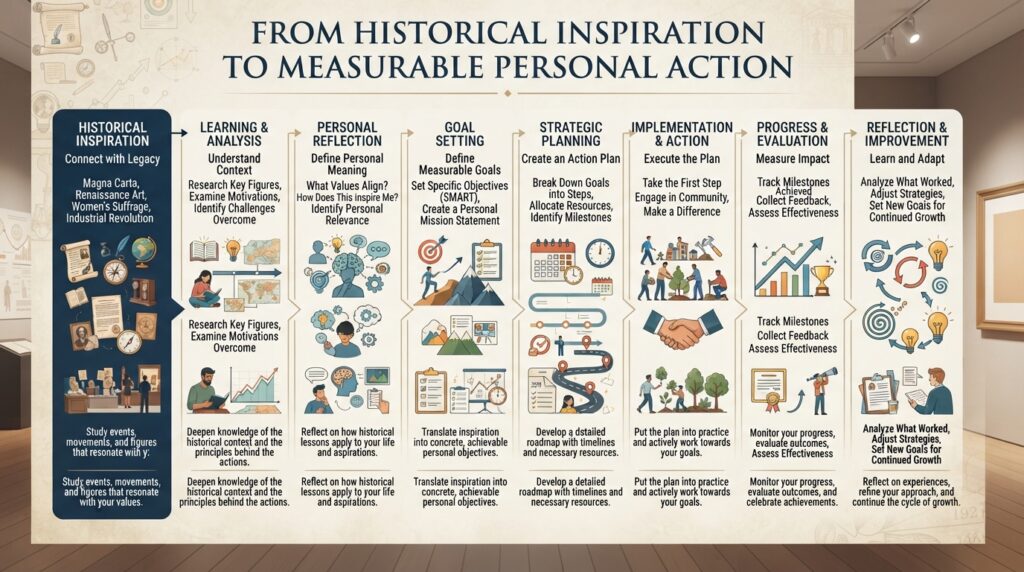
Figure 2. From Historical Inspiration to Measurable Personal Action
Historical Example → Lesson → Principle → Personal Connection → Adaptation → Action Plan → Action → Evidence of Progress → Reflection → Improvement
The Transfer Challenge
One of the most difficult parts of learning is transfer.
You may understand an idea in the museum but fail to recognize where it applies outside the museum.
The Transfer Challenge asks:
“Where else could this lesson be useful?”
Start with the historical case.
Then identify:
Historical Situation
Where did the lesson originate?
↓
Principle
What broader idea can be learned?
↓
New Situation
Where might that principle apply?
↓
Action
What could you actually do?
For example:
Historical Situation:
A person continues pursuing an important responsibility despite repeated obstacles.
Principle:
Perseverance.
New Situation:
A student struggles with a difficult subject.
Action:
Seek help, change study strategies, practice consistently, and continue working rather than abandoning the goal.
The transfer is not automatic.
You must consciously identify the connection.
The Small-Step Challenge
Large goals can feel overwhelming.
Life Application encourages visitors to identify a small first action.
Instead of:
“I will become more responsible.”
try:
“Tomorrow I will complete one responsibility before being reminded.”
Instead of:
“I will become more persistent.”
try:
“When I make a mistake on my next practice test, I will identify the error, determine why I made it, and try the problem again.”
Small actions create opportunities for feedback.
Repeated small actions can contribute to larger changes.
The Obstacle Challenge
Every action plan should anticipate obstacles.
Ask:
“What might prevent me from following through?”
Possible obstacles include:
- lack of time;
- distractions;
- uncertainty;
- discouragement;
- lack of knowledge;
- fear of failure;
- conflicting responsibilities;
- lack of resources;
- lack of support.
Then create an if–then response.
If I become distracted while studying,
then I will put my phone away for 30 minutes.
If I do not understand a topic,
then I will ask for help rather than simply skipping it.
If my first strategy fails,
then I will try another strategy.
This turns a goal into a more resilient plan.
Application Does Not Mean Imitation
Historical figures lived in circumstances different from ours.
Therefore, Life Application should not encourage simplistic imitation.
Instead ask:
What is transferable?
A useful framework is:
Context
What was unique about the historical situation?
Behavior
What did the person actually do?
Principle
What quality, strategy, or value might the behavior demonstrate?
Adaptation
How could that principle be appropriately applied today?
Action
What can I realistically do?
This protects against taking historical examples out of context while still making them educationally meaningful.
From Historical Character to Personal Growth
For character-focused exhibits, visitors can use this sequence:
Observe Behavior
↓
Identify Character Quality
↓
Find Evidence
↓
Understand Context
↓
Identify Personal Relevance
↓
Choose One Behavior to Practice
↓
Reflect on Progress
For example:
Historical Figure: Irena Sendler
Observed qualities: Persistence, diligence, courage, cooperation, responsibility.
Personal question: Where do I need greater persistence?
Possible action: Continue working on a difficult goal while seeking better strategies and appropriate support.
The purpose is not to claim:
“I am like Irena Sendler.”
Instead:
“Her example helps me examine a quality I want to develop.”
Measure Your Application
Reflection becomes stronger when you can observe whether your behavior changed.
Ask:
Before
What was I doing previously?
During
What action did I take?
After
What changed?
Evidence
What can demonstrate that change?
Possible evidence includes:
- completed tasks;
- improved performance;
- repeated behavior;
- feedback from others;
- progress toward a goal;
- improved consistency;
- documented actions.
The purpose is not to turn personal growth into a perfect numerical score.
It is to encourage honest observation and continuous improvement.
What You Learn Through Life Application
By completing Life Application activities, you practice:
Transfer of Learning
Connecting historical knowledge to new situations.
Goal Setting
Turning broad intentions into specific objectives.
Action Planning
Identifying practical steps toward a goal.
Problem Solving
Anticipating obstacles and developing alternatives.
Character Development
Practicing qualities identified through historical examples.
Personal Responsibility
Recognizing your ability to make choices and take appropriate action.
Self-Regulation
Monitoring your behavior and adjusting your strategies.
Continuous Improvement
Learning from results and modifying your approach.
Try the Method Yourself
Think about one historical figure, event, or case you encountered in the museum.
Complete the following:
DISCOVER
What did I learn?
INTERPRET
What principle or quality does this example demonstrate?
CONNECT
Where is this lesson relevant to my life?
ADAPT
How can I appropriately apply it today?
PLAN
What specific action will I take?
ACT
When will I do it?
REFLECT
What happened, and what will I change next?
Then complete:
“Because of what I learned, I will…”
Make your answer specific enough that another person could tell whether you actually did it.
Your Life-Application Formula
LEARN → UNDERSTAND → CONNECT → ADAPT → PLAN → ACT → REFLECT → IMPROVE
Learning becomes more powerful when it changes how we understand ourselves and the world.
Reflection becomes more powerful when it leads to responsible action.
The purpose of Life Application is therefore not simply:
“Be inspired.”
It is:
“Understand the lesson, determine where it belongs in your life, adapt it responsibly, take meaningful action, and learn from the result.”
Reflection Methods Hall
🎯 Decision Simulation
What would I do?
🧠 Critical Reflection
Why do I think this way?
🚀 Life Application
How can I use what I learned?
Together, these methods create a progression:
DECIDE → THINK → APPLY
The three methods can also work together.
You might first use Decision Simulation to experience a difficult choice.
Then use Critical Reflection to examine your reasoning.
Finally, use Life Application to determine how the lesson can inform your own behavior.
Reflection Is Complete When Learning Becomes Action.
Apply Life Application to Museum Exhibits
Irena Sendler
In the Diligence & Perseverance in Pursuing Righteousness Hall, visitors can examine how diligence, perseverance, planning, cooperation, courage, and responsibility appeared through sustained behavior.
Ask:
“Where in my own life do I need greater diligence or perseverance?”
Possible areas include:
- schoolwork;
- long-term projects;
- learning a difficult subject;
- keeping commitments;
- helping others;
- overcoming setbacks;
- developing a skill.
The objective is not to imitate the historical circumstances.
It is to identify a meaningful quality and determine how it can be responsibly practiced today.
→ Continue to the Irena Sendler Exhibit
Volkswagen
In the Volkswagen Business Reflection Hall, visitors can consider lessons about organizational responsibility, ethical leadership, professional courage, accountability, incentives, and speaking up when concerns arise.
Ask:
“How might I respond when pressure conflicts with responsibility?”
Possible applications include:
- speaking up respectfully;
- seeking evidence before making accusations;
- asking appropriate questions;
- recognizing conflicts of interest;
- documenting concerns;
- seeking guidance;
- considering the impact of decisions on others.
The purpose is to translate a historical business case into responsible contemporary decision-making.
→ Continue to the Volkswagen Exhibit
Life Application Challenge
Before leaving this page, choose one lesson from the museum.
Then complete:
My Lesson
Why It Matters to Me
Where I Will Apply It
My First Action
When I Will Do It
What Could Stop Me?
My If–Then Plan
If ____________________, then ____________________.
How I Will Know I Made Progress
What I Will Reflect On Later
Final Reflection
A museum can give you knowledge.
A historical example can give you perspective.
A reflection method can help you understand what the experience means.
But application requires you to decide what you will do with that understanding.
Ask yourself:
What will I do differently because I learned this?
Then begin with one responsible, realistic action.
References
Bandura, A. (1986). Social foundations of thought and action: A social cognitive theory. Prentice-Hall.
Brookfield, S. D. (2017). Becoming a critically reflective teacher (2nd ed.). Jossey-Bass.
Dewey, J. (1933). How we think: A restatement of the relation of reflective thinking to the educative process. D. C. Heath.
Kolb, D. A. (1984). Experiential learning: Experience as the source of learning and development. Prentice Hall.
Schön, D. A. (1983). The reflective practitioner: How professionals think in action. Basic Books.
Zimmerman, B. J. (2002). Becoming a self-regulated learner: An overview. Theory Into Practice, 41(2), 64–70.