
The Lion (Panthera leo): Bold Righteousness, Rightful Authority
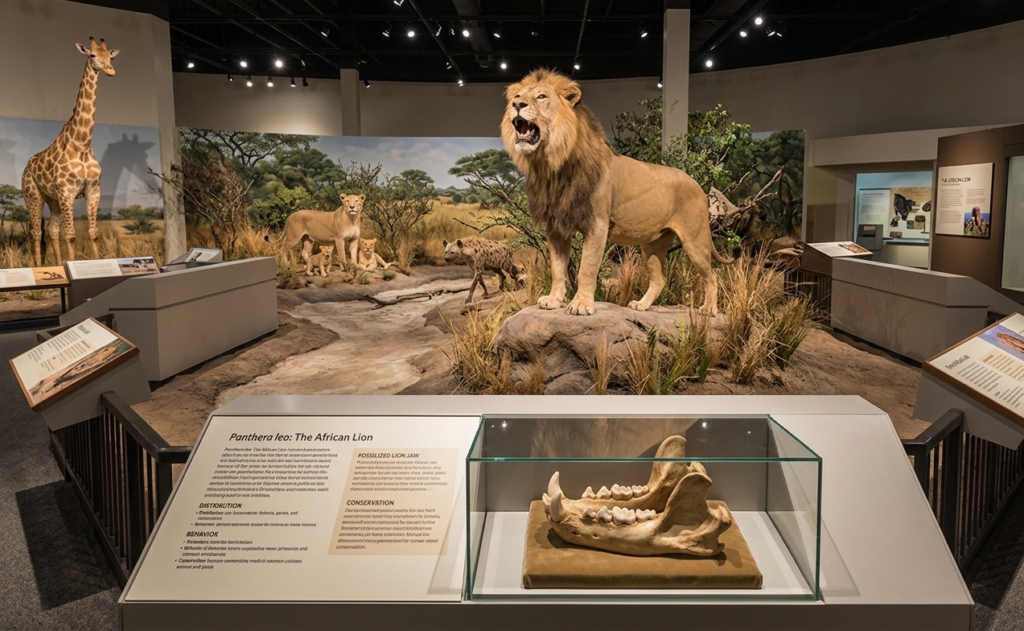
Figure 1. Male Lion in Natural Habitat
Introduction to the Animal
The lion, known in Hebrew as aryeh and in Greek as leon, is the only truly social cat, living in prides that function as extended families. Adult males typically weigh 150-250 kilograms (330-550 pounds) and possess a muscular build, powerful forelimbs, and a terrifying roar that can be heard up to 8 kilometers (5 miles) away (Macdonald, 2018). Unlike the rock badger, which has “little power,” the lion sits at the apex of the African savanna food chain.
The Bible mentions the lion extensively—over 150 times. Samson famously killed a lion with his bare hands (Judges 14:5-6). Daniel was thrown into a den of lions and emerged unharmed (Daniel 6). The lion appears as a symbol of both judgment (Jeremiah 4:7) and divine protection (Isaiah 31:4). The tribe of Judah is called a “lion’s cub” (Genesis 49:9), and Christ Himself is called the “Lion of the tribe of Judah” (Revelation 5:5).
Yet it is in the book of Proverbs that the lion receives its highest moral commendation, contrasting the wicked who flee with the righteous who advance:
“The wicked flee though no one pursues, but the righteous are as bold as a lion.” — Proverbs 28:1 (NIV)
The Wisdom of the Lion
The wisdom of the lion is rooted in accurate self-awareness of authority. The lion does not flee because it knows what it is: the king of beasts. It does not roar to convince itself of its power; it roars because power flows from its very being. This is not arrogance—it is truthful recognition of rightful authority.
King Solomon, who spoke of animals, plants, and beasts (1 Kings 4:33), observed the lion’s confidence and drew a spiritual conclusion. The lion’s wisdom includes:
Table 1. Wisdom Traits of the Lion and Their Practical Lessons
| Wisdom Trait | Behavioral Evidence | Practical Lesson |
|---|---|---|
| Confidence without bluff | The lion roars, then acts. It does not waste energy on empty threats. | Speak truth, then act. Do not posture falsely. |
| Selective engagement | Lions do not fight every challenger. They assess threats and conserve strength. | Wisdom knows when to engage and when to wait. |
| Pride cooperation | Lionesses hunt together; males defend territory together. | The bold righteous do not stand alone. They need community. |
| Territorial clarity | Lions mark clear boundaries and defend them consistently. | Righteousness has clear moral boundaries. |
| Rest without shame | Lions sleep up to 20 hours per day when not hunting. They do not apologize for rest. | The righteous trust God’s provision and rest without guilt. |
The lion’s wisdom also includes knowing when NOT to be bold. A lion will retreat from a porcupine or a herd of angry buffalo—not out of cowardice, but out of prudence. This distinguishes the lion from reckless fools. As the proverb says, “The prudent see danger and take refuge” (Proverbs 22:3). The lion’s boldness is not stupidity; it is calculated courage based on accurate assessment.
The Righteousness of the Lion
If the rock badger’s righteousness is humility that takes shelter, the lion’s righteousness is boldness that stands its ground. Both are righteous. Both are necessary. But they operate in different circumstances.
The rock badger models righteousness for the vulnerable, the weak, and those under attack. The lion models righteousness for those who have been given authority, truth, and a mission. The rock badger says, “I cannot fight; I must hide in the Rock.” The lion says, “I have been given teeth and a roar; I must defend the innocent and advance the kingdom.”
The following table summarizes the key virtues demonstrated by the lion and their ethical implications:
Table 2. Virtues of the Lion and Their Ethical Implications
| Virtue Demonstrated | Behavioral Evidence | Ethical Implication |
|---|---|---|
| Boldness | Advances toward threats rather than fleeing | Righteousness requires courage when truth is at stake |
| Territorial integrity | Defends established boundaries consistently | The righteous must protect moral and spiritual borders |
| Protective authority | Male lions defend the pride, especially cubs | Authority exists to protect the vulnerable, not exploit them |
| Selective ferocity | Lions are not constantly aggressive; they conserve energy for necessary battles | Righteous anger is controlled, not constant rage |
| Fearlessness without recklessness | Retreats from porcupines, not from equal opponents | Boldness is not stupidity; wisdom discerns when to fight |
The lion’s righteousness is not self-righteousness. The lion does not roar “I am great.” The lion roars “I am a lion”—a statement of fact, not boast. The righteous person who is “as bold as a lion” does not say, “I am powerful.” They say, “I serve the powerful God, and I stand on His truth. Therefore, I have nothing to fear.”
Consider the difference:
| False Boldness (Wicked) | True Boldness (Righteous) |
|---|---|
| Bluffs and threatens constantly | Speaks only when necessary |
| Fights every perceived insult | Chooses battles wisely |
| Bold in safety, silent in danger | Bold precisely when danger is real |
| Boldness serves the ego | Boldness serves truth and protects others |
| Flees when confronted with equal force | Stands because the cause is just |
The prophet Isaiah captured this righteous boldness when he wrote:
“Who among us can dwell with the consuming fire? Who among us can dwell with everlasting burning? He who walks righteously and speaks uprightly… he will dwell on the heights; his refuge will be the fortress of the rocks.” — Isaiah 33:14-16 (NKJV)
Notice the paradox: The righteous person is both bold as a lion AND hidden in the Rock. This is not contradiction. The rock badger hides because it has no power. The righteous person hides in God (the Rock) precisely because that hiding gives them the boldness of a lion. The one who knows they are safe in God fears nothing on earth.
Reflection
The lion invites every visitor to this museum to ask a searching question: When should I stand, and when should I flee?
The rock badger teaches the virtue of hiding. The lion teaches the virtue of standing. Both are righteous. Both are wise. But they must be applied correctly.
Consider your own life:
1. Are you a rock badger in a situation that requires a lion?
- Do you flee from necessary confrontations? Do you avoid speaking truth when silence would be cowardice? Do you hide your faith when boldness is required?
- Example: Remaining silent when a colleague is being bullied, or when an injustice occurs in your presence.
2. Are you a lion in a situation that requires a rock badger?
- Do you fight battles you cannot win? Do you roar when you should hide? Do you mistake recklessness for righteousness?
- Example: Confronting every minor offense, or “standing boldly” when prudence would preserve your ability to fight another day.
3. Do you know the source of your boldness?
- The lion’s boldness comes from its own power. The righteous person’s boldness comes from the Rock—from God, from truth, from a just cause. If your boldness comes from your own ego, it will fail when you are weak. If your boldness comes from God, it remains even in weakness.
The apostle Paul understood this paradox perfectly. He wrote:
“When I am weak, then I am strong.” — 2 Corinthians 12:10 (NIV)
Paul was a rock badger (acknowledging his weakness) AND a lion (bold in preaching the gospel). He was beaten, imprisoned, shipwrecked—yet he wrote from a Roman dungeon: “I am not ashamed of the gospel” (Romans 1:16). That is righteous boldness.
As you look upon this lion, ask yourself:
- What truth am I afraid to speak?
- What injustice am I avoiding?
- What moral boundary am I failing to defend?
- And crucially: Am I standing in my own strength (which will fail) or in the strength of the Rock (which never fails)?
References
- Macdonald, D. W. (2018). The Encyclopedia of Mammals. Oxford University Press.
- Reyburn, W. D., & Fry, E. M. (2000). A Handbook on Proverbs. United Bible Societies.
- Walton, J. H. (2015). The Lost World of the Israelite Conquest. InterVarsity Press.
Disclaimer:
This website is an independent digital museum. All product names, trademarks, and brands are the property of their respective owners and are used for identification and educational purposes only. No affiliation or endorsement is implied.