
Nadia Murad — Iraq (1993– )
Nadia Murad is a Yazidi human rights activist, survivor of genocide, and global advocate for victims of sexual violence in conflict. She rose to international prominence after speaking publicly about atrocities committed against the Yazidi people in Iraq, transforming personal suffering into a powerful campaign for justice and accountability.
Through her advocacy, Nadia Murad has worked to bring global attention to the experiences of survivors of violence and to promote the protection of vulnerable communities.
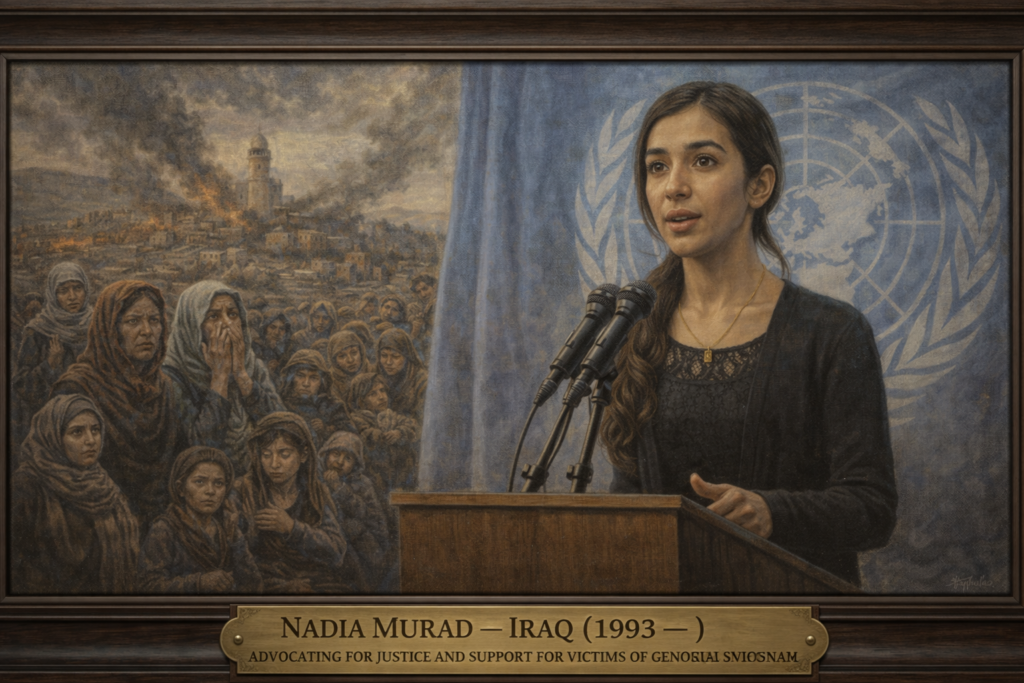
Historical Context
In 2014, the extremist group ISIS launched attacks in northern Iraq, targeting the Yazidis, a religious minority.
Thousands of Yazidi men were killed, and women and girls were abducted and subjected to forced labor, trafficking, and violence. Entire communities were displaced, and the events were widely recognized as acts of genocide.
Nadia Murad was among those captured during these attacks, and her experiences later became central to her advocacy work.
Civic Virtue and Leadership
After escaping captivity, Nadia Murad chose to speak publicly about her experiences, despite the personal difficulty and stigma often associated with such trauma.
She became an advocate for survivors of sexual violence and a representative voice for the Yazidi community.
Murad has worked with international organizations and governments to promote recognition of genocide, support for survivors, and legal accountability for perpetrators.
Her leadership emphasizes human dignity, justice, and the importance of giving voice to those affected by conflict and violence.
Righteous Act: Testifying for Justice and Human Rights
Nadia Murad’s most significant contribution has been her decision to publicly testify about the atrocities committed against the Yazidi people.
She addressed international bodies, including the United Nations, where she called for global action to protect vulnerable populations and prosecute those responsible for crimes against humanity.
Murad also helped establish initiatives to support survivors of violence, including efforts to rebuild communities and provide assistance to victims.
Her courage in sharing her story helped transform global awareness of conflict-related sexual violence and strengthened international advocacy for human rights.
In recognition of her work, she was awarded the Nobel Peace Prize in 2018.
Challenges and Adversity
Nadia Murad’s advocacy emerged from profound personal trauma and loss.
She faced the challenge of recounting painful experiences in public while representing the broader suffering of her community.
Additionally, efforts to achieve justice for victims of genocide often encounter political, legal, and logistical obstacles at the international level.
Despite these challenges, Murad has continued her work, focusing on long-term support for survivors and accountability for perpetrators.
Legacy
Nadia Murad is widely recognized as a leading voice for survivors of conflict-related violence.
Her work has contributed to increased global awareness of genocide, human trafficking, and sexual violence in conflict zones.
She continues to advocate for justice, survivor support, and the protection of human rights worldwide.
Her legacy reflects moral courage, resilience, and a commitment to transforming suffering into meaningful action for others.
References
Murad, N. (2017). The last girl: My story of captivity, and my fight against the Islamic State. Tim Duggan Books.
United Nations Human Rights Council. (2016). They came to destroy: ISIS crimes against the Yazidis.
Amnesty International. (2014). Escape from hell: Torture and sexual slavery in Islamic State captivity.
Bassiouni, M. C. (2016). Accountability for ISIS crimes. DePaul University.