
Righteous AI Hall/Right. AI Gallery
When AI Employees Chose Principle Over Institutional Interest
Year: 2018
Location: United States
Principal Organization: Google
Related Organization: U.S. Department of Defense
Historical Theme: Human–AI Responsibility · Conscience · Restraint · Employee Voice
Historical Significance
Project Maven became one of the earliest major public controversies concerning the relationship between artificial intelligence, military applications, corporate responsibility, and employee conscience.
Google participated in Project Maven, a U.S. Department of Defense initiative involving artificial intelligence to assist in analyzing military drone imagery. In 2018, thousands of Google employees objected to the company’s involvement. More than 4,000 employees reportedly signed a petition opposing the project, and some employees resigned. Google subsequently announced that it would not renew its Project Maven contract when it expired. (WIRED)
The historical importance of the event lies not only in the technology involved, but in the human choices surrounding that technology.
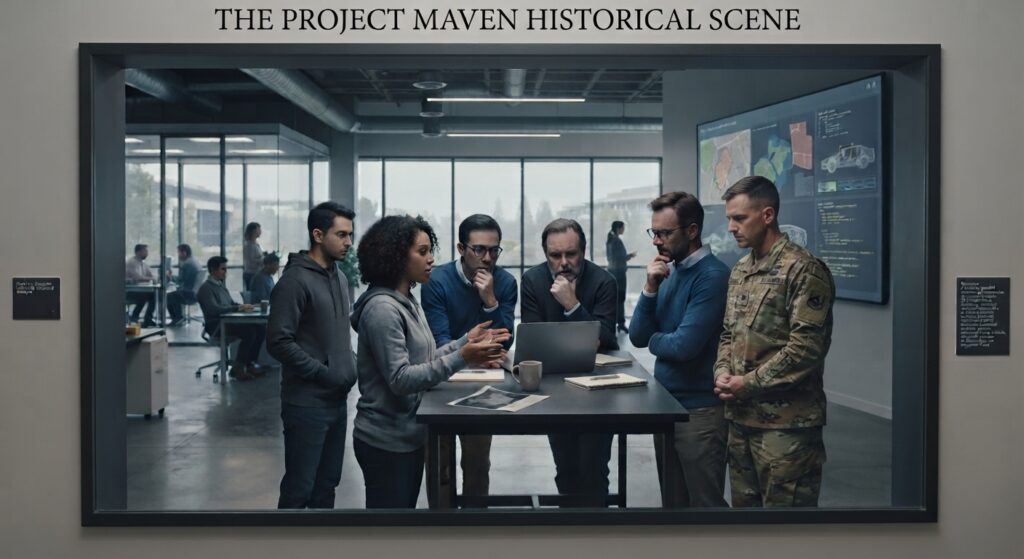
Figure 1 — The Project Maven Historical Scene
Title: Employees Confront the Question of Military AI
Description: A historically grounded museum-style reconstruction representing the 2018 Project Maven controversy: technology workers gathered in a modern technology workplace, discussing the ethical implications of artificial intelligence used for military purposes; documentary museum aesthetic, serious and restrained, no fictional logos, no exaggerated drama.
Title: Project Maven: From Development to Ethical Controversy
Description: A chronological overview of the principal events surrounding the Project Maven controversy and Google’s subsequent AI principles.
Table 1 — Historical Timeline
| Date | Historical Development |
|---|---|
| 2017 | Google began developing its involvement in Project Maven, a U.S. Department of Defense initiative involving AI-assisted analysis of military imagery. |
| 2018 | Google employees organized internal opposition to the project and circulated a petition calling for Google to end its involvement. |
| 2018 | More than 4,000 Google employees reportedly signed the petition; several employees resigned in protest. (WIRED) |
| June 1, 2018 | Google announced that it would not renew its Project Maven contract when the existing agreement expired. (WIRED) |
| June 7, 2018 | Google published its AI Principles, establishing principles concerning social benefit, unfair bias, safety, accountability, privacy, scientific excellence, and appropriate uses of AI. (blog.google) |
| 2026 | More than 600 Google employees signed a letter urging the company not to enter certain classified Pentagon AI arrangements, demonstrating that questions raised by Project Maven remained active years later. (The Washington Post) |
The Historical Conflict
Project Maven created a conflict between several legitimate interests.
The U.S. Department of Defense sought technological capabilities that could improve the analysis of large quantities of military imagery.
Google had technological expertise capable of contributing to that effort.
At the same time, employees questioned whether their work should contribute to military applications of artificial intelligence.
The issue therefore became larger than a technical question.
It became a question of:
Who is responsible for deciding how powerful AI technology should be used?

Figure 2 — Human Judgment and AI Power
Title: The Human Decision Behind the Machine
Description: A symbolic museum image showing a human hand near an AI interface while two paths appear: one representing technological capability and another representing ethical restraint; designed to communicate that technology creates possibilities while humans remain responsible for choosing among them.
The Human Choice
The employees involved in the protest faced a consequential decision.
They could remain silent and continue working on the project.
Or they could express their concerns, knowing that doing so could create conflict with their employer and colleagues.
Thousands chose to speak.
Some employees went further and resigned.
The significance of their actions lies in the principle that professional expertise does not necessarily eliminate personal responsibility.
An engineer, researcher, or developer may participate in creating technology while still asking whether a particular use of that technology is consistent with fundamental ethical commitments.
Title: Where Does Responsibility Begin and End?
Description: This table identifies the different actors involved in the development and use of powerful AI systems and the responsibilities that can arise at each stage.
Table 2 — The Human–AI Responsibility Chain
| Actor | Role | Responsibility Question |
|---|---|---|
| AI Researcher | Develops new capabilities | What capabilities should be developed? |
| AI Developer | Builds and integrates systems | What safeguards should be built into the system? |
| Company | Decides whether and how to deploy technology | Which applications should the company accept or reject? |
| Government | Determines public and national-security uses | What uses should be permitted, restricted, or prohibited? |
| Employee | Participates in development and deployment | What should an individual do when conscience conflicts with assigned work? |
| AI System | Executes programmed or learned behavior | How should autonomy be constrained and monitored? |
| Public / Society | Experiences the consequences | What accountability should society require? |
The Righteous Choice
The Project Maven controversy illustrates several principles that are central to the study of Human–AI righteousness.
Conscience
People may choose to raise ethical concerns even when doing so creates personal or professional difficulty.
Responsibility
Creating technology does not necessarily end responsibility for how that technology may be used.
Courage
A principled position can require individuals to challenge powerful institutions.
Restraint
The existence of a technological capability does not automatically establish that every possible application is appropriate.
Human Agency
AI does not remove human responsibility. Decisions about AI remain connected to the people and institutions that create, deploy, govern, and use it.
Title: Why Project Maven Is Considered for the Righteous AI Gallery
Description: The Museum’s analytical framework evaluates whether the event demonstrates a historically meaningful righteous choice rather than merely a beneficial technological outcome.
Table 3 — Righteousness Test
| Criterion | Project Maven Assessment |
|---|---|
| Conflict | Technological and institutional interests conflicted with employee ethical concerns. |
| Choice | Employees could remain silent or challenge the project. |
| Principle | Conscience, responsibility, safety, and restraint. |
| Risk / Cost | Public criticism of the employer and, for some, resignation. |
| Pioneering Character | One of the most prominent early employee movements concerning military AI. |
| Institutional Response | Google announced it would not renew the Project Maven contract. (WIRED) |
| Historical Impact | The controversy contributed to a broader debate over responsible AI and preceded Google’s publication of AI Principles. (blog.google) |
| Model for Humanity | Demonstrates that people working with powerful technology may challenge its use when they believe fundamental principles are at stake. |

Figure 3 — The Choice to Speak
Title: Conscience Within an Institution
Description: A symbolic representation of an individual technology worker standing among colleagues while choosing whether to remain silent or speak, representing moral courage within a powerful institution.
Institutional Change
The Project Maven controversy was followed by an important institutional development.
On June 7, 2018, Google published its AI Principles.
The principles stated that AI should:
- Be socially beneficial
- Avoid creating or reinforcing unfair bias
- Be built and tested for safety
- Be accountable to people
- Incorporate privacy principles
- Uphold high standards of scientific excellence
- Be made available for uses consistent with these principles
Google also identified applications it said it would not pursue, including technologies whose principal purpose was to cause or directly facilitate injury to people, certain forms of surveillance violating internationally accepted norms, and applications contrary to widely accepted principles of international law and human rights. (blog.google)
The relationship between employee pressure, corporate policy, and AI governance became an important part of the historical significance of Project Maven.
Title: How a Historical Event Influenced AI Governance
Description: This table illustrates the relationship between employee action, corporate response, and the emergence of formal AI principles.
Table 4 — From Protest to Framework
| Historical Stage | Development |
|---|---|
| AI Capability | Artificial intelligence created new capabilities for analyzing military imagery. |
| Ethical Concern | Employees questioned the implications of participating in military AI. |
| Collective Action | Thousands of employees signed a petition opposing the project. |
| Personal Sacrifice | Some employees resigned in protest. |
| Corporate Decision | Google announced that it would not renew the Project Maven contract. |
| Principles | Google published formal AI Principles shortly afterward. |
| Historical Legacy | The episode became part of the continuing debate over responsible AI development and military applications. |
Historical Continuation
The ethical questions surrounding military AI did not disappear after Project Maven.
2026 — A New Generation Raises the Same Question
In April 2026, more than 600 Google employees, including workers associated with its DeepMind AI research organization, signed a letter urging CEO Sundar Pichai not to enter an agreement allowing Google’s AI to be used by the U.S. Department of Defense in classified settings. The employees raised concerns about transparency and possible military applications. (The Washington Post)
The 2026 employee action was historically distinct from Project Maven, but it echoed the central question raised in 2018:
What responsibility do people and organizations have when powerful AI technology is developed for military use?
The recurrence of this question demonstrates that the relationship between AI capability, military power, employee conscience, corporate responsibility, and human oversight remains unresolved.
2026 — Individual Conscience and Professional Sacrifice
The same year also produced a different form of response: individual action.
AI researchers and technology professionals continued to confront questions about whether they could personally participate in the development of AI intended for military applications. In one reported case, a Google DeepMind researcher resigned amid concerns over Google’s military AI relationship with the U.S. Department of Defense.
Unlike the collective action of hundreds of employees signing a letter, resignation represents a more personal form of dissent:
When conscience conflicts with professional responsibility, is an individual willing to sacrifice a position in order to remain faithful to principle?
This creates an important historical contrast:
Table 5 — Forms of Human–AI Ethical Action
| Year | Form of Action | Historical Meaning |
|---|---|---|
| 2018 | Collective employee protest | Employees publicly challenged military AI development. |
| 2026 | Collective employee opposition | A new generation raised related concerns about military AI. |
| 2026 | Individual resignation | Personal conscience resulted in professional sacrifice. |
Together, these events demonstrate that resistance to controversial AI applications can take different forms:
Collective Voice → Public Challenge → Individual Sacrifice
The historical significance is not that every participant necessarily reached the same conclusion, but that the development of powerful AI continues to create situations in which individuals must decide how closely their professional work should align with their principles.
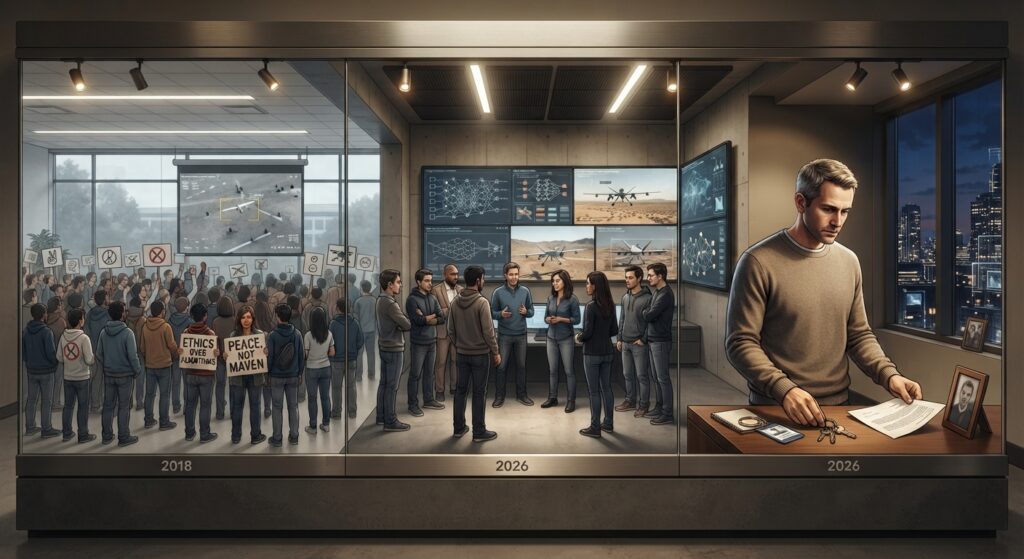
Figure 4 — From Collective Voice to Individual Conscience
Title: A Continuing Historical Question
Description: A museum timeline connecting three moments in the history of military AI ethics: the 2018 Project Maven employee protest, the 2026 collective opposition by Google employees, and the 2026 individual resignation of an AI researcher over concerns about military AI. The timeline emphasizes the evolution from collective protest to individual professional sacrifice, while showing that the underlying question of human responsibility for military AI remains unresolved.
Historical Interpretation
Project Maven should not be interpreted simply as:
“AI was bad.”
Nor should every technical mistake or harmful outcome automatically be classified as unrighteousness.
The deeper historical issue is the relationship between:
Human Choice + AI Capability + Institutional Power
The AI system itself was not the only subject of the controversy.
The important questions concerned the people and institutions that:
- designed the technology,
- developed the technology,
- funded the technology,
- deployed the technology,
- governed its use,
- and accepted or rejected particular applications.
This is why the case belongs within the Human–AI history of righteousness.
Museum Assessment
Righteous AI Gallery Classification
Primary Classification
Human–AI Righteousness
Historical Character
Pioneering Employee Conscience
Core Principle
Human Responsibility for Technological Power
Key Virtue
Courageous Restraint
Historical Pattern
Power → Conflict → Conscience → Choice → Action → Institutional Response → Historical Precedent
The Enduring Question
Project Maven leaves a question for every generation that develops increasingly powerful artificial intelligence:
When humanity possesses the ability to create something, does that mean it should be created—or used—for every possible purpose?
Technology creates possibilities.
Human beings determine how those possibilities are directed.
The history of artificial intelligence is therefore also a history of human judgment.
Power creates possibilities.
Principles give those possibilities direction.
Choices create history.
Righteous choices can become precedents for generations to come.
SAT-Style Education
This interactive zone connects the Righteous AI Gallery’s exhibition on the Project Maven employee protest to academic skills.
Critical Reading: “Conscience and Technology”
Analyze a passage on the Project Maven employee protest. Identify the central claim, examine evidence, and interpret vocabulary in context.
Data Analysis: “The Numbers Behind the Protest”
Interpret data about employee participation, corporate response, and institutional change. Draw inferences from quantitative information about the protest.
Vocabulary Builder: “Words of Moral Choice in Tech”
Explore key terms including conscience, institutional, autonomy, restraint, precedent, and accountability. Each word includes definition, pronunciation, example, synonyms, and antonyms.
Interactive Games — Explore the Exhibition
Reflection from This Case
Explore Project Maven through Decision Simulation, Critical Reflection, and Life Application — three paths to deeper understanding.
References
Google. (2018, June 7). AI at Google: Our principles. Google. Google AI Principles
The Washington Post. (2026, April 27). Google workers petition CEO to refuse classified AI work for the Pentagon. The Washington Post article
Wired. (2018, June 1). Google won’t renew controversial Pentagon AI project. Wired article
Business & Human Rights Resource Centre. (2018). Google introduces “Artificial Intelligence principles” that prohibit its use in weapons and human rights abuses. Business & Human Rights Resource Centre
Business Insider. (2026). How Google made peace with war. Business Insider analysis
Curatorial Note
This case is preserved as a historical study of human choice surrounding AI, rather than as a judgment that the AI technology itself possessed moral intent.
The exhibit distinguishes:
Mistake ≠ Harm ≠ Unsafe ≠ Unrighteous
Its purpose is to examine the choices, principles, consequences, and historical precedent surrounding the development and use of powerful artificial intelligence.