From: Crime and Punishment (1866) by Fyodor Dostoevsky (Russia)
Literary Figures of Righteousness Hall — Righteous Museum
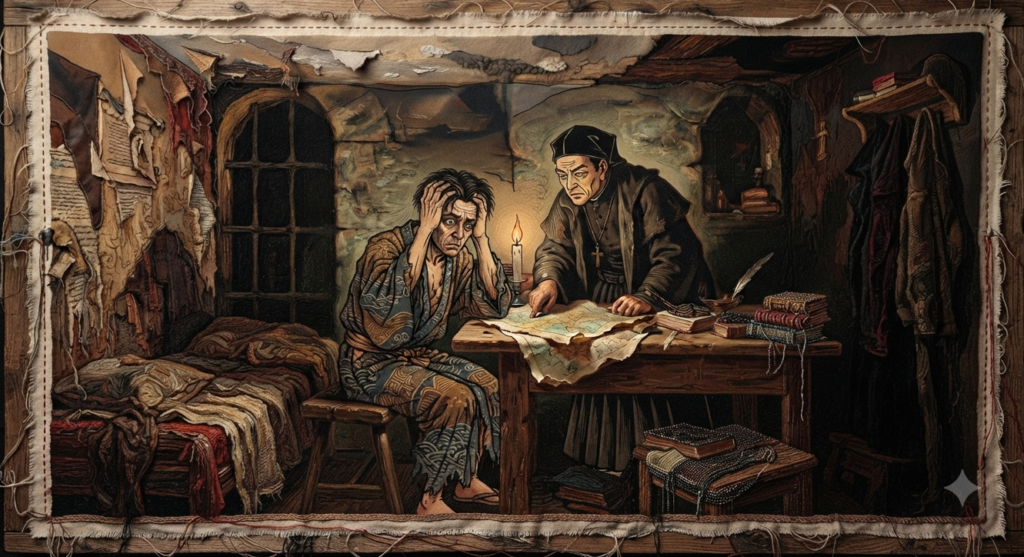
Figure 1. Raskolnikov: The Tormented Mind
Figure 1. Raskolnikov alone in his cramped garret, clutching his head in agony—a visual metaphor for the intellectual who cannot escape his own conscience.
Figure Description: A young man in shabby 19th-century clothing sits on a narrow bed in a tiny, cramped attic room. His face is pale and gaunt, his expression one of intense anguish and confusion. He clutches his head with both hands, as if trying to physically contain his racing thoughts. The room is bare and oppressive—a single candle flickers, casting long shadows. The mood is claustrophobic and tortured—capturing Raskolnikov’s psychological prison.
Introduction
Rodion Romanovich Raskolnikov is the protagonist of Fyodor Dostoevsky’s masterpiece Crime and Punishment, first published in 1866. The novel is widely regarded as one of the greatest works of literature ever written—a profound psychological analysis of guilt, redemption, and the human conscience.
Raskolnikov is a former law student who has been forced to drop out of university due to extreme poverty. He lives in a tiny, cramped garret in St. Petersburg, barely surviving on what little money he can scrape together from pawning his few remaining possessions. He is intelligent, proud, and deeply alienated from society. His name derives from the Russian word raskolnik, meaning “schismatic” or “divided”—a fitting description for a man torn between two opposing forces within himself.
Driven by poverty and an elaborate philosophical theory, Raskolnikov commits a brutal double murder: he kills Alyona Ivanovna, a cruel and exploitative pawnbroker, and her innocent half-sister Lizaveta, who accidentally witnesses the crime. His motive is not simply greed—it is to test his theory that “extraordinary” men have the right to transgress moral laws for the greater good. He believes that men like Napoleon are above ordinary morality, and he wants to prove that he belongs to this elite class.
But the murder does not bring him freedom or greatness. Instead, it plunges him into a terrifying spiral of guilt, paranoia, and physical illness. Raskolnikov’s real punishment is not the eight years of Siberian exile he eventually receives—it is the torment of his own conscience, which he cannot escape no matter how hard he tries to rationalize his crime.
“I’ve only killed a louse, Sonia, a useless, loathsome, harmful creature.” — Raskolnikov to Sonya
Through his relationship with Sonya Marmeladov—a prostitute who maintains an unwavering faith in God—Raskolnikov gradually comes to understand that his intellectual theories cannot override the fundamental demands of conscience and love. He confesses, accepts his punishment, and begins the long journey toward redemption.
Raskolnikov stands as one of literature’s most powerful explorations of the failure of intellect without conscience. His story asks: Can a person commit evil in the name of good and remain righteous?
The Righteous Dilemma: Can Evil Means Serve Good Ends?
Raskolnikov’s story forces us to confront one of the most dangerous questions in moral philosophy: Does a noble goal justify evil means?
Raskolnikov develops a theory dividing humanity into two categories:
- Ordinary people: The vast majority, who must live by the rules and obey the law
- Extraordinary people: The rare few—like Napoleon, Newton, or great leaders—who have the right to transgress moral boundaries in order to achieve something great for humanity
By this logic, killing the pawnbroker is not murder—it is a necessary act to remove a “louse” and use her money for the greater good. But after the murder, Raskolnikov discovers that his conscience does not care about his theories. He is tormented by guilt, and he cannot escape the moral truth that no theory can justify taking an innocent life—especially not the life of Lizaveta, who was completely innocent.
Table 1. The Righteousness Paradox: Raskolnikov’s Theory vs. His Conscience
| Raskolnikov’s Theory (Intellect) | Raskolnikov’s Conscience (Soul) |
|---|---|
| Extraordinary men are above moral law | Guilt torments him constantly |
| Killing the pawnbroker is “justified” | He cannot escape the horror of what he did |
| The ends justify the means | He becomes physically ill from shame |
| He is a “superman” like Napoleon | He faints at the mention of the murders |
| He acted for the greater good | He realizes he killed for himself alone |
Note. This table contrasts Raskolnikov’s intellectual justification for murder with the crushing weight of his conscience. The central righteous question is: Can any theory—no matter how brilliant—justify the taking of an innocent life?
The critical turning point comes when Raskolnikov confesses to Sonya. He tries to explain his theory to her, expecting her to understand. Instead, she weeps and begs him to confess and accept his punishment. Sonya represents the polar opposite of Raskolnikov’s intellectualism: she is faith, love, and compassion—forces that his cold logic cannot defeat.
Raskolnikov eventually realizes that his real crime was not the murder itself, but his belief that he had the right to judge who deserves to live and who deserves to die.
Key Scenes of Moral Choice
Scene 1: The Theory — The Birth of a Dangerous Idea
Long before the murder, Raskolnikov has been developing his theory of the “extraordinary man.” He publishes an article arguing that certain great men have the moral right to transgress ordinary laws in pursuit of higher goals. He believes that he might be one of these extraordinary men—and the only way to find out is to test himself.
The Question: Is it ever right for a person to place themselves above the law? What gives someone the right to decide who lives and who dies?
The Righteous Failure: Raskolnikov’s theory is seductive because it sounds logical. But it is built on pride and arrogance—the belief that his intellect makes him superior to others. True righteousness begins with humility, not superiority.
Scene 2: The Murder — Crossing the Line
Raskolnikov axes the pawnbroker to death, then kills her innocent half-sister Lizaveta when she walks in unexpectedly. The murder is brutal, chaotic, and horrifying. Raskolnikov almost gets caught, forgets to lock the door, and flees in a panic.
The Question: What happens when a person actually commits the act they have only imagined? Is there a difference between thinking about evil and doing it?
The Righteous Failure: Raskolnikov discovers that reality is not like theory. The murder is not clean or heroic—it is messy, terrifying, and wrong. His intellectual justifications dissolve in the face of actual violence.
Scene 3: The Illness — The Body Betrays the Mind
After the murder, Raskolnikov falls into a feverish delirium. He is ill, paranoid, and unable to function. He faints when the police discuss the murders. His body reveals what his mind refuses to admit: he cannot live with what he has done.
The Question: Can a person truly escape their conscience? What does it mean when your own body rebels against your decisions?
The Righteous Lesson: Conscience cannot be outsmarted. No matter how brilliant the theory, the human soul knows right from wrong—and it will not be silent.
Scene 4: The Confession to Sonya — The Turning Point
Raskolnikov visits Sonya and confesses everything. He expects her to be impressed by his theory. Instead, she is heartbroken. She does not judge him—she simply tells him to confess and accept his punishment. Sonya’s love and faith offer Raskolnikov the first glimpse of a path toward redemption.
The Question: What does it mean to truly confess? Is confession about punishment, or about healing?
The Righteous Lesson: Confession is the beginning of redemption. Raskolnikov cannot heal until he stops justifying his crime and accepts responsibility for it.
Scene 5: The Epilogue — Redemption Through Love
In the epilogue, Raskolnikov is in Siberia, serving his eight-year sentence. He remains proud and unrepentant—until he finally allows himself to love Sonya. In that moment, his cold heart begins to thaw. The novel ends with the hope that love can redeem even the most broken soul.
The Question: Is redemption possible for someone who has committed murder? What does it take to truly change?
The Righteous Lesson: Redemption is possible, but it requires surrender. Raskolnikov must let go of his pride, his theories, and his belief in his own superiority. Only then can he be reborn.
Memorable Quotes
Table 2. Key Quotes from Crime and Punishment on Conscience, Guilt, and Redemption
| Quote | Speaker | Significance |
|---|---|---|
| “I want to attempt a thing like that and am frightened by these trifles.” | Raskolnikov | His arrogance before the murder—he believes his plan is grand, not horrific |
| “Kill her, take her money and with the help of it devote oneself to the service of humanity and the good of all.” | Raskolnikov | His utilitarian justification for murder |
| “I’ve only killed a louse, Sonia, a useless, loathsome, harmful creature.” | Raskolnikov to Sonya | His desperate attempt to rationalize murder—calling a human being a “louse” |
| “The really great men must, I think, have great sadness on earth.” | Raskolnikov | His belief that greatness requires suffering—and justifies transgression |
| “To go wrong in one’s own way is better than to go right in someone else’s.” | Razumikhin | A friend’s wisdom—better to make your own mistakes than to follow others blindly |
| “Perhaps God and that Raskolnikov is personifying punishment as a force of justice in and of itself.” | Narrator | The idea that Raskolnikov’s guilt is itself a form of divine justice |
Note. These passages trace Raskolnikov’s journey from intellectual arrogance to the crushing weight of conscience. The quotes reveal his inability to escape the moral truth that no theory can justify murder.
Lessons on Righteousness from Raskolnikov
Table 3. Lessons on Righteousness from Crime and Punishment
| Lesson | Application |
|---|---|
| Conscience cannot be outsmarted | Raskolnikov believed his intellect could justify murder, but his conscience tormented him relentlessly. No theory can override the human soul’s knowledge of right and wrong. |
| The ends do not justify evil means | Raskolnikov killed for the “greater good,” but the murder destroyed him. Using evil means corrupts the actor, no matter how noble the goal. |
| Pride is the root of moral failure | Raskolnikov’s belief in his own superiority led him to commit murder. True righteousness begins with humility, not arrogance. |
| Redemption requires confession | Raskolnikov could not heal until he admitted his guilt and accepted punishment. Taking responsibility is the first step toward healing. |
| Love is stronger than logic | Sonya’s love and faith broke through Raskolnikov’s intellectual walls. Love—not intellect—is the ultimate force for righteousness. |
| Suffering can purify | Raskolnikov’s suffering—his guilt, his illness, his exile—ultimately led him toward redemption. Suffering, when accepted, can be a path to spiritual renewal. |
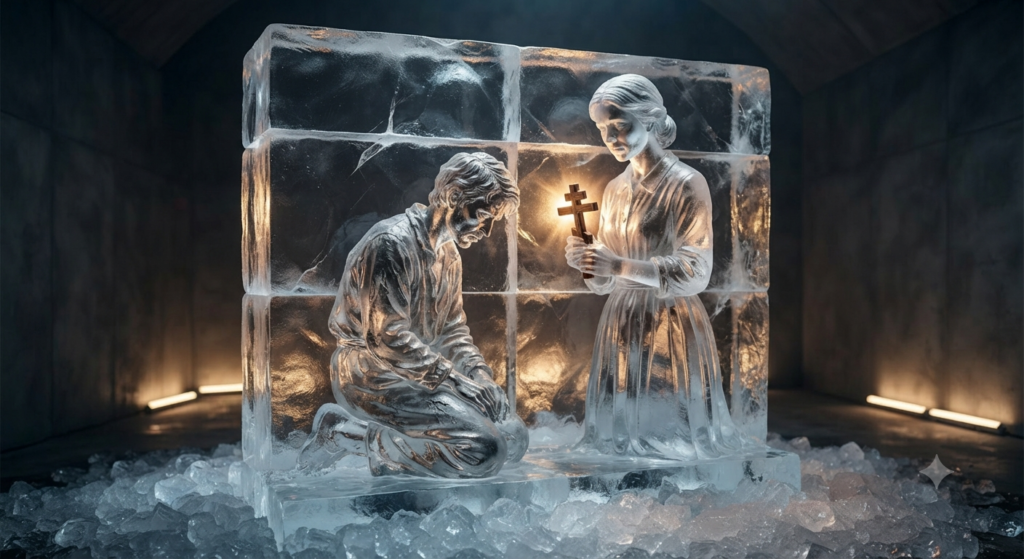
Figure 2 — Raskolnikov and Sonya: The Path to Redemption
Figure 2. Raskolnikov kneeling before Sonya, his head bowed in confession—a visual metaphor for the moment pride surrenders to love and redemption becomes possible.
Figure Description: A young man in shabby clothes kneels before a young woman in modest, worn clothing. The woman holds a small cross in her hands, her expression one of compassion and sorrow. The room is humble and dimly lit, with a single candle creating a warm glow. The man’s head is bowed in submission and humility—he is confessing, not with words, but with his posture. The mood is sacred and transformative—capturing the moment Raskolnikov begins his journey toward redemption through Sonya’s love and faith.
Further Resources
- Read the full text: Dostoevsky, F. (1866). Crime and punishment. The Russian Messenger. The novel is in the public domain and available for free through Project Gutenberg and Standard Ebooks.
- Listen to the audiobook: Free public domain recordings are available through Librivox.
- Watch the film adaptations:
- Crime and Punishment (1935). Directed by Josef von Sternberg. Columbia Pictures. Starring Peter Lorre as Raskolnikov.
- Crime and Punishment (1970). Directed by Lev Kulidzhanov. Mosfilm. Starring Georgy Taratorkin as Raskolnikov.
- Crime and Punishment (2002). Directed by Menahem Golan. Starring Crispin Glover as Raskolnikov.
- Explore more: Visit the Literary Figures of Righteousness Hall to discover other literary characters who faced moral dilemmas.
References
Dostoevsky, F. (1866). Crime and punishment. The Russian Messenger.
von Sternberg, J. (Director). (1935). Crime and punishment [Film]. Columbia Pictures.
Kulidzhanov, L. (Director). (1970). Crime and punishment [Film]. Mosfilm.
Golan, M. (Director). (2002). Crime and punishment [Film]. (No major studio).