
Historical Righteous Innovations
This category examines key moments in history when creative and courageous moral actions—Righteous Innovations— reshaped institutions, norms, and the direction of society.
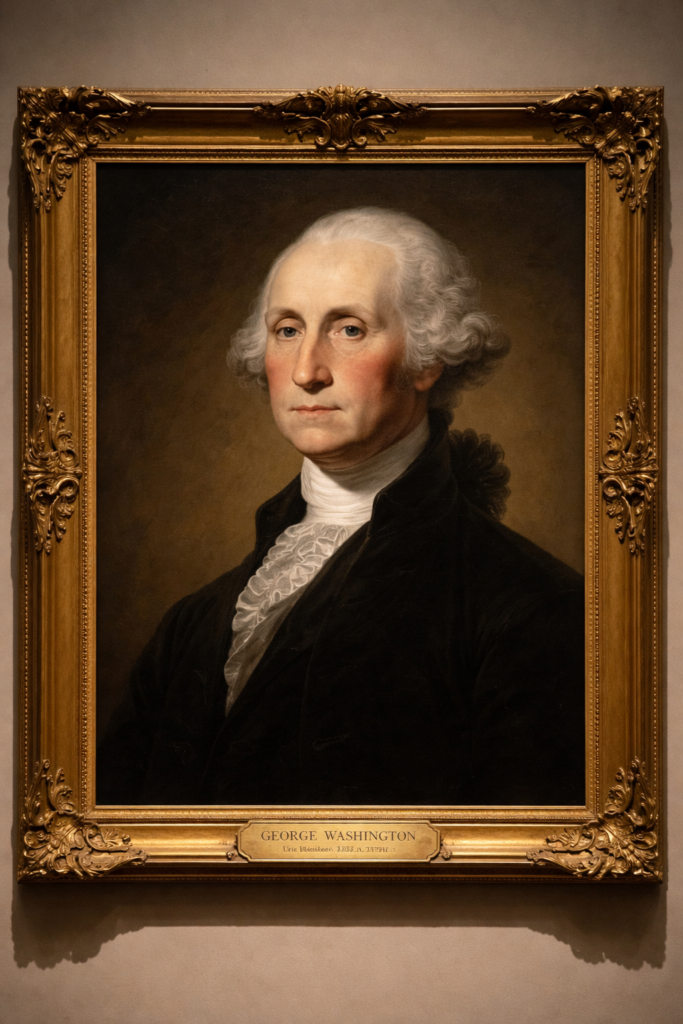
George Washington Voluntarily Leaving the Presidency (USA) (1797)
The decision of George Washington to voluntarily step down from power in 1797 represents a groundbreaking righteous innovation in political leadership.
Righteous Innovation
At a time when political leaders often ruled for life, Washington chose to relinquish power voluntarily after two terms.
This action established a new principle: that leadership in a republic should be limited, temporary, and accountable, rather than permanent or self-serving.
His decision was not required by law but guided by moral judgment and a commitment to the long-term stability of the nation.
Why It Was Innovative
Washington’s choice created a new political norm in which:
- Power is transferred peacefully rather than forcefully
- Leaders step down by principle, not pressure
- Institutions are valued above individual authority
In the late 18th century, this was highly unusual. Many nations were governed by monarchs or leaders who held power indefinitely.
By stepping down, Washington redefined what ethical leadership could look like in a republic.
Impact and Influence
This righteous innovation helped shape the development of democratic systems in the United States and beyond.
It established the tradition of peaceful transfer of power, which became a foundational principle of modern democracies.
The precedent lasted for over a century and was later formalized in the Twenty-second Amendment to the United States Constitution.
Reflection
Washington’s decision invites reflection on the nature of power and leadership.
It raises important questions: When should leaders step aside? How can institutions ensure that power serves the public rather than the individual?
It reminds us that true leadership is not measured by how long power is held, but by the wisdom and integrity shown in relinquishing it.
Legacy of the Innovation
Washington’s decision remains one of the clearest examples of how a single moral choice can reshape political systems.
It demonstrates that true leadership is defined not by holding power, but by the willingness to give it up for the greater good.
References
Ellis, J. J. (2004). His Excellency: George Washington. Knopf.
Chernow, R. (2010). Washington: A life. Penguin Press.
Wood, G. S. (1992). The radicalism of the American Revolution. Vintage Books.