
Righteous Innovation: Lincoln’s Emancipation Proclamation and the Team of Rivals
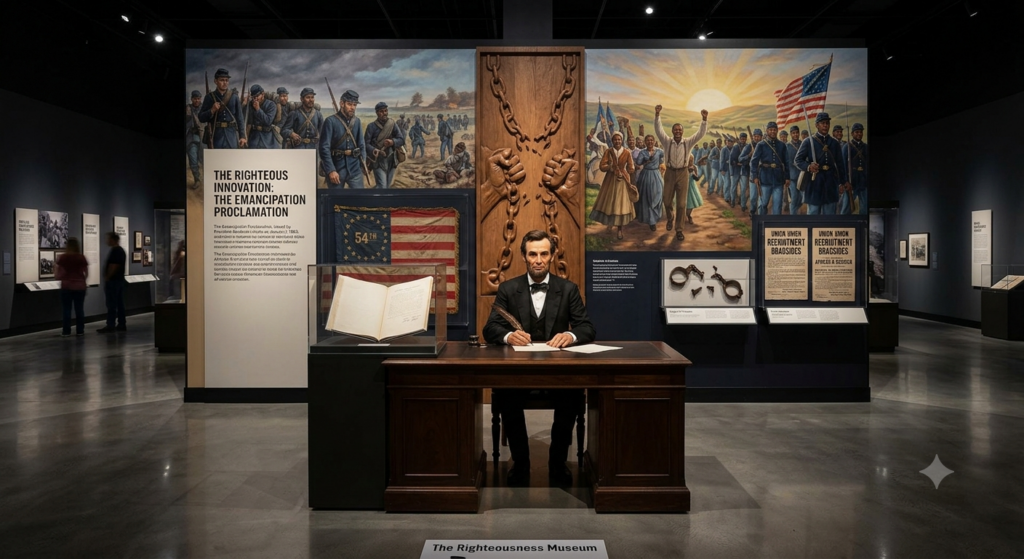
Figure 1. The Righteous Innovation: President Lincoln Signing the Emancipation Proclamation”
Historical Righteous Innovations
This category examines key moments in history when creative and courageous moral actions — Righteous Innovations — reshaped institutions, norms, and the direction of society.
Righteous Innovation 1: The Emancipation Proclamation
The Righteous Innovation
The Emancipation Proclamation, issued by President Abraham Lincoln on January 1, 1863, during the American Civil War, represents one of history’s most profound righteous innovations in law, leadership, and moral vision.
Lincoln declared that all enslaved people in Confederate-held territory “shall be then, thenceforward, and forever free.”
This act transformed the Civil War from a conflict focused primarily on preserving the Union into a moral struggle against slavery. It redefined the purpose of the war and aligned national policy with the principle of human freedom. Although limited in immediate enforcement — it applied only to areas in rebellion — the proclamation fundamentally redefined the moral trajectory of the United States.
As Lincoln himself reflected:
“If slavery is not wrong, nothing is wrong.”
Why It Was Innovative
The Emancipation Proclamation introduced a new model of leadership in which:
- Moral purpose reshapes political policy
- Government authority is used to advance human rights
- War is reframed as a struggle for justice, not only for power
At the time, slavery was deeply embedded in economic and political systems. Declaring emancipation during an ongoing war — when the Union was not yet winning — was a bold and unprecedented use of executive authority for moral transformation.
“I never, in my life, felt more certain that I was doing right, than I do in signing this paper.”
— Abraham Lincoln, after signing the Emancipation Proclamation
Table 1: Impact and Influence of the Emancipation Proclamation
| Impact | Description |
|---|---|
| Empowerment of the Enslaved | Encouraged enslaved people to seek freedom; thousands escaped to Union lines |
| Military Strength | Allowed Black men to join the Union Army, with over 180,000 African American soldiers serving |
| International Shift | Discouraged Britain and France from supporting the Confederacy |
| Moral Clarity | Reframed the war as a struggle for human freedom |
| Thirteenth Amendment | Laid the foundation for the permanent abolition of slavery in 1865 |
| Civil Rights Legacy | Became a cornerstone for future civil rights movements |
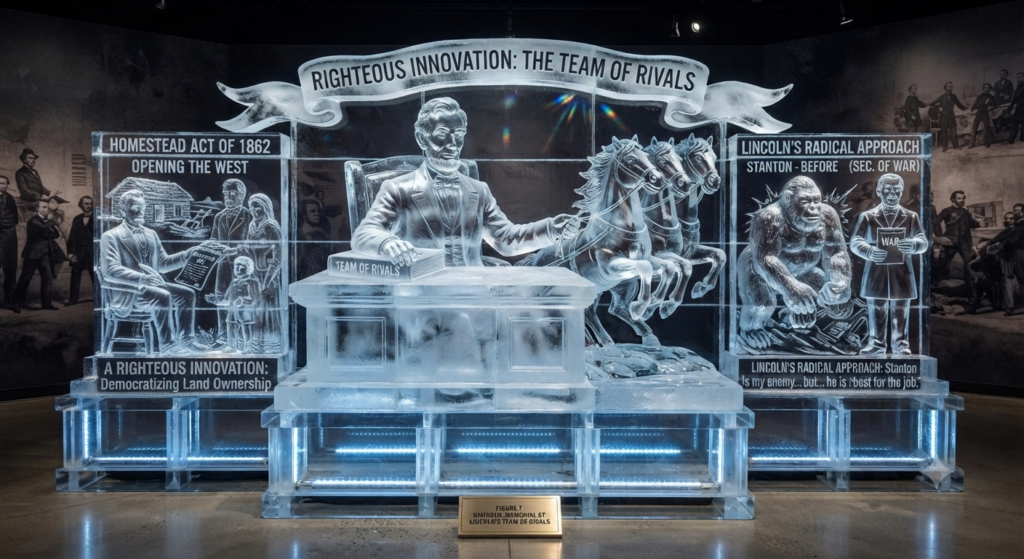
Figure 2. Righteous Innovation: Lincoln’s Team of Rivals & The Homestead Act
Righteous Innovation 2: The Team of Rivals
The Origin of the Term
The phrase “Team of Rivals” was coined by historian Doris Kearns Goodwin in her bestselling 2005 book, Team of Rivals: The Political Genius of Abraham Lincoln. It captured Lincoln’s extraordinary decision to appoint his former political opponents — William H. Seward, Salmon P. Chase, and Edward Bates — to the most powerful positions in his Cabinet.
Washington’s Precedent: A Contrast
This practice was not entirely new. George Washington had also brought together political opposites like Alexander Hamilton and Thomas Jefferson. However, the comparison reveals a crucial difference:
Table 2: Washington vs. Lincoln — Contrast in Cabinet Management
| Contrast | Washington’s Cabinet | Lincoln’s Cabinet |
|---|---|---|
| Outcome | Hamilton and Jefferson became bitter enemies | Former rivals became loyal allies |
| Management | Unable to reconcile fundamental differences | Successfully united rivals for a common cause |
| Legacy | Partisan division intensified | National unity preserved |
Lincoln’s achievement was not simply appointing rivals — it was how he managed them. He used his exceptional emotional intelligence to transform personal grievances into collaborative service for the common cause of saving the Union.
Lincoln’s Radical Approach: Appointing Critics
What made Lincoln truly remarkable was his willingness to appoint not just rivals, but people who had personally mocked, insulted, and humiliated him.
Edwin M. Stanton: From “Gorilla” to Secretary of Defense
The most famous example is Edwin M. Stanton. Before Lincoln became president, they worked together on a patent case. Stanton completely dismissed Lincoln, treating him like a “country bumpkin” and mocking him as a “long-armed ape.” Even after Lincoln was elected, Stanton publicly insulted him, calling him a “gorilla” and an “imbecile.”
Despite these insults, Lincoln appointed Stanton as Secretary of Defense in 1862. Lincoln reportedly said:
“Stanton is my enemy… but for the sake of the country, I believe he is the best man for the job.”
Stanton transformed the War Department and became one of Lincoln’s most trusted advisors. When Stanton publicly called Lincoln’s orders “foolish,” Lincoln simply replied:
“If Stanton says I’m a fool, then I must be one — because he is almost always right.”
Lincoln even gave Stanton the power to veto his own orders. The two eventually became close friends.
Salmon P. Chase: The Ambitious Treasury Secretary
Salmon P. Chase was one of Lincoln’s main rivals for the 1860 nomination. He never hid his ambition for the presidency, repeatedly threatened to resign, and publicly criticized Lincoln’s decisions. Lincoln remarked that Chase had “the presidential fever.”
Yet Lincoln valued Chase’s abilities, calling him “a very able man.” Lincoln’s principle was:
“I do not wish to get rid of anyone, even though he may be foolishly opposing me behind my back.”
William H. Seward: The Arrogant Secretary of State
William H. Seward was Lincoln’s strongest opponent for the nomination. He initially accepted his position with condescension and maintained an arrogant attitude toward Lincoln. There is a famous anecdote: Seward once saw Lincoln polishing his own shoes and scolded him:
“In Washington, we don’t polish our own shoes.”
Lincoln replied with a smile:
“Then, Mr. Secretary, whose shoes do you polish?”
Despite Seward’s arrogance, Lincoln recognized his intellect. Seward eventually became one of Lincoln’s most loyal allies.
Why This Was a Righteous Innovation
Lincoln’s approach was a true righteous innovation because it challenged the conventional logic of power:
- National purpose above personal pride: Lincoln understood that in a time of crisis, the country needed the best minds — regardless of personal grievances.
- Criticism as a safeguard: Lincoln did not see criticism as a threat but as a corrective mechanism. By giving Stanton the power to veto his orders, he used his critic’s honesty to protect himself from his own mistakes.
- Transforming enemies into partners: Lincoln trusted and valued his critics not because they were friends, but because they were the most honest and capable advisors he could find.
Table 3: Key Figures in Lincoln’s Team of Rivals
| Name | Position | Relationship Before Appointment | Legacy |
|---|---|---|---|
| William H. Seward | Secretary of State | Strongest rival for 1860 nomination; arrogant and critical | Became Lincoln’s most loyal ally |
| Salmon P. Chase | Secretary of the Treasury | Main rival; openly ambitious for presidency | Remained critical but respected by Lincoln |
| Edward Bates | Attorney General | Rival for nomination | Served effectively in Cabinet |
| Edwin M. Stanton | Secretary of War | Mocked Lincoln publicly; called him “gorilla” and “imbecile” | Became Lincoln’s trusted friend and advisor |
Inspiring Future Generations and Modern Leaders
Lincoln’s righteous innovation has deeply influenced leaders across generations:
Barack Obama
President Barack Obama appointed his primary primary opponent, Hillary Clinton, as Secretary of State in his first term — widely seen as a direct echo of Lincoln’s “Team of Rivals” approach. Obama recognized the power of bringing talented rivals into leadership and using their expertise to serve the nation.
Modern Leadership
This principle is now widely embraced in business, academia, and other fields. Leaders are encouraged to “embrace diverse perspectives” and recognize that in difficult times, they need people around them who can “challenge their assumptions.”
Table 4: Modern Applications of Lincoln’s “Team of Rivals” Innovation
| Leader | Application of Lincoln’s Innovation |
|---|---|
| Barack Obama | Appointed Hillary Clinton as Secretary of State |
| Modern CEOs | Build diverse leadership teams with differing viewpoints |
| Academic Leaders | Encourage intellectual diversity and debate |
| Government Leaders | Seek input from political opponents and critics |
Applying This Wisdom to Our Daily Lives
In our daily lives, we can also apply this wisdom as the Table 5.
Table 5: Applying Lincoln’s Wisdom to Daily Life
| Area | Application |
|---|---|
| In Teams | Actively invite colleagues who hold different or opposing views into decision-making conversations. Treat disagreements as opportunities to refine ideas, not as personal conflicts. |
| In Relationships | Learn to collaborate — even build friendships — with people with whom you have had past disagreements or rivalries. Focus on shared goals. |
| In Personal Growth | Cultivate Lincoln’s emotional intelligence — learn to manage your own emotions, understand others’ feelings, and navigate conflict with empathy. |
Righteous Innovation 3: The Homestead Act — Land as a Tool for Justice and Opportunity
The Homestead Act (USA, 1862)
The Homestead Act of 1862, signed into law by President Abraham Lincoln on May 20, 1862, represents a profound righteous innovation in land policy, economic justice, and democratic opportunity. It transformed public land from a source of government revenue into a vehicle for ordinary citizens to achieve economic independence and dignity.
The Righteous Innovation
The Homestead Act declared that any adult citizen (or person intending to become a citizen) who had never borne arms against the United States could claim 160 acres of public land — almost free of charge.
To receive full ownership, claimants had to:
- Live on the land for five years
- Improve the land (build a home and cultivate crops)
- Pay a small filing fee (around $10–$18)
This was a radical departure from previous land policies, which had treated public land primarily as a source of revenue to pay off national debt, rather than as a resource for building a just and equitable society.
Why It Was Innovative
Before 1862, the U.S. government’s approach to land distribution followed a different logic. Land was sold to generate income, benefiting wealthy speculators and large landowners rather than ordinary citizens.
Table 6: Land Policies Before the Homestead Act (1862)
| Previous Policy | Approach | Limitation |
|---|---|---|
| Preemption Act of 1841 | Claim up to 160 acres at $1.25/acre | Required purchase; not free |
| Donation Land Claim Act of 1850 | Up to 320 acres in Oregon at $1.25/acre | Excluded Black citizens; required purchase |
| Bounty-Land Warrants | Land grants to veterans | No residency requirement; often sold to speculators |
Table 7: How the Homestead Act Broke the Old Pattern
| Innovation | Why It Matters |
|---|---|
| From “Sale” to “Gift” | Land was offered almost free — not sold for profit |
| From “Speculation” to “Settlement” | Required five years of residency and improvement — land was for living, not for hoarding |
| From “Elite Privilege” to “Common Right” | Open to any citizen or intended citizen — including immigrants — regardless of wealth or status |
| From “Revenue Tool” to “Democratic Foundation” | Land policy shifted from funding the state to empowering the people |
The Righteous Logic Behind the Homestead Act
Table 8: Righteous Principles Embodied in the Homestead Act
| Righteous Principle | How the Homestead Act Embodied It |
|---|---|
| Distributive Justice | Land was distributed to ordinary people, not just the wealthy or well-connected |
| Procedural Justice | The process was open, transparent, and based on clear rules — anyone could apply |
| Opportunity for All | Immigrants and poor citizens were given the same chance to build a life |
| Dignity of Labor | The Act rewarded work, effort, and perseverance — not birth or privilege |
| Repairing the Divide | It addressed the growing gap between rich and poor by giving the poor a tangible asset |
Impact and Influence
Table 9: Impact and Influence of the Homestead Act
| Impact | Description |
|---|---|
| Western Expansion | Over 1.6 million homestead claims were filed, covering more than 270 million acres of land |
| Economic Independence | Millions of families gained economic independence through land ownership |
| Immigrant Opportunity | Immigrants from Europe and elsewhere were drawn to the promise of free land |
| Agricultural Development | The Act spurred the growth of American agriculture and the settlement of the West |
| Democratization of Land | The Act fundamentally democratized land ownership in the United States |
| Foundation for Future Rights | The idea that government should provide opportunity became a lasting American principle |
| Global Influence | The Homestead Act inspired similar land reform movements around the world |
Connection to Lincoln’s Righteous Innovations
The Homestead Act was part of Lincoln’s broader vision of righteous governance — a vision that included: This table 10 summarizes Abraham Lincoln’s three major righteous innovations — the Emancipation Proclamation, the Homestead Act, and the Team of Rivals — and their core purposes.
Table 10: Lincoln’s Three Righteous Innovations
| Lincoln’s Innovation | Year | Core Purpose |
|---|---|---|
| Emancipation Proclamation | 1863 | Freedom from slavery |
| Homestead Act | 1862 | Freedom through economic independence |
| Team of Rivals | 1861–1865 | Freedom through inclusive, humble leadership |
Together, these three innovations formed a complete vision of freedom: freedom from oppression, freedom through opportunity, and freedom through collaboration.
Challenges and Adversity
Abraham Lincoln’s presidency was marked by extraordinary political, military, and personal challenges. The Civil War resulted in immense loss of life and deep divisions within the country. Yet Lincoln’s response to these challenges revealed the depth of his righteous leadership.
Throughout the conflict, Lincoln faced military setbacks, fierce criticism from political opponents, and the constant struggle to maintain national unity in a time of war. Many of his sharpest critics were not distant enemies but members of his own Cabinet — men who had publicly mocked him, challenged his decisions, and even plotted to replace him. Rather than silencing or dismissing them, Lincoln chose a different path: he kept them close, listened to their honest counsel, and used their criticism as a safeguard against his own errors.
Lincoln also endured profound personal hardship, including the death of his son Willie Lincoln in 1862, which deeply affected him during the most difficult years of the war. Yet through this grief, Lincoln’s resilience deepened, and his commitment to justice and unity remained steadfast.
These experiences tested Lincoln’s character and strengthened his determination to guide the nation through one of its most turbulent periods. His ability to transform personal pain into national purpose, and to turn critics into allies, became one of the most powerful expressions of his righteous leadership.
Legacy
Abraham Lincoln is remembered as a symbol of moral courage, justice, and principled leadership. His role in preserving the United States and ending slavery reshaped the nation’s legal and moral foundations.
But Lincoln’s legacy is not only about what he achieved — it is also about how he achieved it. His two righteous innovations — the Emancipation Proclamation and the Team of Rivals — remain powerful models for leadership in times of crisis.
Table 6: Summary of Lincoln’s Two Righteous Innovations
| Righteous Innovation | Key Insight |
|---|---|
| Emancipation Proclamation | Legal authority can be used as a tool for moral progress |
| Team of Rivals | True leadership requires the courage to work alongside critics and transform them into partners |
Lincoln’s life and leadership continue to inspire discussions about human rights, equality, and ethical leadership. His dedication to the ideals of freedom and democratic governance remains central to the historical identity of the United States.
“The dogmas of the quiet past are inadequate to the stormy present. We must think anew, and act anew.”
— Abraham Lincoln, Annual Message to Congress (1862)
Today, Lincoln is widely regarded as one of the most influential leaders in modern history and an enduring example of leadership guided by conscience, resilience, and moral responsibility.
Reflection Questions
- What does Lincoln’s Emancipation Proclamation teach us about using authority for moral progress?
- How can leaders today apply Lincoln’s “Team of Rivals” approach in their own organizations?
- In what ways can criticism be a safeguard for wise decision-making?
- How can we apply Lincoln’s wisdom in our daily lives — in teams, relationships, and personal growth?
References
Foner, E. (2010). The fiery trial: Abraham Lincoln and American slavery. W. W. Norton & Company.
Goodwin, D. K. (2005). Team of rivals: The political genius of Abraham Lincoln. Simon & Schuster.
Guelzo, A. C. (2004). Lincoln’s Emancipation Proclamation: The end of slavery in America. Simon & Schuster.
Holzer, H. (2012). Emancipating Lincoln: The Proclamation in text, context, and memory. Harvard University Press.
McPherson, J. M. (1988). Battle cry of freedom: The Civil War era. Oxford University Press.
Oakes, J. (2013). Freedom national: The destruction of slavery in the United States, 1861–1865. W. W. Norton & Company.