
The Rock Badger (Hyrax): Small Creature, Eternal Wisdom
Introduction to the Animal
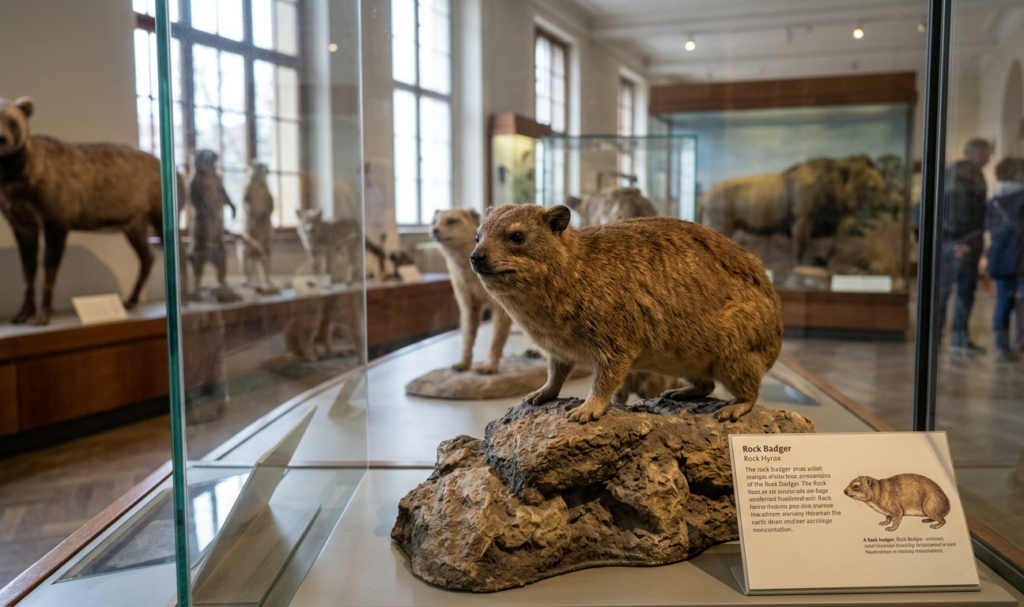
The rock badger, known in Hebrew as shafan and more accurately identified as the Syrian rock hyrax (Procavia capensis syriaca), is a small, furry mammal native to the rocky terrains of the Middle East and Africa (Coakley, 2025). Despite its common name, the rock badger is neither a badger nor a rodent; surprisingly, its closest living relatives are the elephant and the rhinoceros. These creatures, weighing only 3-4 kilograms, possess unique physical adaptations, including rubber-like foot pads that secrete a clammy sweat, enabling them to scale nearly vertical rock faces with ease (Reyburn & Fry, 2000).
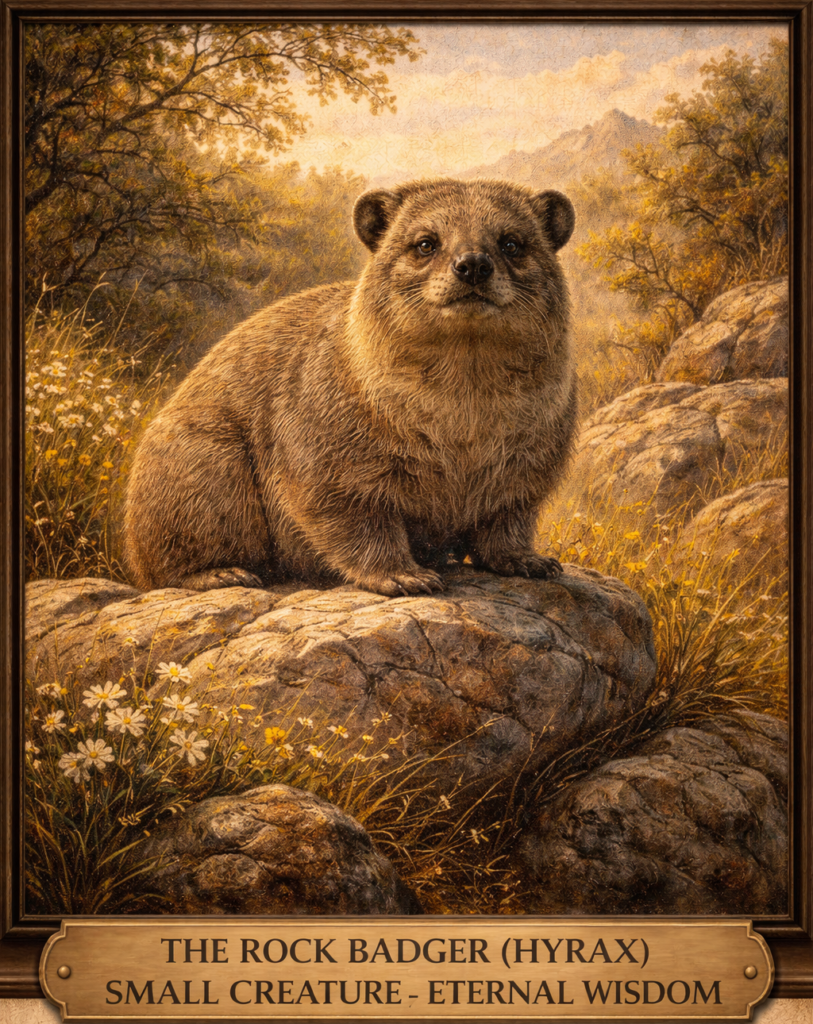
The Bible mentions the hyrax in several passages. It is listed among the unclean animals in Levitical law, described as “chewing the cud” but not having a split hoof. Psalm 104 celebrates God’s provision, noting that “the high mountains are for the wild goats; the cliffs are a refuge for the rock badgers.” Yet it is in the book of Proverbs that this humble creature receives its highest commendation, counted among the “four things on earth that are small, but they are exceedingly wise” (Coakley, 2025).
The Wisdom of the Rock Badger
The wisdom of the rock badger is rooted in self-awareness. The biblical text states simply: “Rock badgers are creatures of little power, yet they make their homes in the crags” (Proverbs 30:26). The acknowledgment of “little power” recognizes a profound limitation. The rock badger cannot outrun predators, cannot fight off eagles or leopards, and possesses no natural weapons for defense. It has “little power” by any measurable standard.
Yet the rock badger does not despair over its weakness. Instead, it chooses a wise strategy: dwelling in the crags. These rocky crevices, often inaccessible to larger predators, provide natural fortresses where the hyrax finds protection (Reyburn & Fry, 2000). Observers in places like Ein Gedi near the Dead Sea can still watch these creatures scrambling along the cliffs, living out the proverb’s lesson daily.
The hyrax’s wisdom extends beyond individual survival to community cooperation. These animals live in colonies and post sentinels—guards that watch for danger while others feed. When a predator approaches, the sentinel emits a distinct whistle, warning the colony to retreat to the safety of the rocks. This combination of individual humility and communal vigilance reflects a sophisticated understanding of how the vulnerable can thrive together (Coakley, 2025).
The Righteousness of the Rock Badger
If wisdom is knowing where to find safety, righteousness is the act of dwelling there. The rock badger’s choice to “make their homes in the crags” is not merely practical—it is a model for righteous living.
Righteousness, across many ethical and religious traditions, involves living in right relationship with a higher power, trusting in protection rather than one’s own strength. The rock badger embodies this truth: acknowledging its powerlessness, it builds its house on the Rock. This is precisely the posture of the righteous person described throughout wisdom literature (Reyburn & Fry, 2000).
The following table summarizes the key virtues demonstrated by the rock badger and their ethical implications:
| Virtue Demonstrated | Behavioral Evidence | Ethical Implication |
|---|---|---|
| Humility | Acknowledges “little power” without despair | Righteousness begins with honest self-assessment |
| Prudence | Chooses safe dwelling in the crags | Wise action follows accurate self-knowledge |
| Community | Lives in colonies with shared vigilance | No one pursues righteousness alone |
| Gratitude | Accepts the refuge provided by nature | Security is a gift, not an achievement |
| Perseverance | Returns to the rocks daily for protection | Righteousness is a daily practice, not a single event |
Furthermore, the rock badger models righteousness through its community life. The hyrax colony, with its shared vigilance and mutual protection, demonstrates that righteousness is not solitary isolation but life lived in accountable community. The sentinel who warns the colony practices sacrificial love—a reminder that ethical living includes bearing one another’s burdens (Coakley, 2025).
Even the hyrax’s designation as “unclean” in Levitical law carries a lesson about righteousness. The dietary laws taught ancient communities that holiness requires discernment and separation. The hyrax, though not fit for the table, was not despised; rather, “the cliffs are a refuge for the rock badgers” (Psalm 104:18). This affirms that righteousness is not about status or strength but about finding one’s appointed place in the created order. The hyrax is exactly where it belongs—in the rocks, safe and provided for.
Reflection
The rock badger invites every visitor to this museum to ask a searching question: Where do I find my security?
In a world that celebrates power, wealth, and self-sufficiency, the hyrax stands as a quiet rebuke. It does not pretend to be strong. It does not envy the eagle’s wings or the leopard’s speed. Instead, it knows its limits and acts accordingly. This is the beginning of both wisdom and righteousness—the honest admission that we are not self-sufficient and that true safety is found outside ourselves.
For those who feel weak, vulnerable, or overwhelmed, the hyrax offers hope. Righteousness does not require immense strength or flawless performance. It requires only the humility to admit one’s need and the wisdom to take shelter in a secure foundation. As one ancient writer put it, the prudent see danger and take refuge (Reyburn & Fry, 2000).
May all who visit the WiseRighteous Nature Hall look upon the small rock badger and remember: true security is not found in pretending to be strong, but in honestly dwelling where we are safe.
References
Coakley, J. (2025, June 28). Wisdom of the Coney. Today in the Word.
Reyburn, W. D., & Fry, E. M. (2000). A Handbook on Proverbs. United Bible Societies.

SAT/PSAT Alignment Practice through Rock Badger (Hyrax)