
Righteous Decisions of the Field Gallery
Sports: Muhammad Ali (USA) (1967)
The actions of Muhammad Ali represent a powerful example of righteous courage in sports and moral conviction in public life.
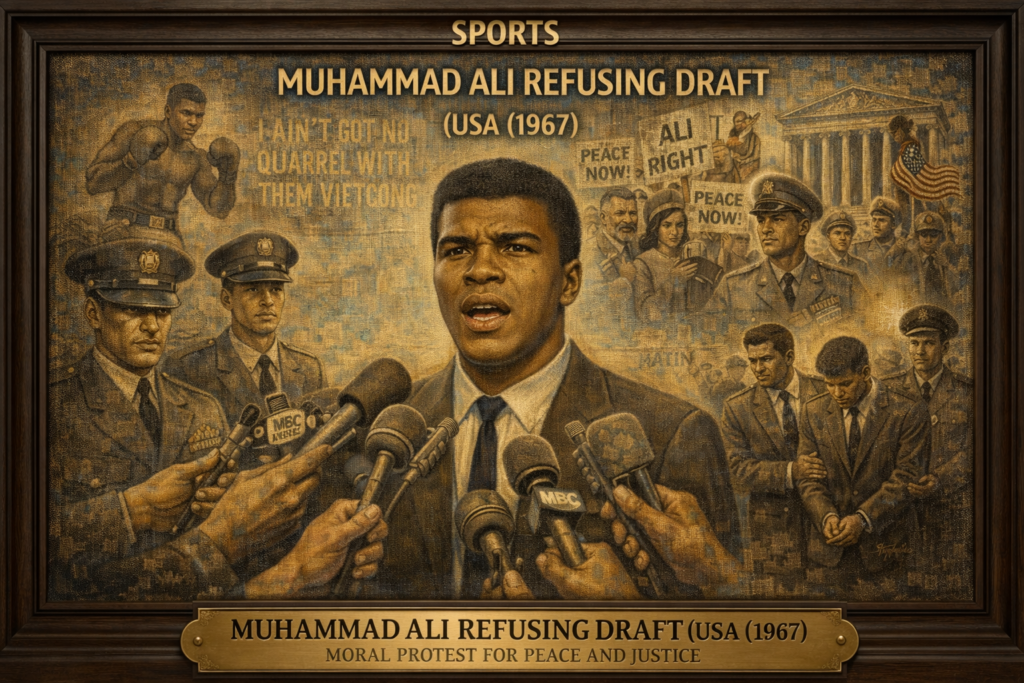
Righteous Act
In 1967, Muhammad Ali refused induction into the U.S. military during the Vietnam War, citing his religious beliefs and opposition to the war.
As a result, he was stripped of his boxing titles, banned from the sport during his prime years, and faced legal prosecution.
Despite these consequences, he remained firm in his stance, choosing principle over personal success.
Righteous Innovation
Ali’s stand represents a righteous innovation in athlete-led moral protest.
It established a model in which:
- Athletes use their platform to express ethical and political convictions
- Personal sacrifice is accepted in defense of justice and conscience
- Sports figures become voices for social and moral issues
This redefined the role of athletes beyond competition, positioning them as influential advocates for change.
Why It Was Righteous
His actions demonstrated:
- Courage to stand against popular opinion
- Commitment to conscience and belief
- Willingness to sacrifice career and reputation for principle
Impact and Influence
Ali’s resistance became a powerful symbol of opposition to the Vietnam War and inspired broader discussions about civil rights, religious freedom, and justice.
His actions influenced future generations of athletes to speak out on social and political issues.
Reflection
Ali’s decision invites reflection on the relationship between personal belief and public responsibility.
It raises important questions: When should individuals resist authority? What is the cost of standing by one’s principles?
It reminds us that righteous action often requires sacrifice, but can inspire lasting change.
Legacy
Muhammad Ali is remembered as both a legendary athlete and a symbol of moral courage and integrity.
His legacy continues to influence conversations about justice, activism, and the role of individuals in shaping society.
References
Hauser, T. (1991). Muhammad Ali: His life and times. Simon & Schuster.
Eig, J. (2017). Ali: A life. Houghton Mifflin Harcourt.
Marqusee, M. (1999). Redemption song: Muhammad Ali and the spirit of the sixties. Verso.