
Righteous Figures of the Field — Technology Category
Technology: Tim Berners-Lee (UK) (1989)
The work of Tim Berners-Lee represents a powerful example of righteous innovation in technology for the benefit of humanity.
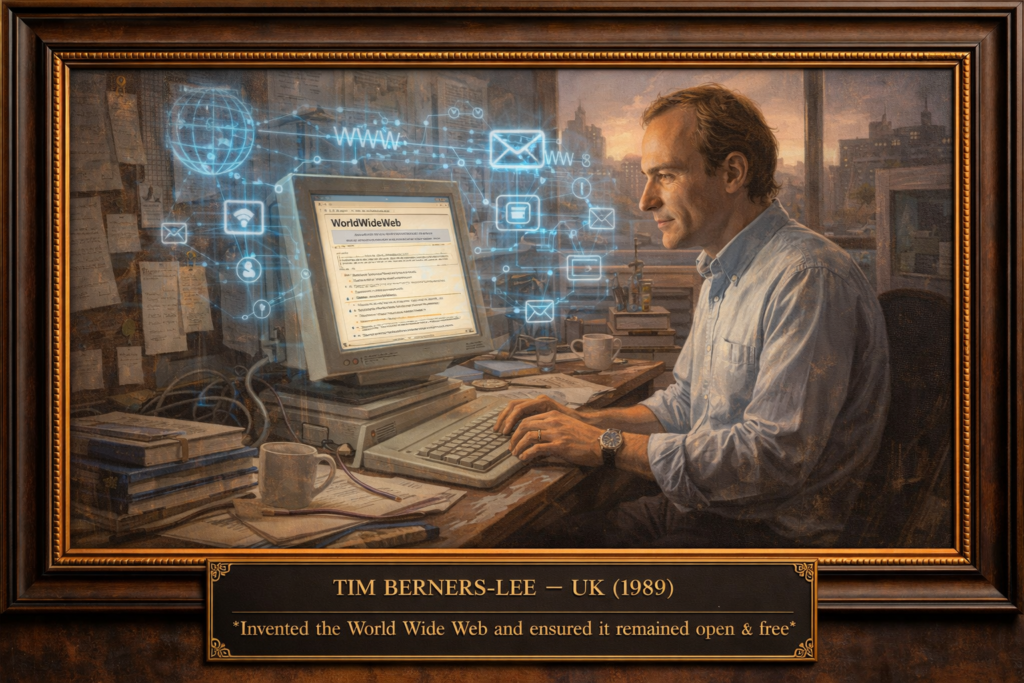
Righteous Act
In 1989, while working at CERN, Tim Berners-Lee proposed and developed the World Wide Web, enabling information to be shared across the internet through a universal system.
His invention introduced key technologies such as HTML, HTTP, and web browsers, making it possible for people around the world to access and exchange information easily.
Righteous Innovation
Tim Berners-Lee’s work represents a righteous innovation in open-access technology.
He chose not to patent or restrict the World Wide Web, creating a model in which:
- Information is freely accessible to everyone
- Technology is developed for the common good, not exclusive control
- Innovation grows through openness and global collaboration
This decision ensured that the web would remain a universal and decentralized platform.
Why It Was Righteous
His actions demonstrated:
- Commitment to openness and accessibility
- Ethical responsibility in technological creation
- Dedication to using innovation to empower humanity
He prioritized the public benefit of his invention over personal profit or control.
Impact and Influence
The World Wide Web transformed communication, education, business, and global connectivity.
It enabled the rapid spread of knowledge and created new opportunities for collaboration across countries and cultures.
His decision to keep the web open allowed it to grow into one of the most important technologies in modern history.
Legacy
Tim Berners-Lee is recognized as a pioneer of the digital age and a symbol of ethical innovation in technology.
His work continues to influence discussions about internet freedom, access to information, and the responsible development of digital systems.
References
Berners-Lee, T. (1999). Weaving the Web. HarperCollins.
Gillies, J., & Cailliau, R. (2000). How the Web was born. Oxford University Press.
Isaacson, W. (2014). The innovators. Simon & Schuster.