
Unrighteous Events of the Field Gallery
Agriculture: Belgian Dioxin Crisis (Belgium) (1999)
The Belgian Dioxin Crisis serves as a significant example of the absence of righteousness in agricultural and food safety practices, highlighting the consequences of negligence and lack of oversight.
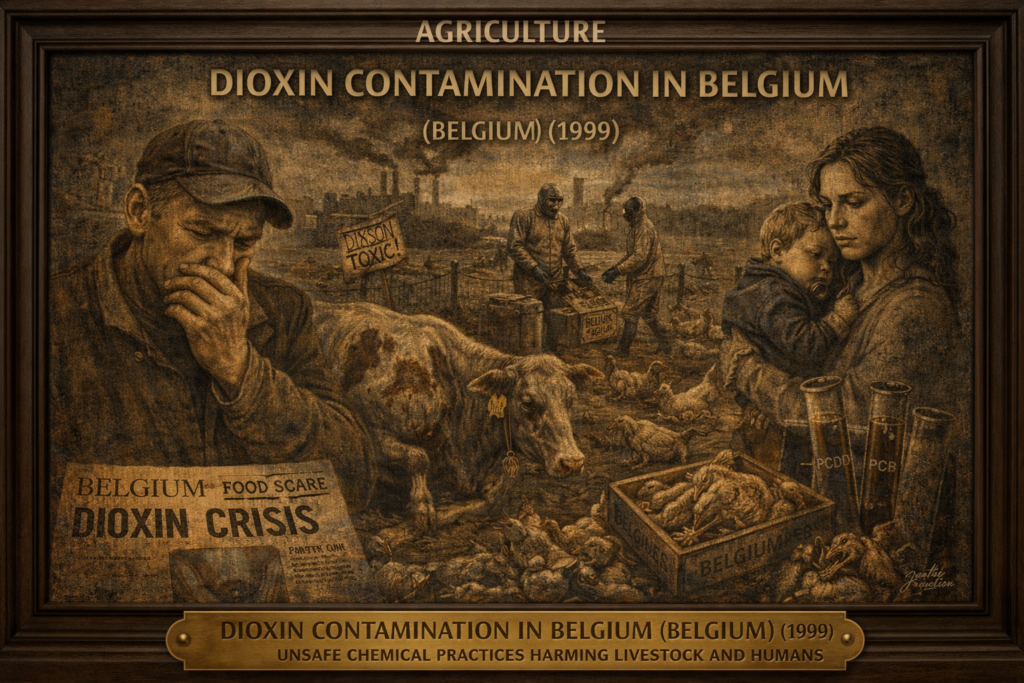
Unrighteous Act
In 1999, animal feed in Belgium was contaminated with dioxins due to the use of improperly processed industrial fats.
This contamination entered the food chain, affecting poultry, eggs, and other livestock products consumed by the public.
The failure to ensure safe production practices led to widespread health concerns and economic disruption.
Ethical Breakdown
This case illustrates a failure of ethical responsibility in which:
- Safety standards were neglected
- Harmful substances entered the food supply
- Transparency and timely response were insufficient
It demonstrated how lapses in regulation and accountability can endanger both public health and trust.
Why It Matters
The crisis highlighted:
- The importance of strict food safety and quality control
- The risks of inadequate oversight in agricultural systems
- The need for accountability and transparency in food production
Impact and Influence
The contamination led to massive recalls of food products, economic losses for farmers and producers, and a crisis of public confidence.
It also prompted stronger food safety regulations and monitoring systems within Belgium and across the European Union.
Reflection
The Belgian dioxin crisis invites reflection on the responsibilities of those involved in food production and regulation.
It raises important questions: How can food systems ensure safety at every stage? What safeguards are necessary to prevent contamination?
It reminds us that protecting public health requires constant vigilance, ethical responsibility, and transparent practices.
Legacy
The crisis remains a cautionary example in agricultural and food safety history.
It underscores the importance of integrity, oversight, and responsibility in systems that directly affect human health and well-being.
References
Van Larebeke, N., et al. (2001). The Belgian PCB and dioxin incident of January–June 1999. Environmental Health Perspectives.
Bernard, A., & Fierens, S. (2002). The Belgian PCB/dioxin episode. Archives of Public Health.
European Commission. (2000). Food safety: The Belgian dioxin crisis. EU Reports.