
Unrighteous Events of the Field Gallery
Politics: The Holocaust (Germany) (1941–1945)
The The Holocaust stands as one of the most extreme examples of the absence of righteousness in human history, demonstrating the catastrophic consequences of hatred, dehumanization, and abuse of state power.
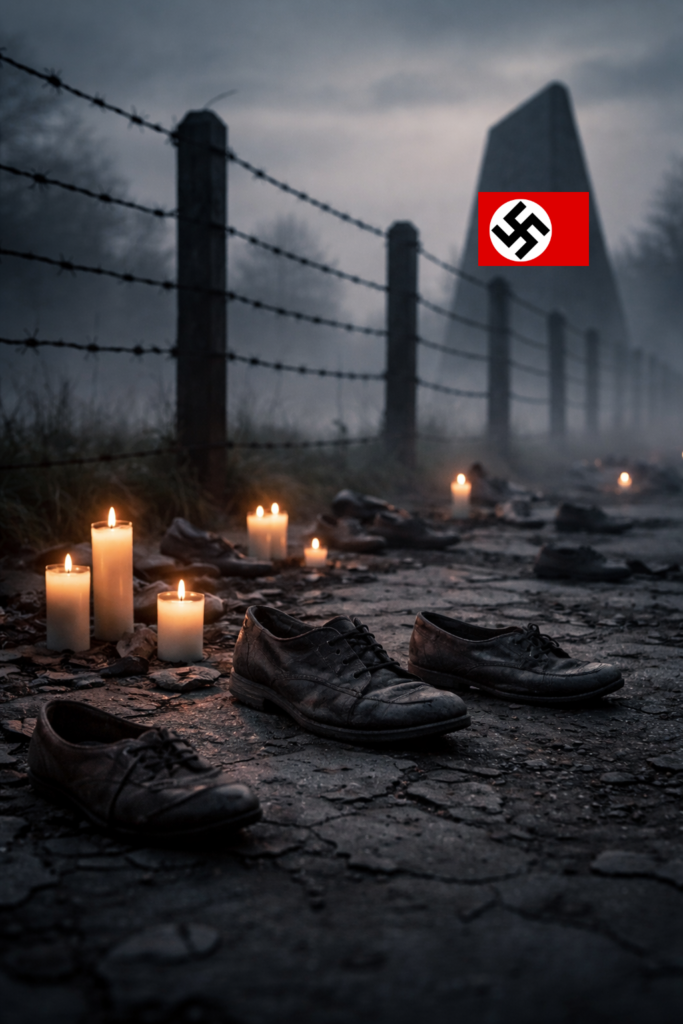
Unrighteous Act
Between 1941 and 1945, the regime of Nazi Germany carried out a systematic genocide targeting Jewish people, as well as Roma, disabled individuals, political dissidents, and others.
Millions were persecuted, deported, and murdered through organized systems including ghettos, forced labor, and extermination camps.
This was a deliberate, state-led effort to eliminate entire populations.
Ethical Breakdown
This atrocity illustrates a complete collapse of moral and ethical principles in which:
- Human dignity was denied and people were dehumanized
- State power was used to carry out systematic violence and genocide
- Laws and institutions were manipulated to legitimize injustice
Why It Matters
The Holocaust demonstrated:
- The dangers of unchecked authority and extremist ideology
- The consequences of silence and complicity
- The necessity of protecting human rights and moral accountability
Impact and Influence
The global response led to the creation of international human rights frameworks and institutions such as the United Nations.
It also shaped legal definitions of genocide and influenced the development of international law.
Reflection
The Holocaust invites profound reflection on human responsibility.
It raises essential questions: How can societies prevent hatred and dehumanization? What responsibility do individuals have to resist injustice?
It reminds us that the absence of righteousness can lead to immense suffering, and that vigilance and moral courage are essential to prevent such tragedies.
Legacy
The Holocaust remains a defining warning in human history.
It underscores the importance of human dignity, ethical responsibility, and the protection of fundamental rights.
Its legacy continues to guide global efforts toward remembrance, justice, and the prevention of future atrocities.
References
Hilberg, R. (1985). The destruction of the European Jews. Holmes & Meier.
Browning, C. R. (1992). Ordinary men. HarperCollins.
United States Holocaust Memorial Museum. (n.d.). Holocaust encyclopedia.