
Unrighteous Events of the Field Gallery
The Watergate Scandal represents a major example of the absence of righteousness in political leadership, highlighting the consequences of abuse of power and violations of democratic principles.
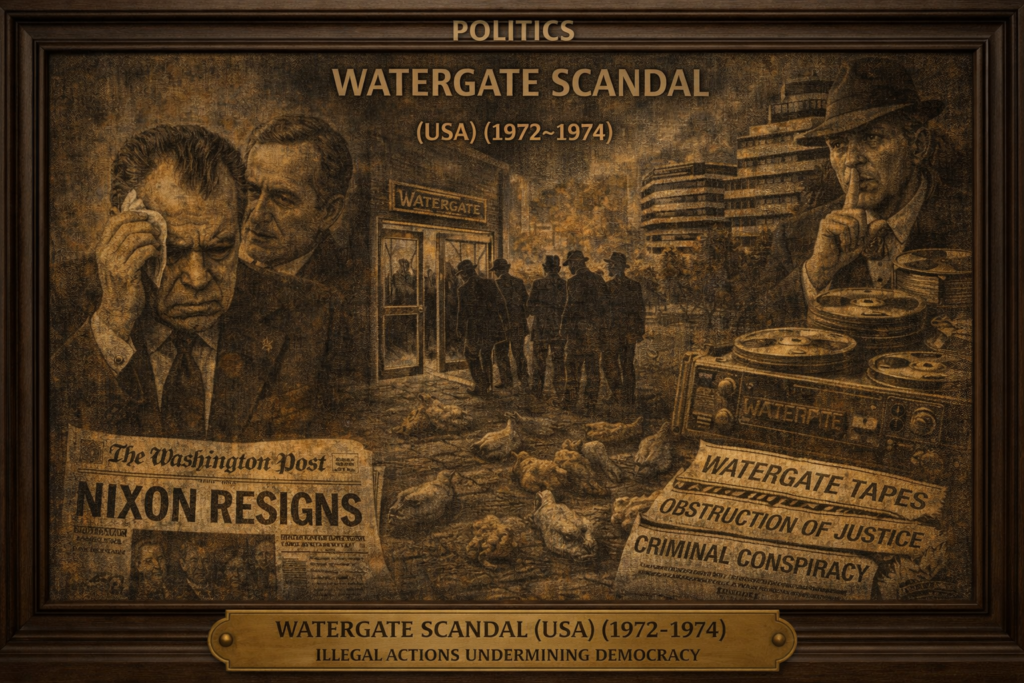
Unrighteous Act
Between 1972 and 1974, individuals connected to the administration of Richard Nixon were involved in a break-in at the Democratic National Committee headquarters and subsequent efforts to cover up the crime.
The scandal revealed the misuse of political power to undermine opponents and obstruct justice.
Ethical Breakdown
This case illustrates a failure of ethical responsibility in which:
- Abuse of power replaced public service
- Illegal actions were followed by systematic cover-up
- Democratic institutions were undermined
It exposed how leadership without accountability can threaten the integrity of governance.
Why It Matters
The scandal demonstrated:
- The importance of rule of law and checks and balances
- The need for transparency and accountability in government
- The role of a free press and independent institutions in safeguarding democracy
Impact and Influence
The Watergate scandal led to the resignation of President Richard Nixon in 1974, marking the first time a U.S. president left office under such circumstances.
It also resulted in reforms to increase government transparency and limit abuses of executive power.
Reflection
The Watergate scandal invites reflection on the responsibilities of political leaders.
It raises important questions: How can democratic systems prevent abuse of power? What role do citizens and institutions play in ensuring accountability?
It reminds us that democracy depends on integrity, transparency, and adherence to the rule of law.
Legacy
The Watergate scandal remains a defining moment in modern political history.
It underscores the necessity of ethical leadership, institutional accountability, and public trust in maintaining a functioning democracy.
References
Woodward, B., & Bernstein, C. (1974). All the president’s men. Simon & Schuster.
Kutler, S. I. (1990). The wars of Watergate. W. W. Norton & Company.
Schudson, M. (1992). Watergate in American memory. Basic Books.