
The Creator and the Abandoned
From: Frankenstein; or, The Modern Prometheus (1818) by Mary Shelley
Literary Figures of Righteousness Hall — The Righteous Museum
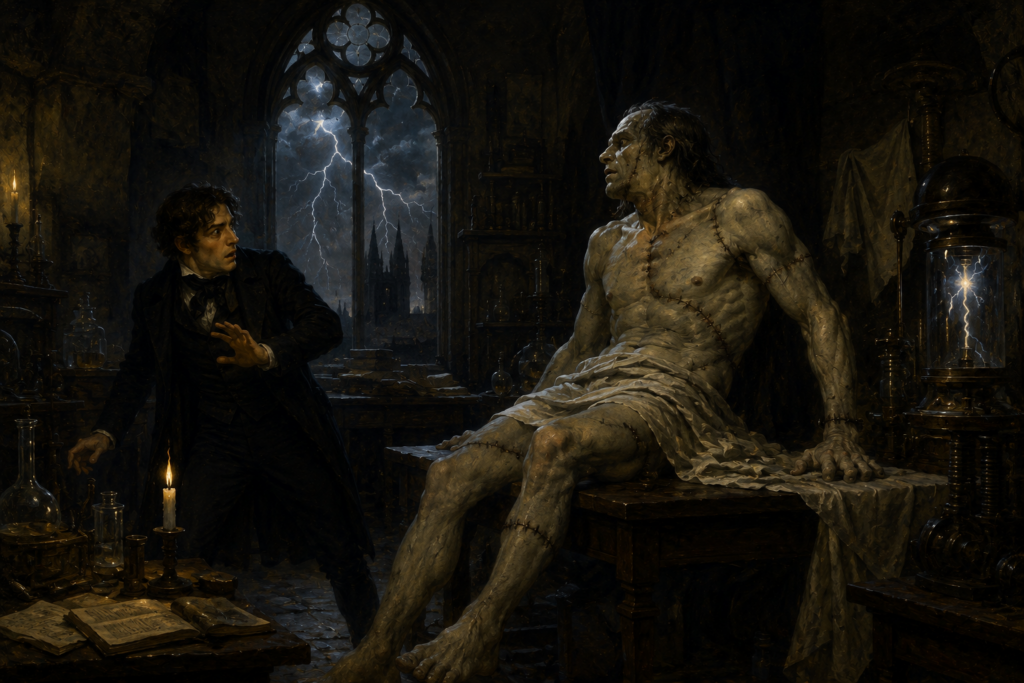
Figure 1. Victor Frankenstein recoiling in terror as his creation awakens—a visual metaphor for the moment ambition meets consequence and responsibility is abandoned.
Figure Description: A young man in early 19th-century clothing stands in a dim laboratory, his face contorted in horror. Before him, a large, stitched-together figure sits up on a wooden table, illuminated by a flash of lightning from a stormy window. Scientific instruments and books are scattered around. The mood is dark, Gothic, and tense—capturing the moment Victor realizes the weight of what he has done.
Introduction
Victor Frankenstein is a young scientist from Geneva who achieves the unthinkable: he discovers the secret of creating life. Driven by ambition and the desire for glory, he assembles a humanoid being from stolen body parts and brings it to life during an electrical storm. But when the creature opens its eyes, Victor is horrified by what he has made. He flees in terror, abandoning his creation.
The Creature, left alone and utterly rejected by its creator, wanders the world searching for acceptance. It learns language, reads philosophy, and develops a deep capacity for sympathy and love. Yet everywhere it goes, humans recoil in fear and attack it because of its grotesque appearance. The Creature is not born evil—it is made monstrous by the cruelty and rejection it faces.
Mary Shelley wrote Frankenstein when she was only 18 years old, and it was first published anonymously in London on January 1, 1818. The novel is often considered the first true science fiction story and remains one of the most powerful explorations of creator responsibility, abandonment, and the nature of justice.
“I ought to be thy Adam, but I am rather the fallen angel…” — The Creature to Victor Frankenstein (Shelley, 1818)
The Righteous Dilemma: Who Bears Responsibility for a Life Created?
Victor Frankenstein’s story forces us to confront a foundational question of righteousness: When we create something—or someone—what is our moral obligation to that creation?
Table 1. The Righteousness Paradox: Creator vs. Creation
| Victor Frankenstein (The Creator) | The Creature (The Creation) |
|---|---|
| Pursued scientific glory at any cost | Born innocent, seeking love and acceptance |
| Abandoned his creation in horror | Rejected by every human it encountered |
| Refused to take responsibility | Forced to survive alone in a hostile world |
| Watched his family die without confessing | Driven to violence by isolation and despair |
| Chose revenge over reconciliation | Offered Victor a chance to make amends |
Note. This table contrasts Victor’s failure to take moral responsibility with the Creature’s journey from innocence to vengeance. The central righteous question is: Does a creator have an inescapable duty to care for what they have brought into existence?
Victor’s moral failure is not in creating life—it is in refusing to take responsibility for that life. He abandons the Creature not once, but repeatedly. When the Creature begs for a companion to end its loneliness, Victor agrees, then destroys the half-finished mate in a fit of fear and disgust. Each act of rejection pushes the Creature further toward violence.
The novel also raises a profound question about justice: Is the Creature’s murder of Victor’s family an act of evil, or an act of desperate justice from a being who has been denied every human right? Scholars have noted that the ultimate evil in Frankenstein is not the Creature’s choices, but the injustice of a society that forces him to make such choices.
Key Scenes of Moral Choice
Scene 1: The Creation — Ambition Without Ethics
Victor Frankenstein, consumed by obsessive ambition, pieces together a human being from stolen corpses and brings it to life. He works in isolation, neglecting his health, his family, and any ethical consideration of what he is doing. His goal is not knowledge for its own sake, but power and renown.
The Question: Does the ability to do something make it right to do it? What responsibility does a scientist have to consider the consequences of their work before they begin?
The Righteous Failure: Victor’s ambition leads him to become arrogant and single-minded. He trespasses on what the novel presents as the sacred territory of life-giving, yet he never stops to ask whether he should create life—only whether he can*.
Scene 2: The Abandonment — The First Act of Injustice
When the Creature opens its eyes, Victor is repulsed. He runs from the room, leaving his newborn creation utterly alone. This is the first and most consequential act of abandonment. The Creature, confused and terrified, stumbles out into a world that will never accept it.
The Question: Is a creator morally responsible for their creation, even if they regret making it?
The Righteous Failure: Victor’s immediate judgment of his creation as a “wretch” and a “miserable monster” is cruel and unfair. He has given life to another being—yet he cannot even look at it with compassion.
Scene 3: The Creature’s Plea — A Chance for Redemption
The Creature tracks Victor to the mountains and makes a desperate plea: create a female companion so that it will no longer be alone. The Creature promises to vanish into the wilderness with its mate, never to harm another human. Victor agrees, then destroys the half-completed companion in a moment of panic.
The Question: Was Victor right to destroy the female Creature? Or did he owe the Creature a chance at happiness?
The Righteous Failure: Victor breaks his promise and denies the Creature the one thing it asked for—companionship. This act of betrayal is the final push that transforms the Creature from a lonely being into a vengeful one.
Scene 4: The Arctic Pursuit — Revenge Without Resolution
Victor chases the Creature across the frozen Arctic, vowing to destroy it. But he dies before he can fulfill his revenge. The Creature appears at Victor’s deathbed, weeping over the body of its creator. It expresses remorse for the deaths it has caused and vows to end its own life by burning itself on a funeral pyre.
The Question: Can revenge ever be just? Does the Creature’s remorse redeem its actions?
The Righteous Lesson: The Creature was not born a monster—it was made one by rejection, cruelty, and the failure of its creator to show it love. Its final act of remorse suggests that it was always capable of moral feeling, even after all it had done.
Memorable Quotes
Table 2 Key Quotes from Frankenstein on Creation, Responsibility, and Justice
| Quote | Speaker | Significance |
|---|---|---|
| “I ought to be thy Adam, but I am rather the fallen angel…” | The Creature | The Creature sees itself as a fallen being—capable of goodness, but driven to evil by rejection |
| “Did I request thee, Maker, from my clay / To mould me Man?” | The Creature (paraphrasing Milton) | The Creature asks the fundamental question: did it ask to be created? Does existence itself impose obligations? |
| “I, the miserable and the abandoned, am an abortion, to be spurned at, and kicked, and trampled on.” | The Creature | The Creature’s cry of pain at its own existence and rejection |
| “Learn from me, if not by my precepts, at least by my example, how dangerous is the acquirement of knowledge…” | Victor Frankenstein | Victor’s warning against unchecked ambition—a confession of his own moral failure |
| “If I cannot inspire love, I will cause fear.” | The Creature | The Creature’s turn toward vengeance—a dark reflection on what happens when love is denied |
Note. These passages capture the novel’s central tension: the Creator’s failure to take responsibility and the Creation’s desperate search for love, which turns to violence when it is denied.
Lessons on Righteousness from Victor Frankenstein and the Creature
Table 3. Lessons on Righteousness from Frankenstein
| Lesson | Application |
|---|---|
| Creation carries responsibility | Victor created life and then abandoned it. The novel teaches that to bring something into existence is to accept a duty of care toward it. |
| Abandonment is a form of injustice | The Creature was not evil at birth—it was made monstrous by rejection. The failure to love and accept others can be a profound moral wrong. |
| Ambition without ethics is dangerous | Victor’s obsessive pursuit of glory led him to ignore every ethical boundary. Scientific progress without moral reflection is a path to destruction. |
| Justice requires empathy | The Creature was denied justice because no one could see past its appearance. True justice requires us to look beyond the surface and understand the other. |
| Revenge never restores justice | Both Victor and the Creature pursue revenge, and both are destroyed by it. Revenge does not heal—it only perpetuates suffering. |
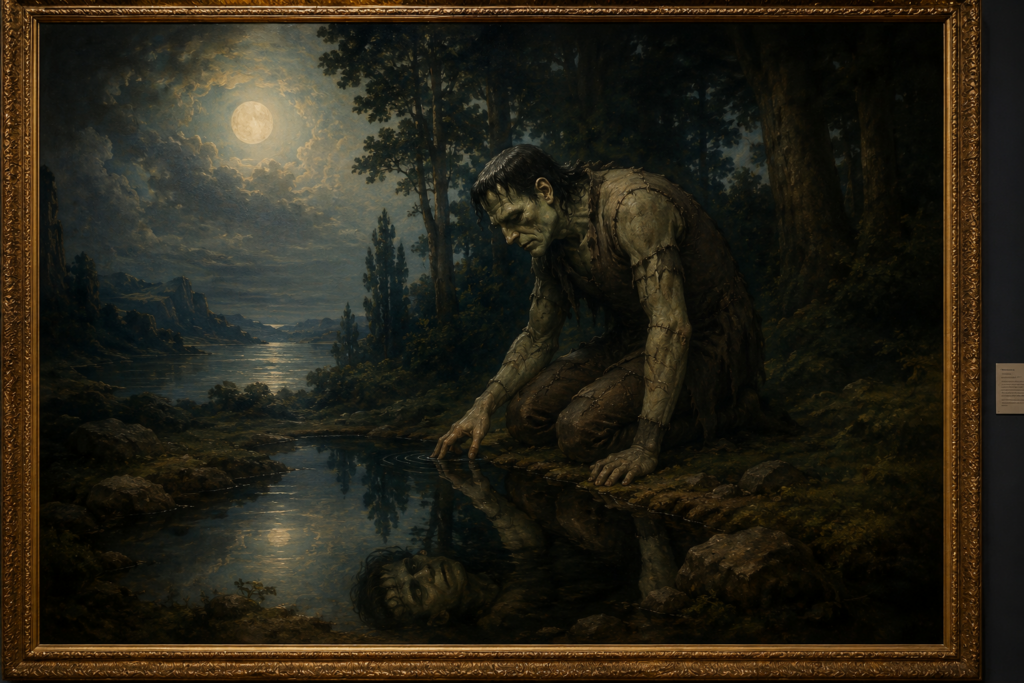
Figure 2. The Creature: The Abandoned One
Figure Description: A large, stitched-together humanoid figure kneels by a still pool of water in a dark forest. Moonlight filters through the trees, illuminating the Creature’s face as it looks at its own reflection. Its expression is one of sorrow and longing, not anger. The scene is quiet, melancholic, and lonely—capturing the Creature’s profound isolation and its desire to be accepted.
Further Resources
- Read the full text: Shelley, M. (1818). Frankenstein; or, The modern Prometheus. London: Lackington, Hughes, Harding, Mavor, & Jones. The novel is in the public domain in the United States and available for free through Project Gutenberg and the Internet Archive.
- Watch the film adaptations:
- Frankenstein (1931). Directed by James Whale. Universal Pictures. Starring Colin Clive as Henry Frankenstein and Boris Karloff as the Creature.
- Mary Shelley’s Frankenstein (1994). Directed by Kenneth Branagh. TriStar Pictures. Starring Kenneth Branagh as Victor Frankenstein and Robert De Niro as the Creature.
- Explore more: Visit the Literary Figures of Righteousness Hall to discover other literary characters who faced moral dilemmas.
References
Shelley, M. (1818). Frankenstein; or, The modern Prometheus. Lackington, Hughes, Harding, Mavor, & Jones.
Whale, J. (Director). (1931). Frankenstein [Film]. Universal Pictures.
Branagh, K. (Director). (1994). Mary Shelley’s Frankenstein [Film]. TriStar Pictures.
Quiz: Victor Frankenstein / The Creature: Frankenstein,Shelley