
Historical Human–AI Pioneers, Choices, and Events That Advanced Righteousness
Artificial intelligence is not only a technology. It is a new arena in which humanity must make choices.
Who creates AI?
Who controls it?
How should it be used?
When should its development be limited?
What should people do when power, profit, convenience, truth, justice, and human dignity come into conflict?
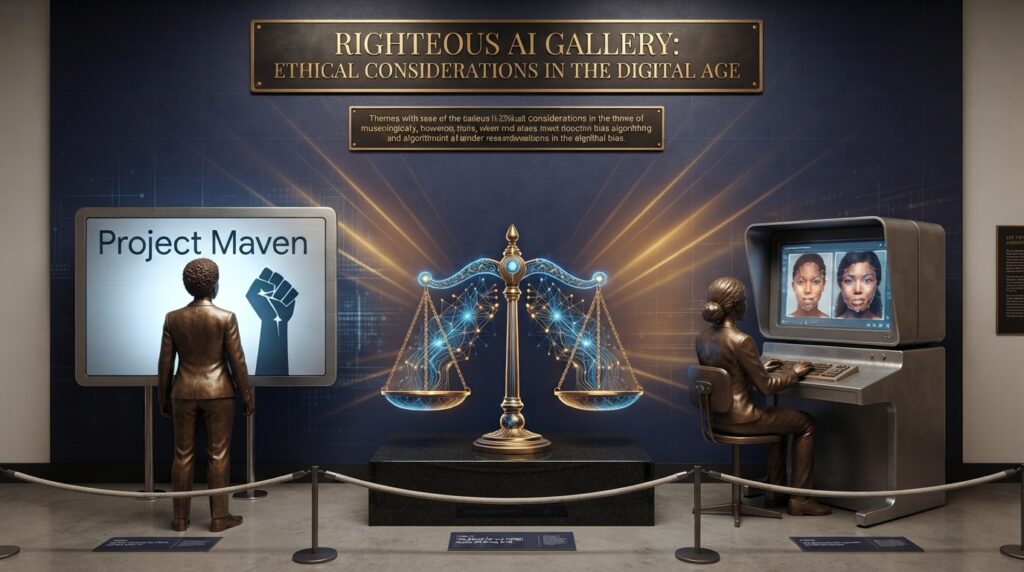
The Righteous AI Gallery preserves historical examples in which people, organizations, and AI systems confronted such choices—and where pioneering actions advanced righteousness and became models for humanity.
What We Collect
This Gallery focuses on Human–AI historical events, not simply AI applications that produce beneficial results.
We look for events involving:
- A difficult choice
- A meaningful moral or ethical conflict
- A righteous principle
- Pioneering action
- Risk, sacrifice, or restraint
- Historical impact
- A lasting precedent or model
Featured Historical Cases
Pioneers of Righteous Human–AI Choices
This growing collection presents historical events in which individuals, organizations, researchers, developers, or other actors made consequential choices concerning AI.
01 — Project Maven Employee Protest
2018 · Google Employees · United States
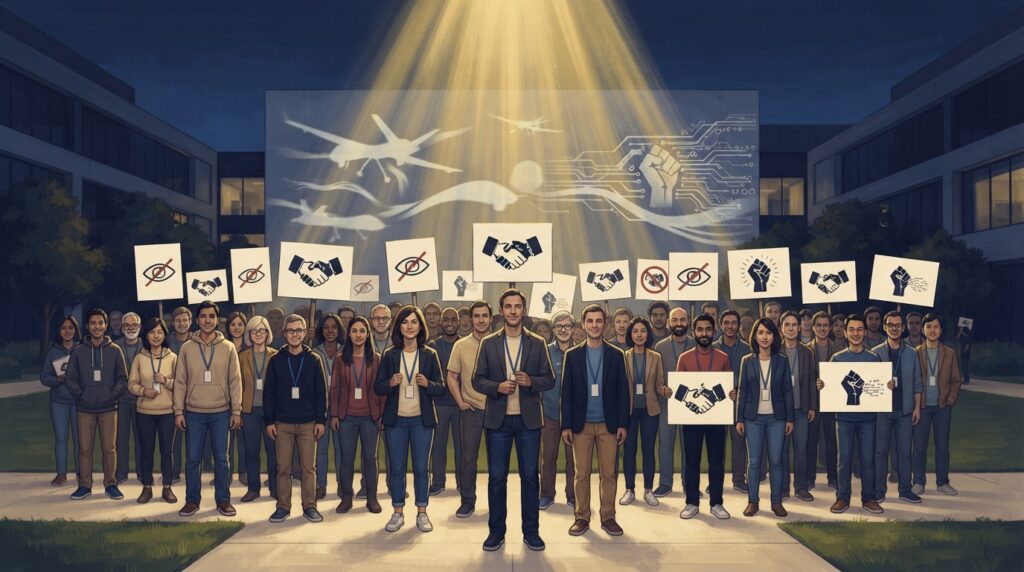
Google employees publicly challenged the company’s involvement in Project Maven, raising concerns about the use of AI in military applications. Their protest demonstrated the willingness of employees to place ethical principles above institutional interests and contributed to Google deciding not to renew the contract.
Righteous Principle: Conscience, responsibility, and restraint
Historical Significance: An early landmark in employee-led resistance to potentially harmful uses of AI.
02 — Gender Shades
2018 · Joy Buolamwini and Researchers · United States
Joy Buolamwini and her research collaborators systematically tested commercial facial-analysis systems and documented significant differences in performance across demographic groups. The research challenged the assumption that AI systems were automatically objective or fair and helped advance the movement for algorithmic fairness and accountability.
Righteous Principle: Truth, justice, equality, and accountability
Historical Significance: A pioneering example of independent research exposing potential algorithmic discrimination.

The Righteous Choice
The central question of this Gallery is:
When humanity gains new technological power, how will we choose to use it?
A powerful technology does not determine whether its use will be righteous.
Human choices matter.
Developers can choose whether to build.
Researchers can choose whether to disclose.
Organizations can choose whether to proceed or stop.
Governments can choose whether to regulate.
Users can choose whether to use technology responsibly.
And individuals can choose whether to stand with principle when doing so carries a cost.
Our Standard
The Gallery does not equate every mistake with unrighteousness, or every beneficial outcome with righteousness.
We distinguish:
Mistake ≠ Harm ≠ Unsafe ≠ Unrighteous
A historical event receives special consideration when it demonstrates:
Conflict → Choice → Principle → Action → Impact → Example
The strongest cases are those in which a pioneering choice became a precedent from which future generations can learn.
From History to the Future
The purpose of this Gallery is not simply to celebrate technology.
It is to examine the choices surrounding technology.
What would I choose?
What should an AI creator do when power conflicts with responsibility?
When should AI be limited?
When should a person speak up?
What principles should guide humanity as AI becomes more powerful?
The history of AI is still being written.
The choices made today may become the precedents of tomorrow.